blogsHomeHeroBanner

नवीनतम लेख

Image

Top 10 Proven Benefits of Tapas VitaInject Plant Growth Regulator

yamini

-

24 April 2026

Understanding the ProblemIn Indian farming, many problems come together in one crop season. Sometimes, the crop grows, but it doesn’t grow to its full potential. The plant may look weak, or the branching may be poor, which affects the overall plant structure. Because of this, the crop may not grow as well as it is expected to.Farmers often notice that while flowers appear on the crop, they don’t stay for long. They fall off early, which can affect the number of fruits the plant can bear. This is a concern because every flower that results into a fruit is important for the final harvest.Weather conditions like extreme heat, uneven rainfall, and salinity can put stress on crops, making them weak and slowing their growth. This also increases their chances of catching diseases, affecting the overall health and yield.These problems can happen in all types of crops, whether it’s vegetables, fruit crops, pulses, or field crops. When these issues arise, they can reduce both the quality and the overall yield of the crop. This is why it’s important to give the crop the right support at the right time to help it grow stronger and healthier.Have you seen your crop showing these signs?Weak root growthLess branches, especially secondary & tertiary Flower dropPoor fruit settingSlow recovery after heat or water stressIf yes, then this is not just a nutrition issue. Many times, the plant also needs proper internal support. That is where a plant growth hormone or growth regulator-based product becomes important. It helps the plant grow better, handle stress better, and use its energy in a smarter way.This is where a good plant growth regulator can make a difference. Tapas VitaInject Plant Growth Regulator is made to support crop growth in a practical way. It acts as a Biostimulant and helps in root development, branching, flowering, fruit setting, and stress management. Along with that, it also helps the plant build its natural defense system. For farmers looking for a reliable plant growth hormone for better crop performance, this product can be a useful support during the season.About the ProductTapas VitaInject Plant Growth Regulator is a bio/organic-based plant growth hormone from AgroHaat. It is made with three important components:Salicylic Acid 2%Naturally Occurring Cytokines 0.036%Vitamin B3 (Niacinamide) 3.75%In simple words, this product works like internal support for the plant.Salicylic Acid helps the plant activate its natural defense system.Cytokines work like a plant growth hormone that supports cell division, side branching, greener leaves, and better flowering.Vitamin B3 helps the plant produce energy and recover faster from stress.Together, these ingredients help the crop in root growth, branching, flowering, fruit setting, and overall vigor. This growth regulator works systemically, which means it supports the plant from inside after application.Proven Benefits for FarmersHere are the practical benefits of Tapas VitaInject plant growth regulator:Helps improve root development for better water and nutrient uptakeSupports secondary and tertiary branching for a stronger plant structurePromotes better flowering and helps reduce flower dropImproves pollen activity, which supports fruit settingHelps in better fruit development and more uniform crop growthKeeps leaves greener for longer by supporting chlorophyll maintenanceHelps the crop tolerate heat, water stress, and salinitySupports the plant’s natural defense against fungal, bacterial, and viral attackHelps improve crop health, quality, and yield potentialUseful as a growth regulator for many crops including vegetables, fruits, pulses, field crops, plantations, orchards, and floricultureFor farmers, the biggest advantage is this: the product does not focus on just one stage. It supports the crop from vegetative growth till flowering and fruit development.How and When to UseUsing this plant growth regulator is simple if you follow the right dose and crop stage.Recommended Dosage10 ml Tapas VitaInject in 150–200 liters of water per acreMethod of ApplicationFoliar sprayDrip irrigationRecommended Spray Schedule1st Spray – Vegetative Stage Apply during active branching, ideally around 25 days after planting.2nd Spray – Vegetative Stage Repeat after 15 days to strengthen secondary branches.3rd Spray – Bud Formation Stage This helps support early flower development.4th Spray – Flower Initiation Stage Useful to improve flower retention and reduce flower shedding.5th Spray – Full Bloom Stage Helps in fertilization and fruit setting.6th Spray – Full Bloom Stage Repeat for better support in fertilization and fruit set.7th Spray – Fruit Initiation Stage Supports fruit development and more uniform growth.How to Prepare Spray SolutionOpen the Tapas VitaInject tube carefully.Mix 10 ml in 150 to 200 liters of water.Stir well.Spray evenly on the crop canopy.If using drip irrigation, use the same recommended dosage through the drip system.Real-Life ScenarioLet us say your chilli crop or tomato crop is growing well in the beginning, but later you notice weak side branches and flower drop. Because of this, the plant does not bear enough fruits. At the same time, rising temperatures are putting extra stress on the crop.In this situation, a biostimulant like Tapas VitaInject can help by supporting branching, keeping the plant active, improving flower retention, and helping in fruit setting. It also supports the crop during heat, drought, and salinity. This means the crop gets a better chance to perform well during sensitive stages.Another example: in cotton, pulses, vegetables, or fruit crops, if the plant looks weak after stress or disease pressure, a good growth hormone like Tapas VitaInject can help the crop recover faster and maintain healthier growth.Precautions / TipsTo get better results, keep these points in mind:Always use the recommended dose onlySpray evenly for proper coverageApply at the suggested crop growth stages for best responseDo not mix with Copper, Sulphur, or Aluminum-based fungicidesFollow label instructions before useUse clean water for mixingAvoid overdosing, as more quantity does not mean better resultsIt is always better to spray during suitable weather conditions, not in extreme hot hoursFor crop-specific guidance, check with an agronomy expert if neededThese precautions build trust because correct use is just as important as a good product.Why Tapas VitaInject Is a Smart Choice for Farmers?What makes Tapas VitaInject different is that it does not only support growth. It also helps the crop handle pressure from weather and disease. In Indian farming, this matters a lot. One week there is heat stress, another week there is moisture stress, and during the flowering stage even a small disturbance can reduce yield.This plant growth regulator supports:Better crop structureBetter floweringBetter fruit settingBetter stress handlingBetter overall crop healthThat is why it can be useful across many crop types and seasons.ConclusionFarming success depends on many small decisions taken at the right time. When your crop needs support for branching, flowering, fruit setting, and stress tolerance, choosing the right plant growth regulator can help protect your hard work.Tapas VitaInject Plant Growth Regulator is a practical plant growth hormone that supports overall crop health in a simple and effective way. With the help of Salicylic Acid, natural Cytokines, and Vitamin B3, it works on growth as well as plant defense. That means your crop gets support not only to grow, but also to stay stronger during difficult conditions.If your crop is entering active growth, flowering, or fruit setting stage, this can be a useful addition to your crop care plan. Use it as advised, at the right stage, and let the crop get the support it needs for better growth and better results.
Image

Tapas VitaInject - Game-Changing Growth Support for Every Farmer

yamini

-

13 April 2026

Every IPL Team Has a Match Winner…Now Every Farm Can Have One TooWhen we watch IPL, one thing is clear…Every team has that one player.The player who changes the game.The player who handles pressure.The player who delivers when it matters the most.Sometimes it’s Dhoni finishing the match - Thala for a reason.Sometimes it’s a bowler taking a crucial wicket.And the whole stadium cheers…because they trust that player.But Think About This…In your farm…Weather is unpredictableFlower drop happens suddenlyPlants look weak even after good careAnd at that moment, every farmer needs one strong support system.Just like a match-winning player.Meet TAPAS VitaInject by BigHaat - The Match Winner for Your Crops Just like that IPL player who stands strong in tough situations…TAPAS VitaInject, the growth regulator works the same way for your crops.It is not just a product.It is a growth hormone, stress reliever, and immunity booster all in one.And farmers across the country are already trusting it…just like fans trust their favorite player.Why Farmers Are Calling It a Game-Changer?Imagine your crop getting support at every stage…Strong Roots = Strong StartVitaInject improves root development so plants can absorb more water and nutrients easily.Better Branching = More GrowthIt promotes secondary and tertiary branches, giving your crop a fuller and healthier structure.More Flowers, Less DropHelps in flower formation and retention, reducing flower drop and increasing chances of fruiting.Better Fruit SettingImproves pollination and fruit development, leading to uniform and better-quality produce.What Makes VitaInject So Powerful?It works like a smart system inside the plant:Salicylic Acid (2%) - Activates plant immunity (like a warning system)Cytokinins (0.036%) - Boosts cell division, branching, and floweringVitamin B3 (3.75%) - Acts like energy supply for plant growthTogether, they help plants: ✔ Handle stress (heat, drought, salinity) ✔ Stay green and active for longerThala for a Reason… VitaInject for a ReasonJust like Dhoni stays calm and finishes the match…Tapas VitaInject supports your crop in every critical stage:Vegetative stage - Better structureBud stage - Strong flower developmentFlowering - Less drop, more retentionFruit stage - Better size and qualityThat’s why farmers are starting to say:This product is there for a reason.Simple to Use, Easy to Trust Just 10 ml per acre (mixed in 150–200 liters water)Can be applied via spray or drip irrigationSuitable for all crops - vegetables, fruits, field crops, plantationsReal Strength: Works Even in Tough Conditions Whether it’s:High temperature Water stress VitaInject helps plants recover faster and stay strong.A Message to FarmersIn IPL, players give their best…And the crowd cheers for them.Now it’s your turn.Take a chance with Tapas VitaInject…!Let us support your crop’s growth.Let VitaInject be that match winner in your field. Final Thought Farming is not easy.It needs patience, effort, and the right support.And sometimes…One right decision can change the entire result, why can’t the decision be VitaInject?Remember: Every IPL team has a match winner…Now your farm can have one too.TAPAS VitaInject - Truly, for a reason.

ऊपर उठाता है

ताज़ा खबरें

राष्ट्रीय योजनाएँ

रोग और कीट

Image

How to control black thrips in chilli?

yamini

-

03 March 2026

Black thrips in chilli is one of the most commonly discussed problems among chilli farmers, especially during dry and warm weather. Many growers notice sudden leaf curling, flower drop, or poor fruit setting and later realise that the real issue is black thrips in chilli fields. Understanding why the problem happens, how it develops, and what practical steps can reduce the damage is the key to sustainable control. This guide is written in simple, farmer-friendly English. It focuses on field observations, practical prevention steps, and safe management approaches, without making exaggerated claims or risky promises. What is black thrips? Black thrips are tiny, slender insects that usually stay hidden on the underside of leaves, flower buds, and tender shoots. Because of their small size, many farmers notice the damage first and the insect later. Chilli black thrips feed by scraping the leaf surface and sucking plant sap. Over time, this feeding style weakens the plant and disturbs normal growth. When black thrips are not managed early, the crop may show slow growth and reduced productivity. Thrips multiply quickly under favourable conditions, which is why regular field monitoring is extremely important. Why black thrips attack chilli crops Black thrips in chilli become more active when certain field conditions support their life cycle. Knowing these triggers helps in prevention. Common reasons for thrips build-up: Hot and dry climate with low rainfall Excessive use of nitrogen fertilisers Continuous chilli cropping in the same field Poor field sanitation and weed growth Lack of natural enemies due to repeated chemical sprays When these factors combine, black thrips in chilli can spread rapidly across the field. Chilli thrips damage symptoms farmers should not ignore Early identification saves both cost and crop health. Chilli thrips damage symptoms usually appear in stages. Early-stage symptoms Moderate infestation symptoms Severe chilli thrips damage symptoms Slight curling of young leaves Silver or bronze streaks on the leaf surface Leaves are losing their natural shine Upward or downward leaf curl Distorted leaf shape and reduced leaf size Slowed plant growth Flower drop and poor fruit setting Deformed or undersized fruits Dry, brittle appearance of leaves Overall stress in chilli plants These chilli thrips damage symptoms often start on new growth, which is why farmers should check the top leaves regularly. How do black thrips in chilli spread within the field? Black thrips in chilli spread mainly through: Wind movement Infected seedlings Movement of labour and tools Nearby host plants and weeds Because thrips can move quickly from one plant to another, partial control often leads to reinfestation. A field-wide approach is always more effective than spot treatment. Black thrips control in chilli using integrated methods Successful black thrips control in chilli does not rely on a single action. Instead, it works best when multiple safe practices are combined, such as: Basic methods from the foundation These steps reduce pest pressure naturally. Avoid excess nitrogen fertiliser Maintain proper plant spacing for airflow Remove heavily infested plant parts Keep field borders weed-free Follow crop rotation where possible Healthy plants are better able to tolerate minor thrips presence. 2. Mechanical and physical methods These methods help in monitoring and early control. Blue or yellow sticky traps for monitoring the adult thrips population Regular visual inspection of leaf undersides Removal of severely affected plants to prevent spread Sticky traps do not eliminate black thrips in chilli completely, but they provide early warning signs. 3. Biological and natural approaches Encouraging beneficial insects supports long-term balance. Conserving natural predators like ladybird beetles and lacewings Avoiding unnecessary broad-spectrum sprays Using neem-based formulations as part of a rotation These methods help suppress chilli black thrips population gradually and safely. 4. What to know before spraying insecticides for chilli thrips? When infestation crosses economic threshold levels, farmers may consider chilli thrips control insecticide options only as per label recommendations. Important safety points: Always rotate insecticides with different modes of action Avoid repeated use of the same chemical group Follow the recommended dosage and spray intervals strictly Respect waiting periods before harvest Preventive steps to reduce black thrips in chilli naturally Prevention is always cheaper and safer than heavy control. Nursery-stage prevention Use healthy, pest-free seedlings Avoid overcrowding in nurseries Inspect seedlings before transplanting Field-level prevention Install sticky traps early Maintain proper irrigation schedule Avoid water stress to plants Nutrition management Balanced fertiliser application Avoid excess urea Ensure micronutrient balance These steps reduce plant stress, which lowers the risk of severe chilli black thrips attack. Common mistakes farmers make during thrips management Many control failures are due to avoidable mistakes: Spraying without confirming pest presence Overdosing chilli thrips control insecticide Ignoring early chilli thrips damage symptoms Mixing incompatible products Spraying during high temperatures Correcting these practices alone can significantly improve black thrips control in chilli fields. When to monitor black thrips in chilli crop Regular monitoring should start: From the early vegetative stage Continue during flowering Increase frequency during dry spells A simple routine of checking 10 - 15 random plants per acre helps catch black thrips before damage becomes severe. Long-term management strategy for chilli black thrips For consistent results across seasons: Rotate crops where possible Maintain field hygiene year-round Use integrated approaches instead of single-solution sprays Keep records of infestation and treatments This long-term thinking reduces dependency on repeated chemical intervention. Managing black thrips is not about quick fixes. It is about understanding the pest, observing the crop closely, and taking timely, balanced action. With regular monitoring, preventive care, and responsible control methods, farmers can reduce the impact of chilli black thrips and maintain healthy crop growth throughout the season. Frequently Asked Questions How can farmers identify black thrips in chilli at an early stage? Early identification of black thrips in chilli is usually based on plant symptoms rather than the insect itself. Farmers may notice slight leaf curling, silver or bronze streaks on young leaves, and loss of leaf shine. Regularly checking the underside of top leaves helps detect chilli black thrips before damage increases. What are the most common chilli thrips damage symptoms seen in the field? Chilli thrips damage symptoms generally start with curled or distorted leaves. As infestation increases, plants may show flower drop, poor fruit setting, and undersized fruits. Severe cases can cause dry, brittle leaves and overall plant stress, especially during hot and dry weather. Why does black thrips infestation increase in chilli crops during dry seasons? Black thrips in chilli multiply faster in hot, dry conditions. Low rainfall, excess nitrogen fertiliser, continuous chilli cropping, and poor weed control create favourable conditions. These factors allow chilli black thrips populations to spread quickly across the field. Is insecticide always required for black thrips control in chilli? Insecticide use is not always the first step in black thrips control in chilli. Preventive practices, regular monitoring, and natural control methods are often used initially. Chilli thrips control insecticide options are usually considered only when pest levels increase beyond manageable limits and must always be used as per label instructions. What mistakes should be avoided while managing chilli black thrips? Common mistakes include spraying without confirming pest presence, overdosing on insecticides, ignoring early symptoms, and spraying during high temperatures. Avoiding these errors helps improve black thrips control in chilli and reduces the risk of resistance and crop stress.
Image

How to Identify Chilli Thrips Damage and Control It Early

yamini

-

03 March 2026

Chilli is a sensitive crop. Even small stress on young leaves or flowers can affect plant growth and final yield. One of the most common yet often misunderstood problems in chilli fields is thrips damage. Many farmers notice curling leaves or poor flowering but realise the real cause only when the damage has already spread.This guide is written in a farmer-first, experience-based manner to help you clearly understand chilli thrips damage symptoms, how to identify them early, and how to take timely control steps without risking crop safety.Why early identification of chilli thrips matters?Thrips are tiny insects, but their impact is big. They attack tender plant parts and feed by scraping the surface and sucking plant sap. If chilli thrips damage symptoms are ignored in the early stage, plants may remain stunted throughout the season.Early identification helps in:Preventing permanent leaf damageProtecting flower formationReducing repeated spraysMaintaining plant vigourUnderstanding chilli thrips symptoms clearly is the first and most important step.What are thrips and how do they attack chilli plants?Thrips are slender, very small insects that usually hide on:Tender leavesLeaf foldsFlower budsUnderside of leavesA chilli thrip damages the plant by scraping the leaf surface and feeding on plant fluids. This feeding disrupts normal leaf growth and affects photosynthesis.Because they are tiny and fast-moving, farmers often miss them during early infestation.Chilli thrips damage symptoms: what to look for firstRecognising chilli thrips damage symptoms early can save the crop. Below are the most common visible signs seen in chilli fields.1. Leaf curling and crinklingYoung leaves curl upward or inwardLeaves look narrow, twisted, and roughGrowth appears unevenThis is one of the earliest chilli thrips symptoms.2. Silvery or bronze patches on leavesScraped leaf surface looks shiny or silveryOver time, these patches turn brownThis type of thrips damage is more visible under sunlight3. Stunted plant growthPlants remain short even with proper nutritionInternodes become shorterNew leaf formation slows downThese are strong indicators of chilli thrips damage symptoms in the vegetative stage.4. Flower drop and poor fruit setFlowers dry and fall earlyReduced fruit formationUneven chilli sizeThis stage is critical, and untreated chilli thrips symptoms can directly affect yield.How to confirm thrips infestation in chilliTo confirm thrips damage:Gently tap a leaf over white paperLook for tiny moving insectsCheck early morning or evening for better visibilityDo not rely only on leaf curling. Nutrient deficiency and herbicide stress can look similar, but chilli thrips damage symptoms usually appear first on new growth.Difference between thrips damage and nutrient deficiencyObservationThrips damageNutrient deficiencyLeaf textureRough, crinkledSoft, thinLeaf colourSilvery → brownUniform yellowingSpreadPatchy, fastGradualNew leavesHighly affectedMildly affectedThis comparison helps avoid a wrong diagnosis when identifying chilli thrips damage symptoms.When is the chilli crop most vulnerable to thrips?A chilli thrip infestation is most severe during:Hot and dry weatherEarly vegetative stageFlower initiation stageDry climate supports rapid multiplication, making early monitoring very important for chilli thrips control.Cultural practices to reduce thrips pressureBefore jumping to sprays, basic field practices can reduce thrips damage naturally.Field-level precautionsAvoid water stress in plantsMaintain proper plant spacingRemove heavily infested shootsAvoid excess nitrogen fertiliserHealthy plants tolerate chilli thrips symptoms better than stressed crops.Mechanical and preventive methodsUse yellow or blue sticky traps for monitoringRegular field scouting twice a weekRemove weeds that act as alternate hostsThese steps support early chilli thrips control without chemical stress.Chilli thrips control using insecticidesWhen infestation crosses manageable levels, chilli thrips control insecticide options may be considered carefully.Important points before spraying:Always follow label instructionsRotate modes of actionAvoid repeated use of the same chemistrySpray during early morning or eveningUsing a chilli thrips control insecticide should be based on pest pressure, not routine calendar spraying.Note: The choice and dosage of insecticides should always be as per local agricultural recommendations and label directions to ensure crop and user safety.Correct spraying method for better thrips controlFor effective chilli thrips control:Ensure good coverage of new leavesFocus on leaf undersidesUse the recommended water volumeAvoid spraying during high temperaturesPoor spraying technique often leads to repeated thrips damage even after treatment.How early control helps reduce future damage?Early management of chilli thrips damage symptoms:Protects new leaf growthImproves floweringReduces the cost of multiple spraysMaintains uniform crop growthOnce leaf deformation occurs, it cannot be reversed. That is why early action against chilli thrips symptoms is critical.Common mistakes farmers make with thrips controlWaiting too long after the first symptomsOver-spraying without monitoringMixing multiple chemicals unnecessarilyIgnoring resistance managementAvoiding these mistakes improves long-term chilli thrips control results.Final takeaway for farmersThrips may be small, but ignoring chilli thrips damage symptoms can lead to big losses. Regular crop observation, correct identification, and timely action are the keys to successful management.By understanding:Early chilli thrips symptomsProper monitoring methodsSafe chilli thrips control insecticide usePreventive field practicesFarmer tip: Walk through your chilli field every 3 - 4 days during early growth. Early eyes save the crop.Frequently Asked Questions1. How to Identify Chilli Thrips Damage and Control It Early?To identify chilli thrips damage early, carefully observe young leaves and flower buds. Look for leaf curling, silvery patches, and rough leaf texture. Early detection allows farmers to start monitoring and apply timely chilli thrips control measures before the damage spreads across the field. Regular field visits during the early growth stage are the best way to identify chilli thrips damage and control it early.2. What are the first signs to Identify Chilli Thrips Damage and Control It Early?The first visible signs include curling of tender leaves, narrow and twisted growth, and silvery streaks on the leaf surface. These chilli thrips damage symptoms usually appear on new growth first. If these signs are noticed early, it becomes easier to identify chilli thrips damage and control it early without repeated sprays.3. When should farmers try to Identify Chilli Thrips Damage and Control It Early?Farmers should start monitoring from the early vegetative stage, especially during hot and dry weather. Thrips multiply quickly in dry conditions. Inspect the crop every 3 - 4 days, tap leaves over white paper, and check the underside of new leaves. Early monitoring helps identify chilli thrips damage and control it early before flowering is affected.4. Can leaf curling alone help Identify Chilli Thrips Damage and Control It Early?Leaf curling is an important symptom, but it should not be the only factor considered. Nutrient deficiency or herbicide stress may look similar. To correctly identify chilli thrips damage and control it early, confirm the presence of tiny moving thrips on leaves or buds. Proper identification avoids unnecessary spraying.5. Why is it important to Identify Chilli Thrips Damage and Control It Early instead of waiting?Once leaves become deformed due to thrips feeding, they do not return to normal shape. Delayed action can result in stunted growth, flower drop, and poor fruit set. By learning how to identify chilli thrips damage and control it early, farmers can protect plant vigour, reduce input costs, and maintain better yield potential.

कृषि भाड़े

खेत की तैयारी

Image

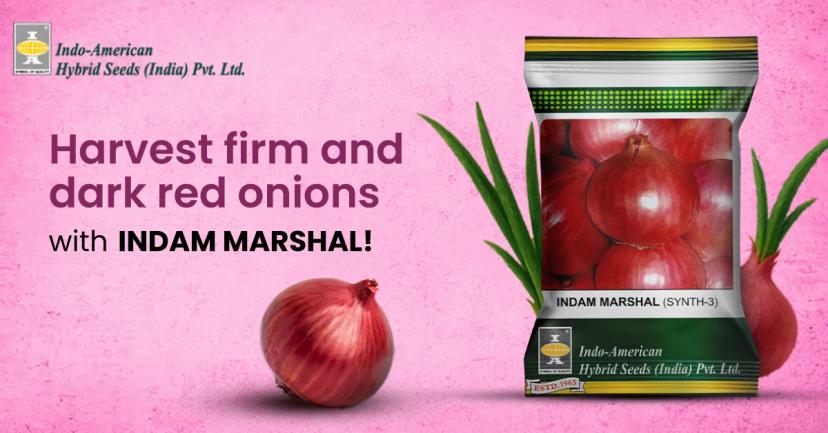
INDAM Marshal Onion: A High-Performing Hybrid for Early Maturity and Market Leadership

yamini

-

21 July 2025

India ranks among the world’s top onion-producing countries, with onions forming a staple in Indian cuisine and a significant commodity in the agricultural economy. As consumer demand rises and climatic unpredictability intensifies, onion farmers require dependable, high-yielding varieties that not only thrive under challenging conditions but also ensure market competitiveness. One such breakthrough hybrid is INDAM Marshal, developed by Indo-American Hybrid Seeds (INDAM). This early-maturing, high-yield onion hybrid has gained substantial attention among Kharif season growers across key agricultural states such as Karnataka, Andhra Pradesh, Maharashtra, and Madhya Pradesh. Designed to deliver marketable bulbs with uniform shape, superior color, and excellent storage potential, INDAM Marshal is a smart solution for commercial onion cultivation in India. A Next-Generation Onion Hybrid INDAM Marshal stands out as a next-generation hybrid designed with multiple farmer-focused benefits: Early maturity for quick market entry Uniform bulb shape and size to reduce grading losses Bright red coloration for better consumer appeal High storability for market flexibility Resilience in Kharif season conditions, particularly monsoon moisture and disease stress The hybrid’s genetics are optimized for both yield and visual appeal. Each bulb weighs approximately 90–100 grams, with a globe-round shape and smooth, glossy outer skin—traits that ensure premium prices in local and regional markets. Key Physical and Commercial Traits Bulb Shape: Globe-round, symmetrical for easy packaging and appealing presentation Bulb Weight: 90–100 grams, reducing grading and sorting losses Color: Deep red, attractive in fresh markets Skin Texture: Firm and glossy, enhancing post-harvest life Storability: High, reducing spoilage and improving transportation logistics Maturity: 90–95 days after transplanting, enabling early market access These characteristics make INDAM Marshal ideal for fresh markets, institutional buyers, and short- to medium-distance transportation. Farmers benefit from uniformity in harvest and fewer rejections at wholesale markets due to inconsistent quality. Plant Architecture and Agronomic Strength INDAM Marshal is bred for vigor, featuring upright growth and strong foliage that contributes to bulb health and disease resilience. Its medium-spreading plant habit allows for: Optimal leaf-to-bulb ratio, ensuring efficient photosynthesis Improved canopy coverage for weed suppression and soil moisture retention Reduced lodging, thanks to a sturdy base and erect posture The hybrid’s early maturity gives it a distinct economic advantage. It allows farmers to harvest during high-demand periods—typically December and January—when early arrivals can command significantly better prices. Recommended Cultivation Practices Seasonality and Sowing Schedule INDAM Marshal is recommended for Kharif season cultivation (June to July sowing). It performs best under monsoon-fed or irrigated conditions, establishing quickly in nursery beds or directly in fields. Nursery Sowing: Early June to mid-July Transplanting Age: 25–30 days after sowing Harvest Window: Late December to January The short crop cycle enables faster turnover and the opportunity for sequential cropping or rotation, increasing overall farm productivity. Seed Rate and Spacing Seed Rate: 3 kg per acre (approx.) Plant Spacing: 15–20 cm between plants Row Spacing: 30–45 cm Proper spacing ensures bulbs develop evenly without competition for nutrients or light. It also facilitates airflow, reducing fungal disease incidence. Soil Requirements Soil Type: Loamy to sandy loam with good drainage Soil pH: 6.0 to 6.8 Fertility: High organic content and balanced micronutrient levels improve performance Avoid water logging conditions as onions are sensitive to excess moisture, particularly during bulb formation stages. Nutrient and Irrigation Management INDAM Marshal responds best to precise nutrient scheduling and water delivery. Drip irrigation systems are recommended to minimize water usage and prevent foliage diseases caused by overhead watering. Nutrient Guide: Macronutrients: Nitrogen (N): For healthy foliage during vegetative growth Phosphorus (P): Critical for root development and early growth Potassium (K): Improves bulb size, skin firmness, and color Micronutrients: Boron (B): Prevents tip dieback and ensures bulb compactness Calcium (Ca): Reduces internal breakdown Zinc (Zn): Improves overall stress tolerance Fertigation—the application of nutrients through drip irrigation—is ideal for maximizing nutrient use efficiency and minimizing environmental runoff. Pest and Disease Resistance Strategy While INDAM Marshal possesses robust plant health, the crop still requires vigilance against common pests and diseases, especially under humid Kharif conditions. Major Pests: Thrips: Cause leaf curling and reduce photosynthetic efficiency Onion maggots: Damage bulbs at the root level Control Tactics: Sticky traps and neem-based sprays Crop rotation with non-host plants Soil solarization before planting Common Diseases: Purple blotch: A fungal infection causing leaf spots Basal rot: Affects bulbs and lower foliage Prevention & Management: Fungicidal seed treatment Use of disease-free nursery beds Timely fungicide sprays and cultural controls IPM (Integrated Pest Management) practices, including the use of biocontrol agents and threshold-based chemical applications, are strongly advised for sustainable disease control. Yield Performance and Post-Harvest Management With optimal care and environmental conditions, INDAM Marshal can achieve significantly higher yields per acre compared to traditional varieties. Its bulb uniformity allows efficient mechanical or manual harvesting. Harvest Guidelines: Harvest Time: When 50% of the tops bend over naturally Post-Harvest Curing: Dry under shade for 10–15 days to harden skins Storage: Cool, dry storage areas prolong shelf life Proper curing and handling ensure better skin quality, reducing post-harvest losses and enhancing market price. Regional Adaptability: Field trials and farmer experiences indicate excellent performance of INDAM Marshal across: Karnataka: Particularly well-suited for Belgaum, Dharwad, and Bagalkot belts Andhra Pradesh: Performs well in Anantapur and Kurnool Maharashtra: Strong results in Nashik and Ahmednagar Madhya Pradesh: Suitable for the Indore–Ujjain onion-producing belt Its tolerance to mild abiotic stress and adaptability to varying soil profiles make it a reliable choice for onion producers in both irrigated and rain-fed zones. Market Opportunities and Financial Advantages INDAM Marshal’s early maturity, visual appeal, and storability make it a favorite among traders and aggregators. The hybrid enables farmers to enter markets ahead of supply gluts, securing higher prices. Key Economic Benefits: Faster returns on investment due to short crop cycle Lower post-harvest losses through improved shelf life Better market access through attractive bulb appearance Repeat demand from buyers for consistent quality In organized retail and bulk procurement markets, consistency and reliability are valued highly. The INDAM Marshal checks all these boxes. Conclusion INDAM Marshal is transforming the onion farming landscape with its agronomic resilience, superior quality, and profitability. Developed with a deep understanding of Indian growing conditions, this hybrid empowers farmers with: Early harvesting advantages Consistent yield and bulb quality Lower production risks Greater market acceptance and price realization Whether you’re a progressive farmer aiming to modernize your cultivation approach or a wholesaler seeking consistent quality, INDAM Marshal offers a dependable, high-performance solution. For those who wish to stay competitive in India’s evolving onion market, INDAM Marshal is not just a hybrid—it’s a strategic investment in agricultural success.
Image

Delegate protected my maize crop from fall armyworm and also increased the yield – Pradeep Suryabhan Sonawane, Jalgaon, Maharashtra

yamini

-

09 July 2025

When Pradeep Sonawane speaks, corn farmers across Maharashtra take note. In a season where Fall Armyworm continues to threaten maize fields across the country, his crop didn’t just survive, it thrived. What made the difference? Delegate. A scientifically advanced insecticide containing Spinetoram 11.7% SC, Delegate is Sonawane’s trusted partner in protecting his crop and ensuring maximum yield. Across India, corn growers face rising cultivation costs, unpredictable rains, FAW outbreaks, and the looming risk of counterfeit seeds. But those who act early, spraying Delegate at 15–20 days report uniform stands, healthy foliage, and again at 30–35 days, got grain-filled, tip-packed cobs. Delegate isn’t just another spray. It’s a performance-driven solution with:  Fast action and long-lasting control (12–14 days) Dual mode of action: contact + ingestion Translaminar activity to control pests hiding beneath leaves Rainfastness within 2 hours Low-dose efficacy, IPM fit, and crop/pollinator safety Corn farmers who delay spraying until visible damage often lose yield potential. But those who apply Delegate proactively, as recommended. witness greener fields, less labour, and more income per acre. As Vishnu Patil from Sambhajinagar shares: “My maize crop got complete protection from Fall Armyworm and I got 5 kg more yield per 100 cobs compared to other insecticides.”  With rising demand from the starch and ethanol industry, corn is now a strategic crop. Investing in Delegate isn’t a cost, it’s a choice for full ROI and peace of mind. It’s a Green chemistry which is safe for crop consumed as Fodder and for applicator as well. With Delegate, your crop and income stay in full control. Delegate – कंट्रोल में खेत. Watch their Delegate story here- https://www.youtube.com/watch?v=oiz4GZ5Fnxs&list=PLDoPZMi3WRhmjOhbvBnJ-kqfRE5MgJZds&index=2 https://www.youtube.com/watch?v=D91lZyxl3fk&list=PLDoPZMi3WRhmjOhbvBnJ-kqfRE5MgJZds&index=1&t=6s

राज्य योजनाएं

आपको रुचिकर लग सकता है

भारत का सबसे बड़ा कृषि मंच

400+

ब्रांड्स

30M+

किसानों की पसंद

9K+

उत्पाद

95%+

से ज़्यादा पिनकोड में सेवा