Introduction
Onions are a staple crop in India and world as well. They are prized for their versatile uses in terms of culinary and processing across the nation. However, onion crop faces many biotic and abiotic stress conditions during cultivation. One such major threat to the crop and bulb yield is thrips damage. Thrips, scientifically known as Thrips tabaci are the tiny insect pests that damage the foliage during active growing stages. They might look harmless in the beginning, but the tiny insects sure cause some significant damage to the crop and its economic value. They have potential to affect the growth negatively. If not controlled in their early stages of attack, they might get difficult to manage. Here in this article, let’s understand the early signs of insect attack, visual symptoms, nature of damage and modes of controlling thrips to have a healthy and quality onion crop.
Onion Thrips Damage Symptoms
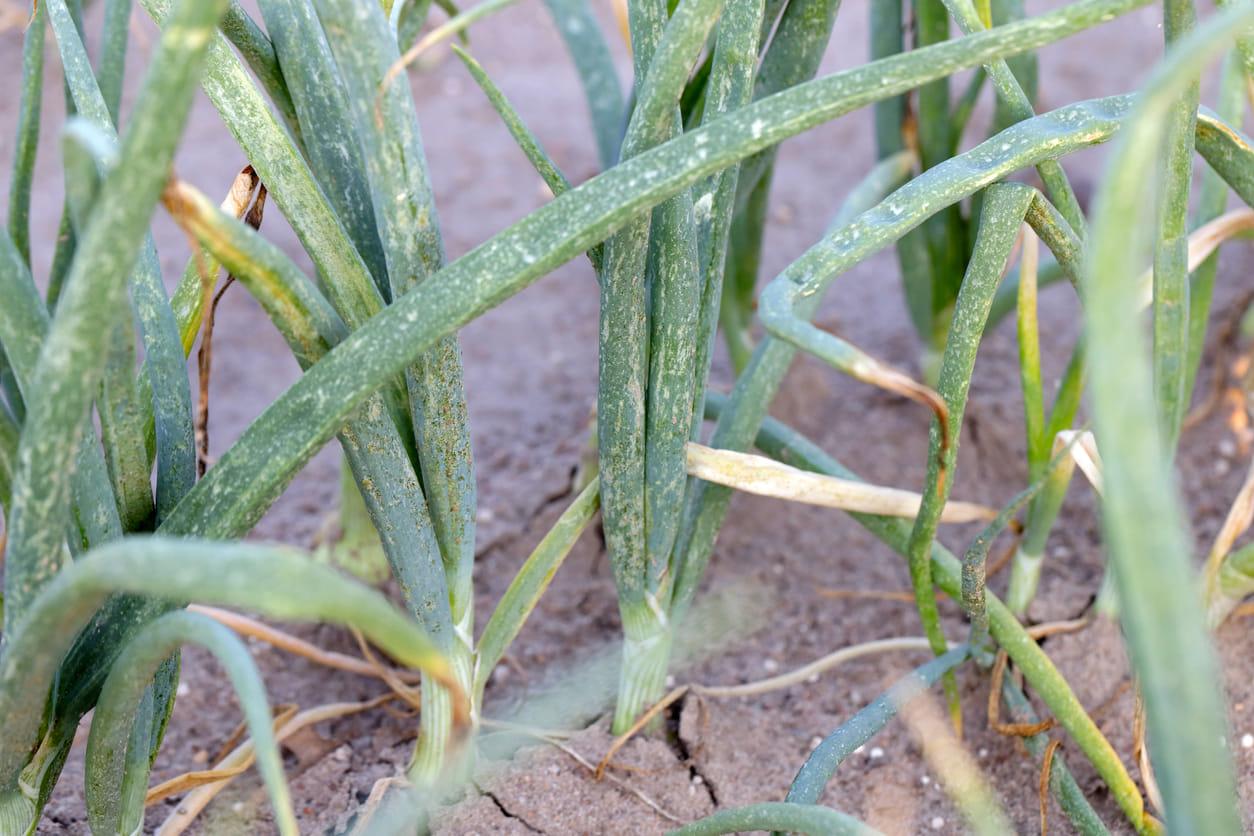
- Thrips damage on leaves can be identified by the silvery patches appearing on leaves. These silvery patches are the result of thrips sucking the sap from the tender leaves.
- As the severity of damage increases, leaves start curling inwards, plants look drooped, and the leaf tips start drying backwards causing ‘tip burn’ symptom.
- Dryness, silvery appearance, and poor bulb formation is one of the major onion thrips symptoms. Impact on bulb formation leads to reduced yield and marketability of the bulbs.
The Stages of Thrips Attack
- Generally, both larval and adult stages of thrips are damaging to the crop. Larval stage of thrips, also known as nymphs colonize on the leaves and suck the sap from young, tender leaves. Adult thrips also almost have same effect on the plants due to sap sucking.
Favorable Conditions
- Weather: Hot and dry conditions are highly favourable for thrips mutiplication. Low relative humidity (<60%) and high temperature (25-35°C) promote thrips population.
- Crop Stage: Huge attack of the pest is during the early bulb formation and the young, tender leaves are more susceptible to thrips attack.
Preventive Measures
- Field sanitation: get rid of all kinds of weeds and plant debris that might favour thrips population.
- Avoid continuous onion cultivation in the same field. Crop rotation should be followed once in every three years.
- Soil moisture should be properly maintained in order to manage humidity which impact the pest population.
- Grow onion hybrids/varieties that are resistant or tolerant to thrips damage
- Mulching by reflective silvery or white mulches to repel thrips
- Grow border crops which are non-host plants to avoid thrips drifting to your field by air.
Onion Thrips Management Practices
Mechanical Control of Onion Thrips
- Use of traps like sticky traps, light traps, water pan traps to monitor thrips population.
- Spraying with water using medium pressure nozzles to wash away thrips colonies.
- Destruction of infested plant parts
- Maintain proper drainage, weed managent etc, for field hygiene
Biological Control of Thrips in Onion
- Release of predatory mites like Amblyseius swirskii, Amblyseius cucumer is which feeds on the larvae and adults
- Apply bio-pesticides which contains Beauveria bassiana
- Use of neem based formulations as foliar sprays like neem oil, azadirachtin 1500 pm @2ml/ltr.
Product Name | Technical Content | Dosage |
Botanical extracts | 1.5-2.5 ml/liter of water | |
High concentration of Natural capsicum,enriched with other herbal extracts | 3.3 ml/liter of water | |
Phytoconstitutents formulation | 1.5-2.5ml/ltr of water |
Chemical Control of Onion Thrips
Product Name | Technical Content | Dosage |
Fipronil 80% WG | 0.12 g/liter | |
Dimethoate 30% EC | 2 ml/ltr of water | |
Tolfenpyrad 15% EC | 2 ml/ltr of water | |
Profenophos 50% EC | 2.5 ml/liter of water | |
Deltamethrin 100 EC | 0.3 ml/liter of water |
Conclusion
In conclusion, thrips in onion is a serious threat. They can cause significant damage if not managed properly. These tiny insects can disrupt onion growth, leading to poor bulb formation, lower yield, and reduced marketability. However, early detection and effective onion thrips control strategies can minimize their impact.
Farmers can protect their onion crops by recognizing the signs of thrips damage and the conditions that help them spread. They should implement both preventive and active management practices, such as crop rotation, biological control, and, if necessary, targeted chemical treatments. Regular monitoring, good field hygiene, and using resistant varieties can also help reduce the risk of severe infestations.
Ultimately, combining different approaches, including mechanical control, biocontrol, and careful use of chemicals, is the best way to manage thrips. This ensures healthy, high-quality onion yields. With these strategies, onion farmers can protect their crops from thrips and continue to produce a good harvest for local and global markets.