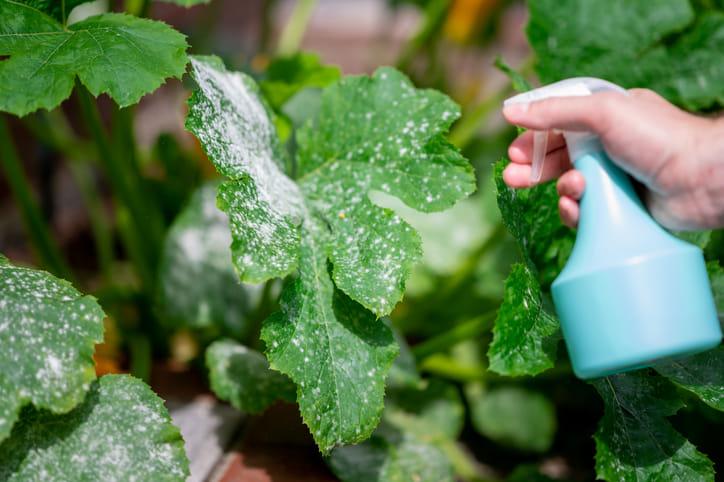
Powdery Mildew of Cucurbits Can Destroy Yield Fast - Here’s How to Stop It
IntroductionCucurbits—cucumber, melon, watermelon, squash, and pumpkin—are important vegetable crops grown extensively during the kharif season across India. Powdery mildew, caused by various Erysiphe and Podosphaera species, is one of the most widespread and destructive fungal diseases of cucurbits. The disease can spread rapidly through a field, covering leaf surfaces with white, powdery coating within days, and if unchecked, can reduce marketable fruit production by 30-80%. Unlike many fungal diseases, powdery mildew does not require free water for infection—it thrives in dry conditions with moderate humidity, making it common during the hot, dry periods of the monsoon season. The disease weakens plants, reduces photosynthetic capacity, and causes defoliation, leading to sun-scalded fruits and poor quality. The most frustrating aspect is how quickly powdery mildew spreads: entire fields can be heavily infected within 7-10 days during favorable conditions. This guide will help you recognize powdery mildew at its earliest stage and implement integrated control strategies to stop the disease before it destroys your crop.What is Powdery Mildew of Cucurbits?Powdery mildew of cucurbits is a fungal disease caused by species such as Erysiphe cichoracearum and Podosphaera xanthii. These obligate parasites affect the leaf surfaces and can also appear on stems and fruits. Unlike most fungal diseases that require water droplets for spore germination, powdery mildew spores germinate in dry conditions and spread through wind. This dry-weather preference makes powdery mildew uniquely dangerous because it thrives when you think conditions are unfavorable for disease. The fungus rapidly produces millions of spores that spread to healthy plants, establishing infection within 24-48 hours of spore landing on leaf surfaces.SymptomsLearn to identify powdery mildew symptoms:White powder: Characteristic white, powdery coating appears on leaf surface, resembling talc or flourPattern progression: Initially appears as scattered spots, then spreads to cover large portions of leafLeaf undersides: Particularly heavy on lower leaf surfaces; upper surface may appear lighterStem and petiole: White powdery coating extends to stems, petioles, and tendril surfacesFruit infection: Developing fruits show whitish, russetted patches; infected areas remain hard and unmarketableLeaf yellowing: Severely affected leaves turn yellow and eventually brown as photosynthesis is blockedDefoliation: Heavy infection causes leaves to dry and fall off, exposing fruits to sunburnPlant vigor: Overall plant appears weakened, stunted; vines wilt during heat of the dayWhole plant appearance: Canopy shows progressive coverage; heavily infected plants appear whitish from distanceYield loss: 30-80% reduction in marketable fruit; early infection prevents fruit development Farmer Tip: Inspect leaf undersides every 5-7 days during kharif. Powdery mildew often starts there before spreading to upper surface. When you first see white powder, act immediately—the disease spreads explosively fast. Favorable ConditionsPowdery mildew thrives under these unique conditions:Dry conditions with low rainfall: Unlike most fungal diseases, powdery mildew prefers dry weatherModerate humidity (40-60%): Optimal for spore germination and fungal growthTemperature range of 15-25°C: Suits fungal development; disease spreads year-round in suitable climatesShade or cloudy weather: Reduces UV stress on pathogen spores and extends their viabilityDense plant canopy: Reduces air movement and creates microclimate favorable for fungusExcess nitrogen fertilizer: Promotes soft leaf tissues highly susceptible to infectionStressed plants: Drought stress, nutrient deficiency, or damage weakens disease resistanceSusceptible varieties: Some cucumber and melon varieties are inherently more prone to infection Preventive MeasuresPrevention is absolutely critical because powdery mildew spreads so rapidly:Use resistant varieties: Choose powdery mildew-resistant cucumber or melon varieties where availablePlant spacing: Maintain proper spacing (60 × 45 cm for cucumber) to ensure good air circulationAvoid shade: Don't plant cucurbits in shaded areas or near tall crops that reduce lightBalanced fertilization: Apply recommended NPK; avoid excess nitrogen that promotes soft tissuesProper pruning: Remove lower leaves and inward-growing branches to improve air circulationField sanitation: Remove infected crop residue immediately after harvestAvoid overhead irrigation: Water during early morning; avoid wetting foliage at other timesScout regularly: Inspect undersides of leaves every 5-7 days for earliest symptomsClean tools: Disinfect pruning tools to avoid spreading infection between plants Management PracticesIntegrated management combining preventive, biological, and chemical approaches gives best results. Early intervention is critical because powdery mildew spreads exponentially.Mechanical and Cultural ControlStart with non-chemical methods:Remove infected leaves: Carefully prune leaves showing heavy mildew coating and destroy themCanopy pruning: Remove lower leaves and inward-growing shoots to improve ventilationSpray water: Light water spray can wash off spores; do this in early morning before applying pesticidesIncrease spacing: Thin fruit to reduce fruit burden and allow better air movement Biological ControlApply these biological products to suppress powdery mildew:Product NameTechnical ContentDosageSulphur Wettable PowderElemental sulphur 80% w/w3-4 g/L waterPotassium BicarbonatePotassium bicarbonate 85% w/w2-3 g/L waterTrichoderma Viride WPTrichoderma viride 1 × 10⁷ CFU/g5-6 g/L waterNeem Oil 3% ECCold-pressed neem oil 3% w/v5% solution (50 ml/L)Bacillus subtilis WPBacillus subtilis 1 × 10⁸ CFU/g10 ml/10 L water Sulphur is especially effective and has been used for centuries. Apply every 7-10 days from flowering onwards.Chemical ControlUse chemical fungicides when disease pressure is serious:Product NameTechnical ContentDosageHexaconazole 5% ECHexaconazole 5% w/v1-1.5 ml/L waterPenconazole 5% ECPenconazole 5% w/v0.5 ml/L waterWettable Sulphur 80% WPSulphur 80% w/w3-4 g/L waterDinocap 48% ECDinocap 48% w/v0.5 ml/L waterAzoxystrobin 25% SCAzoxystrobin 25% w/v1 ml/L water Safety Tip: Never spray sulfur-based products when temperature exceeds 32°C, as it can damage plants. Avoid mixing sulfur with copper-based fungicides. Always wear protective gear and follow label instructions. Best Time to Take ActionScout frequency: Check leaf undersides every 5-7 days from flowering stage onwardsPreventive sprays: Begin fungicide applications at first flower or even earlier if disease pressure is high in regionSpray interval: Apply fungicides every 7-10 days during kharif season when disease risk is highPost-infection: If powdery mildew appears, begin sprays immediately and increase frequency to every 5-7 daysHarvest safety: Stop sprays 14 days before harvest to ensure food safety Common Mistakes Farmers Should AvoidStarting treatment too late: Powdery mildew spreads exponentially. Act at first sign of disease.Waiting for rain: Powdery mildew doesn't need rain. It spreads in dry conditions. Don't wait.Assuming overhead irrigation helps: Dry foliage is essential. Water only at soil level.Over-applying nitrogen: Excess nitrogen promotes soft leaves highly susceptible to infection.Overcrowding plants: Poor spacing prevents air circulation. Maintain recommended plant density.Not rotating fungicides: Resistance develops quickly. Rotate chemical classes. ConclusionPowdery mildew of cucurbits is a uniquely dangerous disease because it thrives in dry conditions and spreads with explosive speed—entire fields can be devastated within days. The key to managing powdery mildew is prevention and early intervention, starting with disease-resistant varieties, proper spacing for air circulation, and avoiding excess nitrogen. Scout your field every 5-7 days starting at flowering, and at the very first sign of white powder on leaf undersides, implement fungicide applications immediately. Don't wait for the disease to worsen—sulfur or other systemic fungicides applied early can completely prevent infection, while late applications can only slow the already-established disease. The dry-weather preference of powdery mildew means you cannot rely on rain to help manage the disease. Instead, use dry conditions to your advantage by maintaining dry foliage and applying fungicides when humidity is not high. With consistent application of these integrated management strategies, you can keep powdery mildew under control and achieve high-quality, disease-free cucumber and melon harvests that command premium prices in the market.Note: The information contained herein is for informational purposes only. Nothing herein shall be construed to be financial or legal advice. Viewers are advised to do their own research before making any decisions.