Maize Stem Borer Attack: Early Symptoms and Best Control Methods
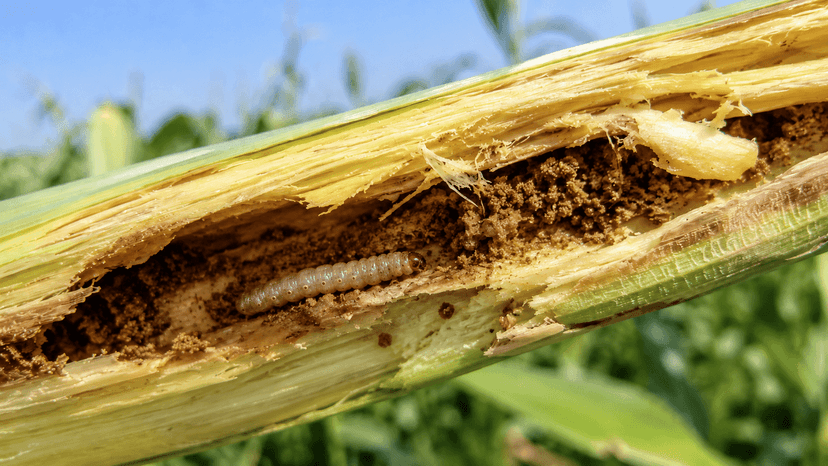
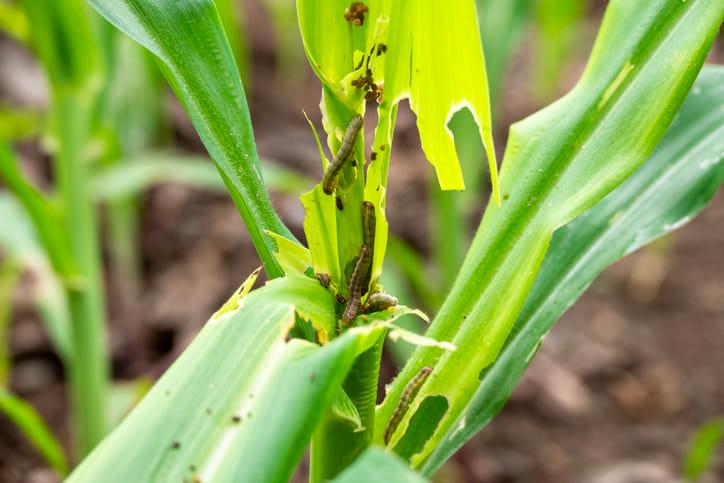
IntroductionMaize is one of India's most important cereal crops, grown extensively during both kharif and rabi seasons across states like Karnataka, Madhya Pradesh, Rajasthan, and Tamil Nadu. The maize stem borer, primarily Chilo partellus (spotted stem borer) and Ostrinia nubilalis (European corn borer), is one of the most destructive insect pests of maize, causing losses of 10-40% or even total crop failure in severe infestations. Unlike pests that feed on leaves or silks, stem borers tunnel inside the plant, making them difficult to control once they're inside. The larvae bore through the stem, weakening the plant structure and creating entry points for diseases. Infested plants show stunted growth, broken stems, and premature wilting. Early identification of stem borer presence is critical because once larvae are inside the stem, most insecticides cannot reach them. This comprehensive guide will teach you to recognize stem borer attack at its earliest stage and implement integrated pest management strategies to protect your maize crop throughout the growing season.What is Maize Stem Borer?Maize stem borers are lepidopteran insect pests whose larvae tunnel inside maize stems and cobs, feeding on internal tissues. The spotted stem borer (Chilo partellus) is the most prevalent and damaging borer in India, with multiple generations per year. The adult is a brown moth that lays eggs on maize leaves. After hatching, neonate larvae penetrate the leaf sheath and bore into the stem, where they feed for 20-30 days. This internal feeding causes severe plant damage: weakened stems that break under wind, lodging, and reduced grain formation. Unlike external feeders that are visible and easy to control, stem borers are hidden inside the plant, making them much harder to manage. Prevention and early intervention are critical because once larvae are established inside the stem, conventional insecticides cannot reach them.SymptomsLearn to identify maize stem borer damage at every growth stage:Early damage: Oval or elongated holes appear on leaves; leaves develop ragged appearance as larvae feedWhorl damage: Young growing tips show holes and tattered appearance; new leaves emerge with tearsDeadheart formation: Central shoot dies back, causing characteristic brown, dead appearance of plant's growing pointStem entry holes: Small, dark holes visible on stem surface mark larval entry pointsFrass (insect feces): Brownish powder ejected from stem holes and accumulated around damaged areasInternal tunneling: When you split the stem, you can see tunnels inside with larvae presentStem breakage: Heavily damaged stems break at weak points, especially during wind or rainLodging: Plants bend or fall over due to weakened stem structure from larval tunnelingWhole plant appearance: Stunted growth, yellowing, poor vigor compared to healthy neighboring plantsYield loss: 10-40% grain yield loss from reduced cob development and grain filling Farmer Tip: Check your maize field at V3-V5 growth stage (3-5 leaves). Look for leaf holes and frass. If you find egg masses on leaves, you can remove them by hand. Split a few stems—if you see tunnels and larvae inside, begin pest control measures immediately. Favorable ConditionsThese conditions promote stem borer outbreaks:Warm temperature (20-30°C) during kharif season favors egg laying, larval development, and adult emergenceHigh humidity and adequate rainfall create favorable breeding conditionsContinuous maize cultivation without break provides year-round host plantsMonoculture maize fields with no natural enemies allow pest population buildupPresence of susceptible varieties with softer stems; some modern hybrids are more susceptibleCrop residue from previous season harboring overwintering larvaeProximity to sugarcane or sorghum crops that also host stem borersLack of crop rotation allowing pest population carryover Preventive MeasuresPrevention reduces pest populations before they cause damage:Use resistant varieties: Choose maize hybrids with known tolerance to stem borer attackPractice crop rotation: Avoid continuous maize cultivation; rotate with non-host crops like legumesField sanitation: Remove all crop residue immediately after harvest and destroy it to eliminate overwintering larvaeDeep ploughing: After harvest, plough field 15-20 cm deep to bury residue and expose larvae to natural enemiesPlant trap crops: Grow attractive host plants like sorghum or sugarcane nearby to divert borers from main cropTimely planting: Sow maize at recommended time for your region to avoid peak stem borer activityBalanced nutrition: Well-nourished plants are more vigorous and can tolerate borer damage betterScout field regularly: Monitor from V3 stage onwards; weekly scouting helps detect early infestationConserve natural enemies: Preserve parasitoids like Tricholepidosis pilicornis and predators Management PracticesIPM approach combines mechanical removal, biological control, and chemical pesticides only when necessary.Mechanical ControlNon-chemical methods are highly effective if applied early:Manual egg collection: Inspect leaf surfaces 7-10 days after transplanting. Remove egg masses and crush them.Remove affected plants: Pull out plants with deadheart symptoms. This removes larvae before they damage more tissue.Cultural practices: Maintain proper spacing and avoid overcrowding to promote plant vigor and faster growthAdjust water management: Drip irrigation instead of flooding reduces humidity and stress on plants Biological ControlBiological products can suppress borer populations:Product NameTechnical ContentDosageBacillus thuringiensis (Bt)Bt subsp. indianensis 1 × 10⁹ IU/mg1 g/L water, spray at V3-V6Beauveria bassiana WPBeauveria bassiana 1 × 10⁹ spores/g5-10 g/L waterSpinosad 45% SCSpinosad 45% w/v0.5 ml/L waterNeem Oil 3% ECCold-pressed neem oil 3% w/v5% solution (50 ml/L water)Tricholepidosis pilicornis (parasitoid)Egg parasitoid wasp 500-1000 parasitoidsUse as per lab guidance Chemical ControlChemical insecticides for stem borer control, best applied at early larval stage (V3-V5):Product NameTechnical ContentDosageChlorpyrifos 20% ECChlorpyrifos 20% w/v2 ml/L waterCartap Hydrochloride 50% SPCartap hydrochloride 50% w/w1 g/L waterImidacloprid 17.8% SLImidacloprid 17.8% w/v0.5 ml/L waterLambda-Cyhalothrin 5% ECLambda-cyhalothrin 5% w/v0.5 ml/L waterMonocrotophos 36% SLMonocrotophos 36% w/v1.5 ml/L water Safety Tip: Apply insecticides at V3-V6 stage (3-6 leaves) when damage is first observed, before larvae enter stems. Once inside, systemic insecticides may not reach larvae. Always follow label directions and safety precautions. Best Time to Take ActionField scouting: Begin at V3 growth stage (when plants have 3 visible leaves)Check frequency: Scout every 7-10 days from V3 to V8 stageEgg collection: When egg masses appear, remove them manually immediatelyEarly spray: If leaf damage exceeds 5-10%, apply biological or chemical insecticide at V4-V5Critical window: Best control achieved before larvae penetrate stem, within first 10-15 days of larval activity Common Mistakes Farmers Should AvoidSpraying too late: Once larvae are inside stems (deadheart stage), insecticides cannot reach themNot scouting early: Without regular monitoring from V3, you miss the critical control windowNot removing residue: Crop residue harbors overwintering larvae. Proper sanitation prevents next season's infestationContinuous monoculture: Growing maize every season allows pest population buildup. Rotate crops.Ignoring resistant varieties: Some hybrids are more susceptible. Choose resistance where available ConclusionMaize stem borer is one of the most damaging pests of maize because larvae tunnel inside the plant where they're protected from most pesticides. However, the insect has a critical vulnerability: the egg and early larval stages are exposed and accessible to control measures. By combining early scouting, manual egg collection, mechanical removal of infested plants, and timely application of biological or chemical pesticides at the V3-V5 stage, you can effectively prevent stem borer damage and protect your maize crop. Prevention through crop rotation, field sanitation, and use of resistant varieties is far cheaper than trying to control an established infestation. With commitment to early detection and integrated pest management, you can minimize stem borer losses and achieve healthy, productive maize plants that deliver high grain yields and good income.Note: The information contained herein is for informational purposes only. Nothing herein shall be construed to be financial or legal advice. Viewers are advised to do their own research before making any decisions.