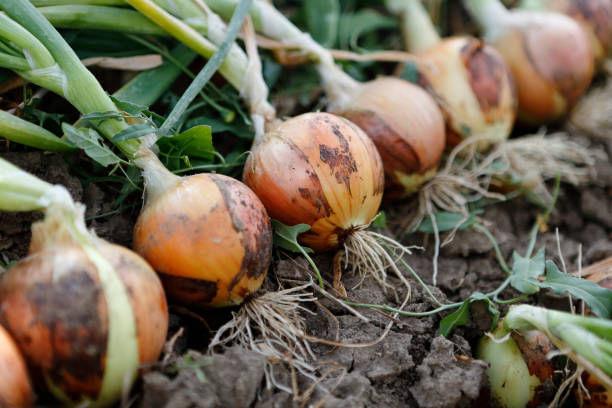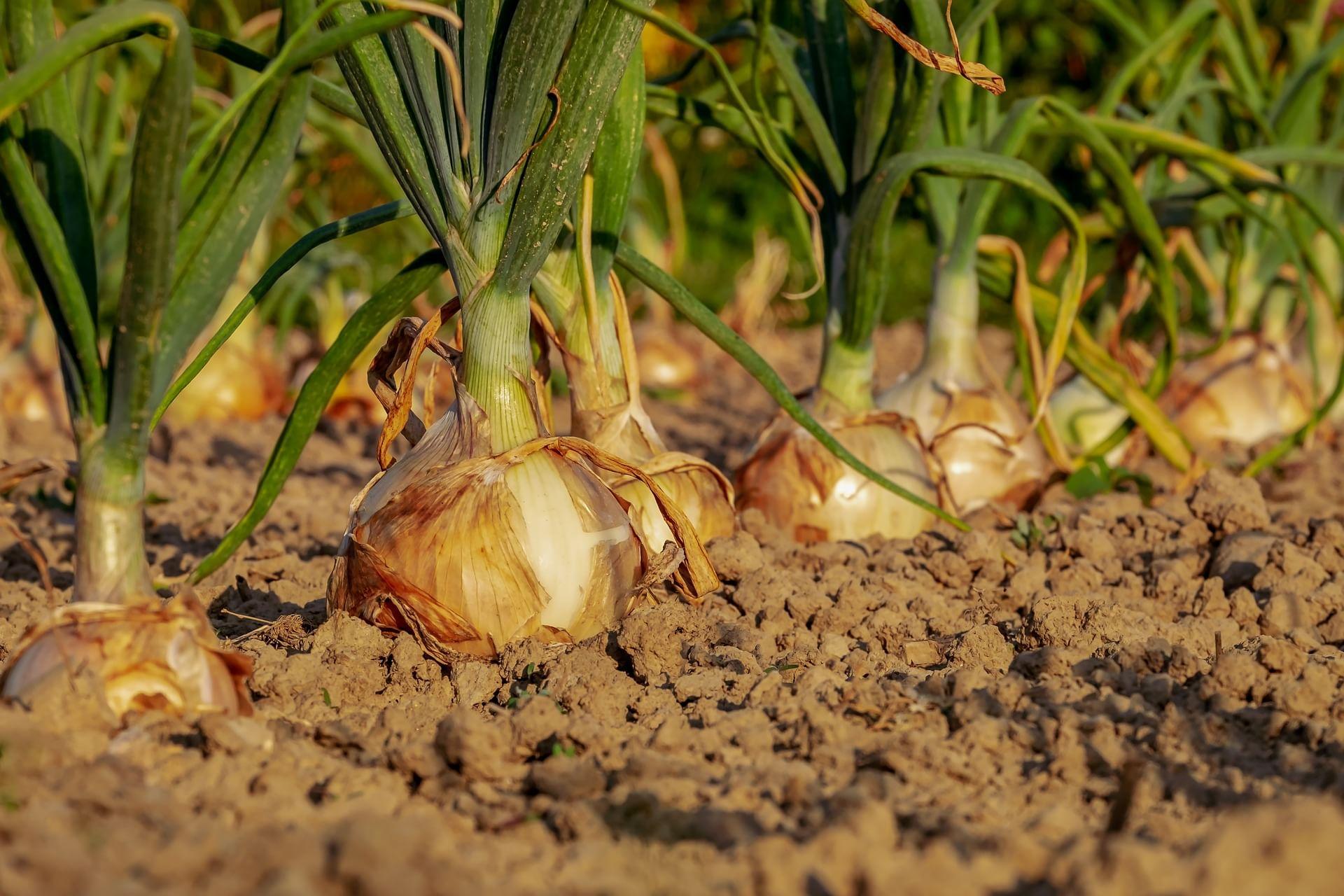
Onion (Allium cepa) is a staple in Indian cuisine, known for its pungent flavor and aroma from sulfur compounds. India is one of the world’s largest onion producers, with key cultivation regions in Maharashtra, Karnataka, and Gujarat. Onions are crucial for domestic consumption and a significant source of income for farmers.
Soil Requirements for Onion Farming
Onions thrive in sandy loam to clay soil with good drainage, rich in organic matter. The optimal pH for onion crops is 6-7.5. Avoid waterlogged, acidic, or alkaline soils to promote healthy onion roots.
Planting Times and Best Growing Seasons for Onions
- Maharashtra, Gujarat: May-June (Kharif), August-September (Rabi)
- Tamil Nadu, Karnataka: March-April (Early Kharif), May-June (Kharif), September-October (Rabi)
- Rajasthan, UP: May-June (Kharif), October-November (Rabi)
Note: Adjust planting times based on local climate.
Different Methods of Growing Onions
1. Nursery Transplanting
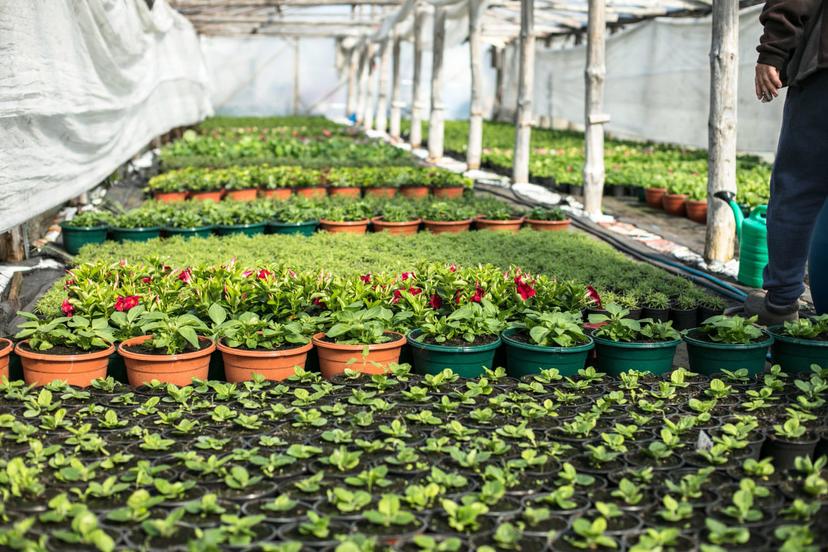
Onion seeds are sown in nursery beds and then transplanted to the main field.
- Nursery Preparation: For 1 acre of main field, prepare 0.05 acre (200 m²) of nursery. Apply 200 kg of FYM and 2 liters of Trichoderma harzianum to prevent soil-borne diseases.
- Sowing: Use 3-4 kg of seeds for 1 acre. Sow seeds 5-7.5 cm apart at 1 cm depth. Cover with fine soil and water lightly.
- Seed Treatment: Treat seeds with Bavistin or Trichoderma viride to prevent damping off.
2. Small Bulblets for Green Onions
This method is used for producing green onions or bunching onions.
- Bulblets: Use small kharif onion bulblets raised in the previous season. Sow 15 gm of seeds per m².
- Timing: Sow in Jan–Feb and harvest tops and selected bulblets by April-May. Store the bulblets for later transplanting in the kharif season.
3. Broadcasting/Direct Sowing
This method is suitable for large onions or small onions in flat beds.
- Seed Rate: Use 8-10 kg of seeds per acre.
- Sowing: Sow onion seeds in lines 30 cm apart for large onions or broadcast seeds in flat beds for small onions.
- Post-Sowing Care: Ensure seeds reach 2.5-3 cm depth. Thin plants and weed every 10 days for better bulb development.
Land preparation for Onion
Plough the field to a fine tilth and add 10 t of FYM at the time of last ploughing. Flat beds or broad bed furrows can be formed for transplanting the seedlings. Prepare flat beds of 1.5 - 2 m width and 4 - 6 m length. For broad bed furrows, prepare beds of 120 cm width and 15 cm height with 45 cm furrow spacing between two beds. Irrigate the beds before transplanting seedlings.
Transplanting of seedling from nursery
Seedlings raised from seed sown nursery will be ready for transplanting within 6 – 7 weeks of sowing for kharif and 8 – 9 weeks for rabi. Transplant the seedlings with a spacing of 15 cm between the rows and 10 cm between the plants.
Fertilizing Onions for Healthy Growth
The general dose of fertilizer recommendation for onion is 60:24:24 kg/acre.
Nutrient | Fertilizer | Dosage | Time of Application |
|---|---|---|---|
Organic | FYM | 10 t/acre | At the time of last ploughing |
Nitrogen (N) | Urea | 65 kg | Basal (Initial) |
|
| 65 kg | Top dressing (20-25 days after transplanting) |
Phosphorus (P) | Single Super Phosphate (SSP) | 150 kg | Basal (Initial) |
Potassium (K) | Muriate of Potash (MOP) | 40 kg | Basal (Initial) |
Micronutrients | Anshul Vegetable Special | 2.5 gm/lit water | 20-25 days after germination (3 sprays at 20-day intervals) |
Water Management for Growing Onions
Onions are grown as an irrigated crop. Irrigate at transplanting and again on the 3rd day. Thereafter, water every 10-15 days based on soil moisture. Stop irrigation 10 days before harvesting. Avoid over or under-watering, as it can impact growth. Drip or sprinkler systems are recommended.
Weed Management in Onion Farming
It is important to keep the field free from weeds during the initial growth stages of onion planting. Apply Oxyfluorfens 23.5% E.C at 200 ml/acre followed by one hand weeding 45 days after transplanting for effective weed management.
Onion Intercropping and Crop Rotation
Onions can be intercropped with sugarcane during the first 5 months after planting. They can also be rotated with legumes, corn, brassica, and solanaceous crops.
- Legumes: Rotating onions with legumes helps replenish nitrogen in the soil.
- Corn: Corn doesn’t host onion pests, reducing the risk of pest buildup in the soil.
- Brassica & Solanaceous Crops: Rotating with these crops helps maintain soil health and reduces pest and disease buildup.
This rotation practice helps prevent soil depletion, boosts crop health, and promotes better onion yields.
Common Onion Pests and Control Measures
1. Onion Thrips
Symptoms: The leaves of infested plants become curled and twisted, with silvery patches appearing. Over time, the leaves distort, wilt, and the plant dries up.
Control Measures:
- Spray Neem 0.3% (2.5 - 3 ml/lit of water).
- Use Delegate Insecticide (0.9 - 1 ml/lit of water).
- Apply Curacron Insecticide (2.5 ml/lit of water).
2. Head Borer
Symptoms: Head borers feed on the flower stalk and cause small round holes near the top of the onion bulb. Larvae leave small pellets of excrement (frass) near these holes.
Control Measures:
- Apply Ekalux Insecticide (2 ml/lit of water).
- Use Cigna Insecticide (1.5 - 2 ml/lit of water).
3. Onion Fly
Symptoms: Onion flies lay eggs on older leaves and the soil. Their larvae tunnel into the onion bulbs, damaging the flesh. They also feed on the roots, causing the plant to stunt and yellow, eventually leading to wilting.
Control Measures:
- Set up 4 Barrix vegetable fly traps per acre to control adult flies.
- Spray Alika Insecticide (0.5 gm/lit of water).
- Use Keefun Insecticide (2 ml/lit of water).
4. Cutworms
Symptoms: Young cutworm larvae feed on the tender foliage, causing the leaves to wilt and turn yellow or brown. As they mature, they cut the onion plants off at the stem, leaving ragged edges and causing the plants to die.
Control Measures:
- Spray Vedagna Nobor (2.5 – 3 ml/lit of water).
- Apply Plethora Insecticide (2 ml/lit of water).
5. Red Spider Mite
Symptoms: Red spider mites cause stippling or white dots on the leaves. You’ll notice webbing on the leaves, and affected leaves may turn yellow or bronze in severe cases.
Control Measures:
- Use Meothrin Insecticide (0.5 ml/lit of water).
- Apply Movento Energy Insecticide (0.5 – 1 ml/lit of water).
Onion Diseases and Prevention Tips
1. Damping Off
Symptoms: Seedlings wilt and collapse at or below the soil line. The stems turn brown or black, and the roots rot. Infected seedlings look dried out.
Control Measures:
- Spray Amruth Alcare Liquid (2 - 3 ml/lit of water).
- Treat seeds with Trichoderma viride (10 gm per 1 kg of seeds).
- Drench the soil with Ridomil Gold (1 - 1.5 gm/lit of water).
2. Downy Mildew
Symptoms: Greyish mold appears on the underside of leaves, causing them to curl. Leaves turn yellow and then brown.
Control Measures:
- Apply Downy Raze Bio Fungicide (2.5 ml/lit of water)
- Spray Amistar Top Fungicide (1 ml/lit of water).
3. White Rot
Symptoms: Yellowing and dieback of leaf tips, white, cottony fungal growth on the bulb’s base, and black sclerotia on the bulb.
Control Measures:
- Practice Onion crop rotation to avoid re-infection.
- Use clean seeds for sowing.
- Treat seeds with Roko Fungicide (2 - 3 gm per 1 kg of seed).
4. Purple Blotch
Symptoms: Small purple spots appear on the leaves, which enlarge and form blotches with a white center and purple border.
Control Measures:
- Use Custodia Fungicide (1.5 ml/lit of water).
- Apply Cabrio Top Fungicide (1.2 - 1.4 gm/lit of water).
5. Basal Rot
Symptoms: Soft, mushy rotting at the base of the onion plant, yellowing leaves, and white mold growth on onion scales.
Control Measures:
- Treat seeds with Vitavax power (3 gm per 1 kg of seeds).
- Drench the soil with Dhanustin Fungicide (0.5 - 0.8 gm/lit of water).
6. Anthracnose (Twister Disease)
Symptoms: Leaves curl and twist with pale-yellow, water-soaked patches.
Control Measures:
- Spray Roko Fungicide (0.5 gm/lit of water).
- Apply Dhanuka M45 Fungicide (3 - 4 gm/lit of water).
(Note: Check the product’s label before application to know the right time of application.)
Harvesting Onions
Harvesting time depends on the type of onion and the planting season. For dry onions, harvest after 5 months, while for green onions, harvest after 3 months.
- Rabi onions: Harvest when 50% of the neck/top falls over.
- Kharif onions: Look for yellowing leaves and red pigmentation on the bulbs as signs for harvest.
To harvest, manually uproot the bulbs. In hot weather with hard soil, use a hand hoe to pull out the bulbs. After harvesting, spray the onions with Carbendazim (2 gm/lit of water) to prevent fungal infections.
Curing
After harvesting, onions need curing to improve shelf life and skin color. Spread them in the field, avoiding direct sunlight, and cover them with foliage in small heaps. Let them dry for 3-5 days until the leaves and stems are completely dry. Once dry, cut the leaves, leaving about 2-2.5 cm of the stem above the bulb.
Storage
Store cured onions in a cool, dry place with good ventilation to prevent mold & rot. Proper storage can extend shelf life for months.
Expected Onion Yield
Expected yield is 8-10 tons per acre.