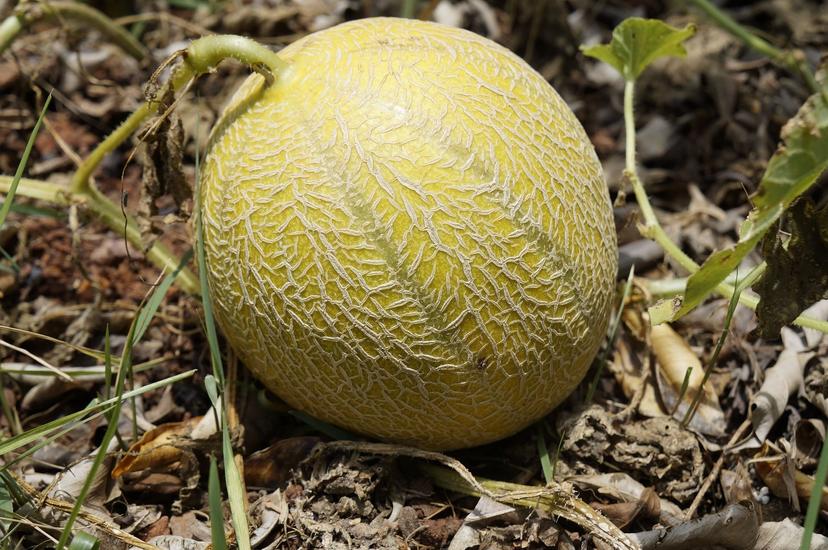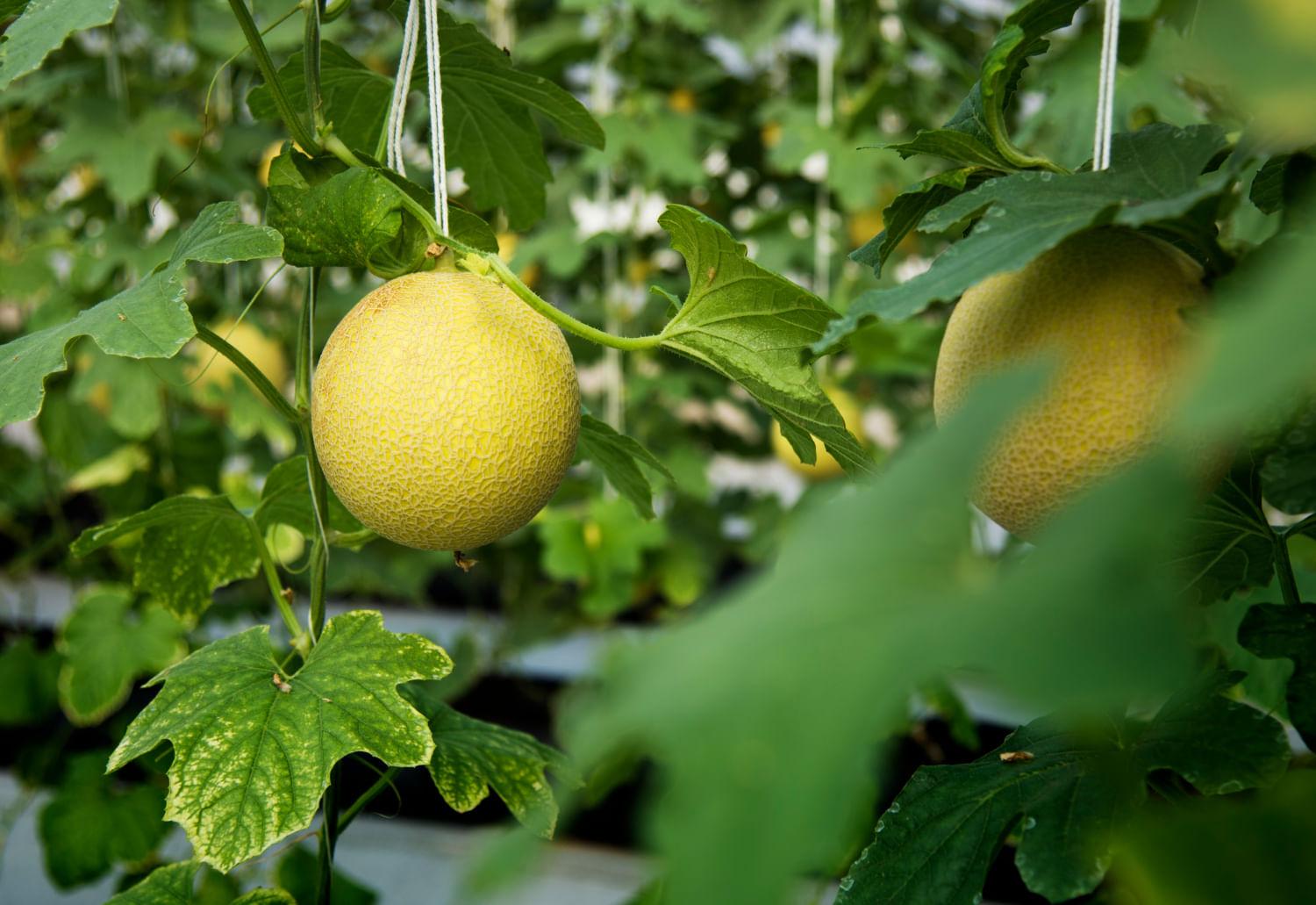
Muskmelon (Cucumis melo L) is a popular summer fruit crop, cultivated by farmers in India. It is a warm-season crop known for its unique flavour and taste, high water content, and cooling effect on the body. They are rich in rich in Vitamin A and C. In India, Muskmelon is mainly grown in Punjab, Tamil Nadu, Uttar Pradesh, Maharashtra, Andhra Pradesh, Telangana and Madhya Pradesh. India is the 3rd largest producer of muskmelon in the world after China and Turkey.
Season and Climate:
The muskmelon growing season in India is mainly from November to February. The ideal temperature for germination is 23 - 25°C, and optimum temperature required for its growth and fruit development is around 20 - 32°C.
High temperature and low humidity during ripening improve fruit sweetness and aroma. The crop tolerates drought but is sensitive to frost. High humidity can increase disease incidence like downy mildew and anthracnose.
Muskmelon Seed Varieties:
|
Varieties/Hybrids |
Features |
|
Madhuras type fruit Maturity: 55 to 60 days (5 to 7 days earlier than madhuras) Fruit weight - 1.0 to 1.25 kgs Good flesh color and aroma Mild netted fruits with medium cavity 12 to 15% TSS |
|
|
Flesh is orange in color; tolerant to BRIX13 Ready to harvest in 60 to 65 days Average weight 1.2 to 1.5kg Approximate seeds count - 100 |
|
|
This variety is prolific and early Round fruit with light yellow skin Average fruit weight: 1.5 - 2 kg Fruit harvesting: 40 days after flowering Flesh is white, tender & very sweet with aroma & unique taste |
|
|
Flesh is orange in color; tolerant to BRIX13 Ready in 60 to 65 days Average weight 1.2 to 1.5kg Approx seeds count - 50 |
|
|
Relative days to maturity (DS) - Green: 60 - 65 Fruit size (kg): 1.5 - 2.0 Fruit shape: Oval Netting on fruit: Good Flesh colour: Deep salmon Flesh texture: good Seed cavity: small TSS %: 13 - 14 |
|
|
Shape: Globe shaped with smooth, golden-yellow skin Weight: About 1-1.5 kg Its orange flesh is crispy with brix of 14-16% Early maturing, easy to cultivate and set fruit and can be harvested 70-75 days after sowing Season - Late Kharif, Early summer |
|
|
Orange sweet flesh Sugar content: 13 - 15 % Hard net outer skin Shape/Size: Round Weight: 1.5 - 2.5KG Maturity: 65 - 70 DAYS Yield: Approximately 20 - 25 tons/acre |
|
|
Fruit flesh: Dense netting with orange flesh, with aroma and sweet in taste TSS: 12 - 15% Fruit weight: 1 - 2 kg Days to first harvest: 70 -75 Days for Maturity After Transplanting Good tolerance against Fusarium & diseases caused by viruses, Good for Long Transport |
Soil requirement:
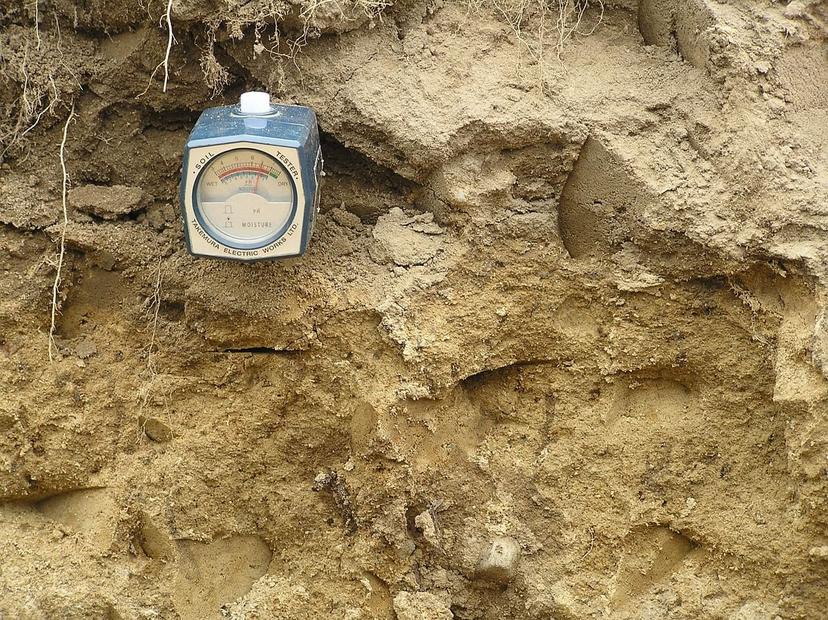
A well-drained sandy loam soil rich in organic matter is best for muskmelon cultivation. The soil pH should be between 6.5 and 7.5. Muskmelon is slightly tolerant to soil acidity but cannot tolerate soils with high salt concentration. Light soils support early maturity, while heavy soils promote good vine growth but delay the crop maturity.
Seed rate:
400 - 600 gm/acre
Methods of Sowing and Planting:
- Sowing is generally done from October to November in the southern and central parts of India. Seeds are soaked in water for 12-24 hours before sowing to improve germination.
- Muskmelon seeds are sown in pits and raised beds while in riverbed cultivation, they are sown in trenches.
- Before sowing, treat the seeds with Trichoderma viride at 1.25 gm/lit water or Pseudomonas fluorescence at 5 - 10 ml per 50 ml of water or Metalaxyl 4% + Manconzeb 64% WP at 1-1.5 gm/ liter of water.
- Seedlings raised in polythene bags matures 15 to 20 days earlier compared to direct seeded crops.
1.Pit Method
- Pits of about 60 cm wide, 60 cm long and 45 cm deep are to be dug out. Pits should be spaced at about 1.5 - 2 m apart.
- Fill them with FYM or well-decomposed compost.
- Sow 5 - 6 seeds in each pit with a depth of 1 - 1.5 cm.
- Cover the seeds with soil. After establishment, only 2 or 3 plants in each pit will be allowed to grow while rest others will be uprooted.
2.Raised bed
- Prepare beds of 3 - 4 meter wide.
- Sow 2 seeds/hill on both sides of the beds at 60 cm distance between hills.
3.Polybags
- The polythene bags of 15cm x 10cm size punched at base should be filled with equal proportion of soil:FYM or soil:FYM:silt (in case the soil is sandy).
- Seeds should not be sown deeper than 1.5 cm.
4.Protrays
- Seedlings can be raised in protrays under protected conditions.
- Protrays having 98 cells can be used.
- 1 - 2 seeds can be sown per cell.
Field Preparation:
The Main field should be ploughed to fine tilth, and long channels should be formed 2.5 m apart.
Spacing:
Place the seedlings about 2-3 feet apart in rows that are 5-6 feet apart.
Transplanting:
- Transplant the seedlings of 20 - 30 days old with at least 2 - 3 true leaves.
- Seedling is transplanted at the edges of furrows or lower half height of the ridge, so that sufficient irrigation or moisture is available to plants. Irrigation is done immediately after transplanting.
Manures and Fertilizers:
Farmyard manure and neem cake can be applied at the time of land preparation. Half dose of N, full dose of P & K can be applied as basal, while the remaining N can be applied at the time of earthing up at 4 weeks after sowing. Application of micronutrients promotes plant growth, increases fruit yield, flesh and thickness of rind.
The general dose of fertiliser recommendation for muskmelon is 32:24:12 kg/acre.
|
Nutrient Type |
Fertilizer |
Dosage (per acre) |
|
Organic |
FYM |
8 ton |
|
Neem cake |
40 kg |
|
|
Biofertilizer |
Seed treatment: 10 ml of Sun Bio Azos + cold jaggery solution (per kg seed) Soil application: 1 lit Sun Bio Azos with 50–100 kg FYM/compost Drip: 5–10 ml/lit water |
|
|
Soil application: 10 ml Sun Bio Phosi + 50–100 kg manure Fertigation: 1–2 lit |
||
|
Nitrogen (N) |
Urea |
70 kg |
|
Ammonium sulphate |
156 kg |
|
|
Phosphorus (P) |
Single Super Phosphate |
150 kg |
|
Double Super Phosphate |
75 kg |
|
|
Potassium (K) |
Muriate of Potash |
20 kg |
|
Sulphate of Potash |
24 kg |
|
|
Micronutrient |
Gassin Pierre Green Label Magnesium (Mg 2%, S 5%) |
2–3 ml/lit water |
|
Boron 20 |
1 gm/lit water |
Irrigation:
Proper irrigation is important for muskmelon. Light and frequent watering is needed during early growth stages. The first irrigation can be delayed if the soil has sufficient moisture. For a transplanted crop, irrigation is done immediately after planting, followed by irrigation at weekly intervals. Irrigation can be done when it is necessary at the time of fruit maturity i.e., when withering is seen on the veins in the morning, as excess water reduces sweetness. A total of 7-11 irrigations may be required for the whole crop season depending on the soil type and growing season.
‘Drip irrigation’ is recommended for better quality of fruit, minimizing disease and weed infestation and for water conservation.
Intercultural operations:
1.Weeding:
- To control weeds, flooding of the field should never be allowed. If possible, drip irrigation can be installed
- During early growth stages, the field should be kept free from weeds
- Weeding and earthing up should be done when N is applied as top dressing
- During the initial stages of vine growth, light hoeing is recommended.
2.Mulching:
Mulching can be done with straw mulches so that fruits do not come in contact with water.
3.Pruning:
Remove the secondary shoots up to the 7th node on the main stem to improve plant growth and fruit set. Pruning helps to improve yield and fruit quality.
Use of Plant Growth Regulators (PGR):
Stages of Application: Vegetative, flowering and fruit development stage (Also refer to the product label before application)
|
Product name |
Content |
Dosage |
Benefits |
|
Amino acids and nutrients |
Foliar: 2ml/litre water |
Promotes root growth and vigorous development of the buds, induces a greater flowering Helps in pollination and good early fruit set. Improves the quantity and quality of the harvest |
|
|
Gibberellic Acid 0.001% L |
1.25 ml/lit water |
Reduces flower and fruit drop Stimulates flower production, enlarges fruit, and boosts crop yields |
|
|
Alpha Naphthyl Acetic Acid 4.5% SL |
1 – 1.5 ml/4.5 lit water |
Induces flowering prevents shedding of flower buds and unripe fruits Helps in enlarging fruit size, increasing and improving the quality and yield of fruits |
Plant protection:
Management of Pests in Muskmelon:
|
Product name |
Technical content |
Dosage |
|
Fruitfly |
||
|
Pheromone lure |
6 – 8 per acre |
|
|
Chlorantraniliprole 18.5% SC |
0.3 ml/lit |
|
|
Aphids and Thrips |
||
|
Azardiractin 300 PPM |
6 ml/lit water |
|
|
40% (Profenofos) + 4% (Cypermethrin) EC |
2 ml/lit water |
|
|
Flupyradifurone 17.09% SL
|
2 ml/lit water |
|
|
Leaf miner |
||
|
Azadiractin 10000 PPM |
1.5 – 2.5 ml/lit water |
|
|
45 gm/l Chlorantraniliprole + 18 gm/l Abamectin |
1 ml/lit water |
|
|
Cyantraniliprole 10.26% OD |
1.7 to 2.0 ml/lit water |
|
Management of Diseases in Muskmelon:
|
Product name |
Technical content |
Dosage |
|---|---|---|
|
Downy mildew |
||
|
Based on Pseudomonas fluorescence |
2.5 ml/lit water |
|
|
Dimethomorph 12 % + Pyraclostrobin 6.7 % WG |
3 gm/lit water |
|
|
Ametoctradin 27% + Dimethomorph 20.27% SC |
1.6 – 2 ml/lit water |
|
|
Anthracnose |
||
|
Azadiractin 10000 PPM |
1.5 – 2.5 ml/lit water |
|
|
Carbendazim 50% WP |
0.6 gm/lit water |
|
|
Copper hydroxide 53.8% DF |
2 gm/lit water |
|
|
Wilt |
||
|
Azadiractin 10000 PPM |
1.5 – 2.5 ml/lit water |
|
|
Thiophanate Methyl 70% WP |
0.5 gm/lit water |
|
|
Powdery mildew |
||
|
Eugenol, Thymol, potassium salts, cationic surface agent, sodium salts & preservatives |
1.5 – 2 gm/lit water |
|
|
Dimethomorph 12 % + Pyraclostrobin 6.7 % WG |
3 gm/lit water |
|
|
Fluxapyroxad 250 G/L + Pyraclostrobin 250 G/L SC |
0.4 – 0.5 ml/lit |
|
Harvesting:
1.Half-slip stage
Fruits are not fully ready for table use, but are good for distant market use. Slight pressure is required to harvest fruit from the stem
2.Full –slip stage
Fruits are completely ready for table use and also best for local market. Pressure is not required to separate fruit from the stem
3.Musky flavour
On ripening, the fruits produce a pleasant musky flavour
4.Change in colour
At the fruit ripening stage, the rind becomes soft, fruit skin colour changes from green to yellow
5.Full netting
On the fruit surface, a net-like structure is developed.
Storage:
Muskmelons are perishable fruits and can be stored in room temperature only for 2 - 4 days. It can be stored in a cold store at 2-4°C and 85 - 90% relative humidity for 2 - 3 weeks.
Frequently Asked Questions
What is the best season for muskmelon cultivation in India?
The muskmelon growing season in India is mainly from November to February, depending on region and climate.
How much seed is required for muskmelon farming?
About 400–600 grams of muskmelon seeds per acre is required. Use healthy, treated seeds to ensure better germination and uniform plant growth.
How often should irrigation be done in muskmelon?
Light and frequent irrigation is needed in early stages. Later, watering should be reduced during fruit maturity to improve sweetness and quality.
What is the ideal spacing for muskmelon plants?
Maintain 2–3 feet between plants and 5–6 feet between rows for proper growth, airflow, and better yield.