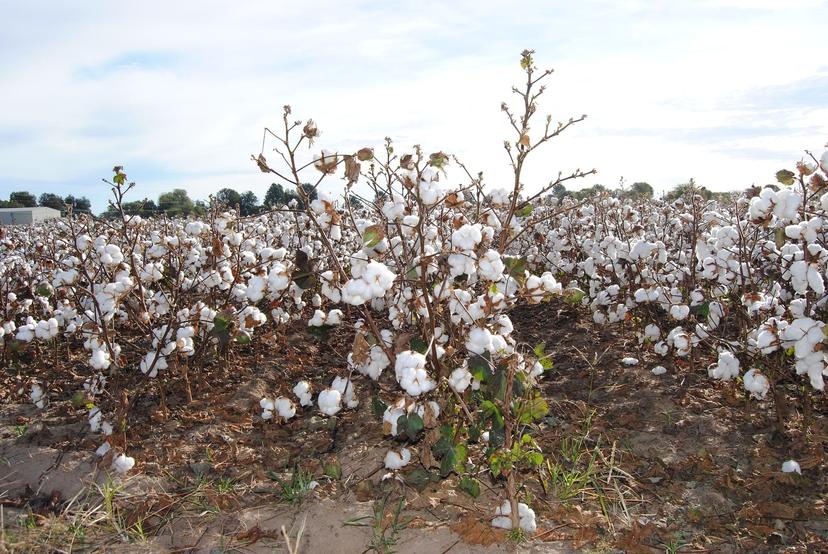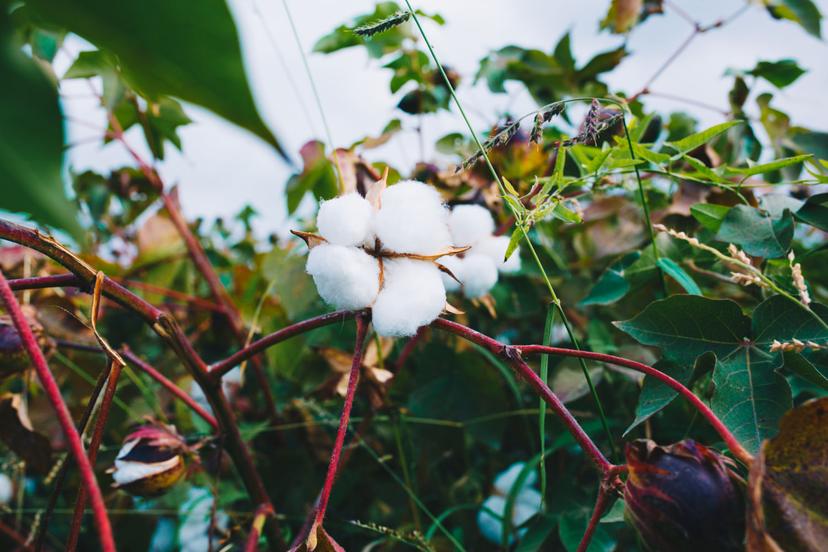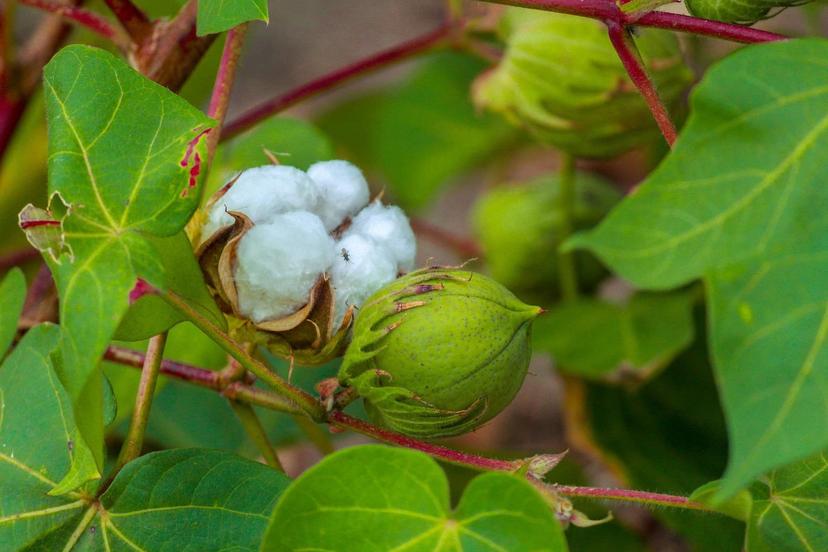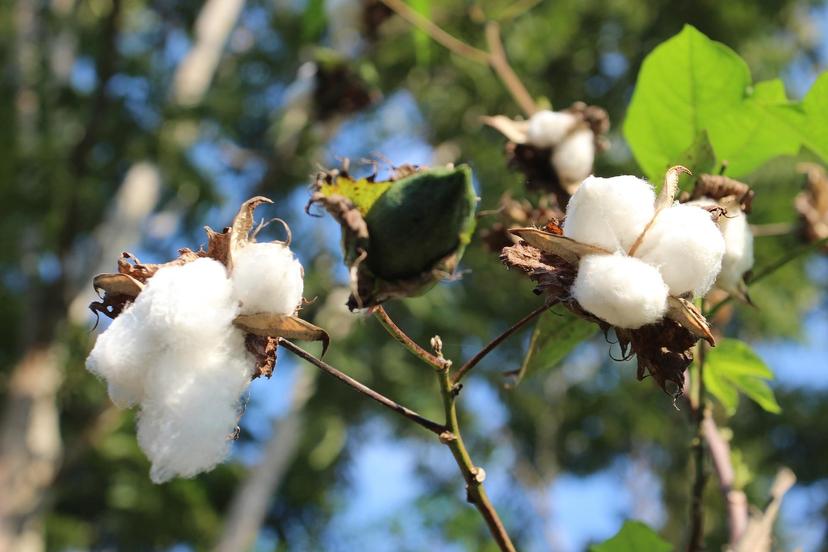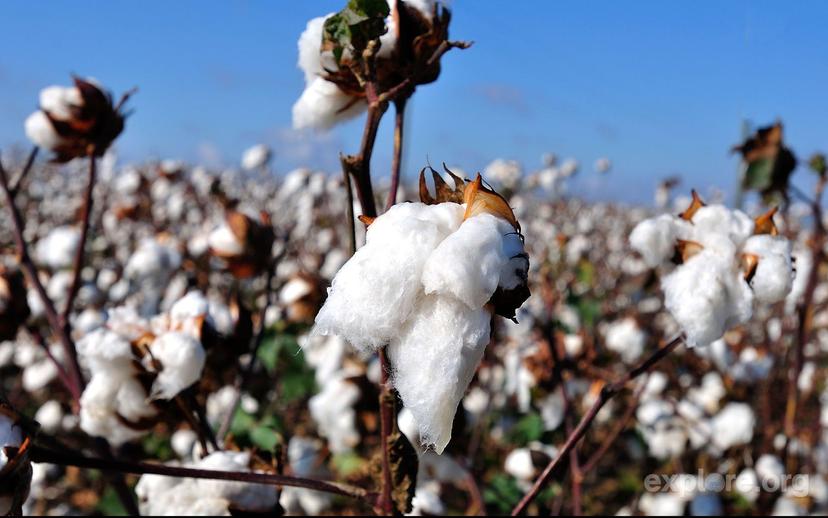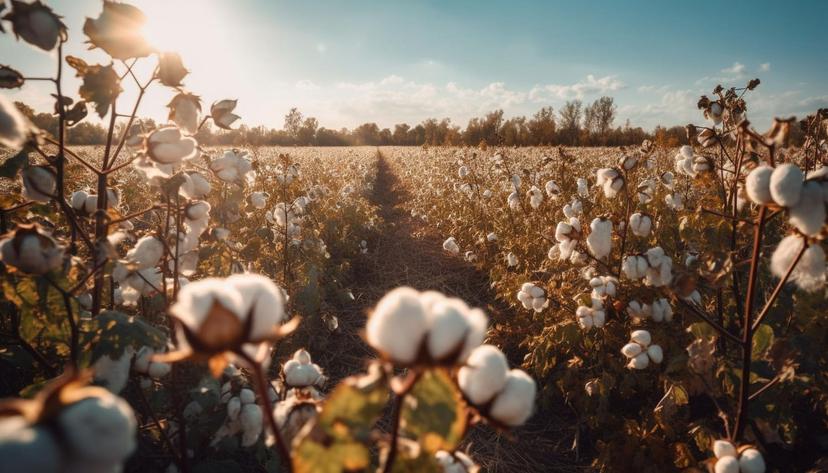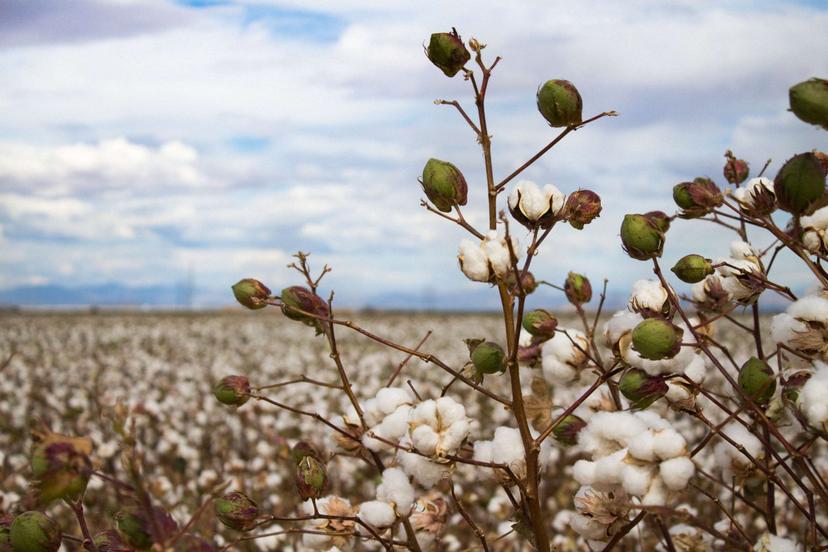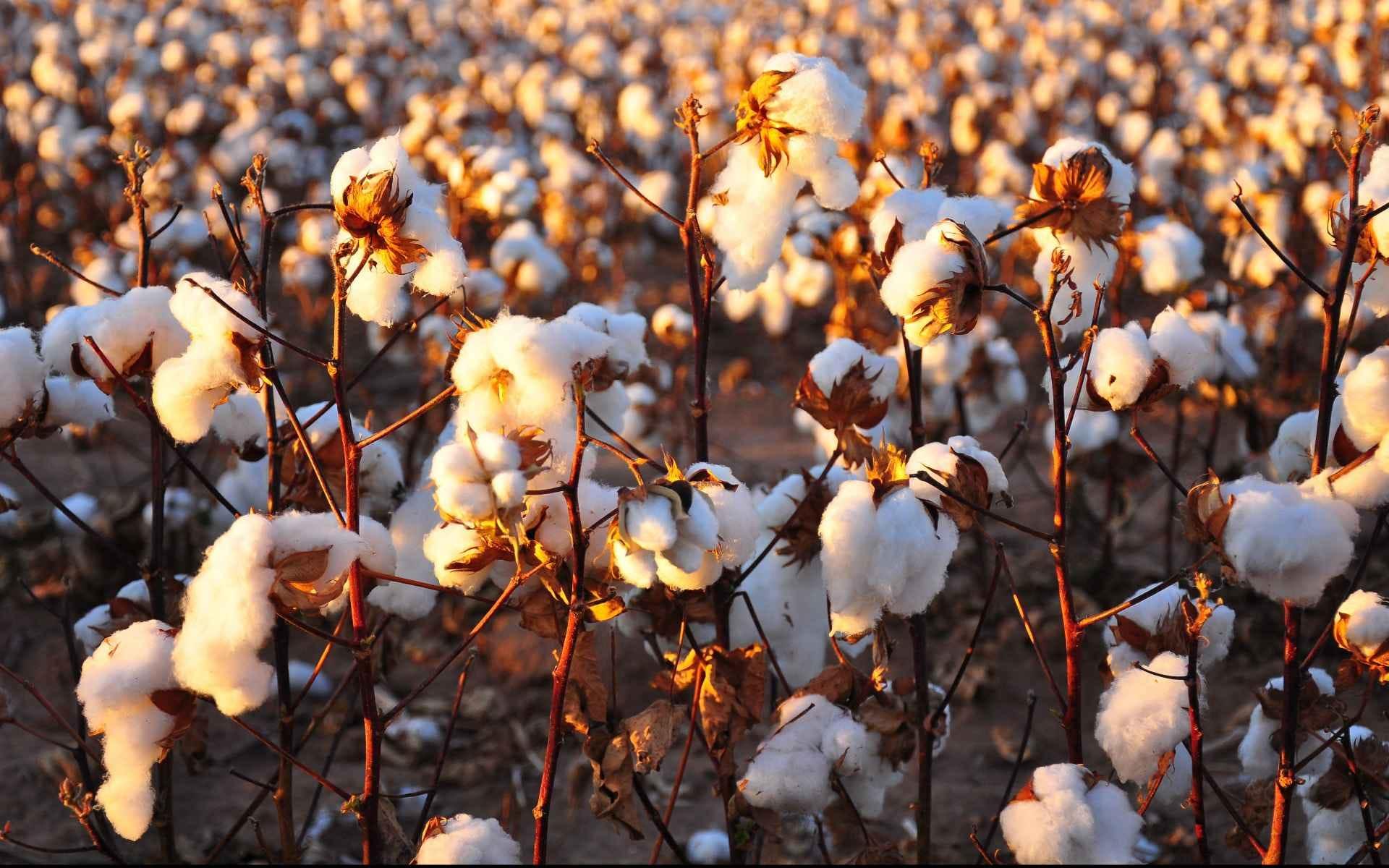
Cotton is one of India's most important cash crops, cultivated for its fibre and popularly called "white gold." It grows best in black cotton soil under warm, humid conditions. This guide covers everything you need to grow cotton successfully and improve your farm's productivity.
Cotton Crop at a Glance
Botanical Name: Gossypium spp.
Common Name: Kapaas (Hindi), Kapaha (Punjabi), Paruthi (Tamil), Pathi (Telugu).
Crop Season: Kharif and Rabi
Crop Type: Cash crop
Soil Requirements
Cotton can be grown in a wide range of soils, from medium to heavy. Black soil is ideal soil type for the cultivation of cotton crops. It tolerates a pH between 5.5 and 8.5.
Climatic Requirements
Cotton thrives in hot, humid conditions. A temperature of 21-27°C and annual rainfall of 500 - 700 mm is ideal for optimum growth.
Varieties and Hybrids of Cotton
Desi cotton: Aravind, Sri Nandi, Yaganti, Kanchan, Krishna, LK 861, Digvijay
American cotton: F-320, Laxmi, F-414
Hybrids: H-4, Savitha, Surya, DCH 32, Om Shankar
Package of Practices for Cotton
Land Preparation
The land used for cotton cultivation should be ploughed thoroughly with a mould board plough to a depth of 15 to 20 cm, then harrow two or three times. Remove all stubbles and provide pre-sowing irrigation for better crop establishment.
Sowing Time
Sowing Time Based on Seasons:
Kharif irrigated: April - May
Kharif rainfed: June - July
Hybrids: July - August
Rabi season: September - October
Summer season: February - March
Seed Rate and Spacing
Sow cotton seeds in lines as follows:
|
Species |
Seed Rate (kg/ha) |
Spacing (cm) |
|---|---|---|
|
Gossypium hirsutum |
12 to 15 |
60 cm × 30 cm |
|
Desi cotton |
8 to 12 |
60 cm × 15 cm |
|
Hybrids |
2 to 4 |
120 cm × 60 cm |
Seed Treatment
For productive cultivation of cotton crops, treat cotton seeds with sulphuric acid at 100 ml/kg. The fuzz burns and the delinted seed should be washed thoroughly with water and dried in the shade.
Irrigation Schedule
Avoid waterlogging conditions in cotton planting. The most critical irrigation stages of irrigation are squaring, flowering, and boll development. Schedule 2-3 irrigations in Kharif and 6-7 in Rabi for better crop growth and development.
Manures and Fertilizers
To avoid unnecessary consumption, apply fertilizers based on soil test results.
- Hybrid and American cotton: Apply N:P:K at 120:60:60 kg/ha.
- Desi cotton: Apply 40:20:20 kg N, P₂O₅, and K₂O per hectare.
Inter-cultivation Practices
In cotton planting, the first 50-60 days are the most critical for weed competition. Apply Stomp Xtra (Pendimethalin 38.7% CS) at 600 ml/acre for pre-emergence treatment. Post-emergence, use Hitweed (Pyrithiobac Sodium 10% EC) at 1 ml/L of water to control broad-leaved weeds, and Targa Super (Quizalofop ethyl 5% EC) at 400 ml/acre for narrow-leaved grasses.
Crop Protection
Pests of Cotton
|
Insect |
Symptoms |
Management |
|---|---|---|
|
Spotted bollworm (Earias vitella ) |
- Central shoots dry, and drops down - Later, it bores into flower buds, bolls and causes shredding |
- Apply Curacron (Profenofos 50% EC) at 1000 ml/acre - Apply Marker (Bifenthrin 10 % EC) at 325 ml/acre |
|
American bollworm (Helicoverpa armigera) |
- Flaring up of bracts - Bore holes filled with frass on squares |
- Apply Plethora (Novaluron 5.25% + Indoxacarb 4.5% SC) at 2 ml/L of water - Apply Ekalux (Quinalphos 25 % EC) at 400 ml/acre |
|
Pink bollworm (Pectinophora gossypiella) |
- Bore holes in cotton bolls - Premature flower drop - Rosetting of flowers - Stains the lint |
- Apply Proclaim (Emamectin Benzonate 5% SG) at 88 gm/acre to the cotton farm - Apply Ampligo (Chlorantraniliprole 10% ) + Lambdacyhalothrin 5% ZC at 100 ml/acre |
|
Tobacco caterpillar (Spodoptera litura) |
- Irregular bore holes - Skeletonization of leaves - Heavy defoliation |
- Apply Plethora (Novaluron 5.25% + Indoxacarb 4.5% SC) at 2 ml/L of water - Apply Gunther (Novaluron 5.25% + Emamectin benzoate 0.9% SC) at 2 ml/L of water |
|
White fly (Bemicia tabaci ) |
- Suck sap from the leaves - Low-quality lint - Boll shedding occurs in severe cases |
- Apply Confidor (Imidacloprid 17.8 % SL) at 1 ml/L of water - Apply Lancer Gold (Acephate 50 % + Imidacloprid 1.8 % SP) at 400 gm/acre to the cotton farm |
|
Cotton Aphid (Aphis gossypii ) |
- Both nymphs and adults suck the sap from leaves - Shiny appearance due to honeydew secretion
|
- Apply Confidor (Imidacloprid 17.8 % SL) at 1 ml/L of water - Apply Lancer Gold (Acephate 50 % + Imidacloprid 1.8 % SP) at 400 gm/acre |
|
Cotton mealy bug (Phenacoccus solenopsis) |
- Bushy shoots - At an early stage of cotton planting, crop senescence may be seen - Sooty mould formation |
- Apply Confidor (Imidacloprid 17.8 % SL) at 1 ml/L of water - Apply Lancer Gold (Acephate 50 % + Imidacloprid 1.8 % SP) at 400 gm/acre |
Diseases of Cotton Crop
|
Disease |
Symptoms |
Management |
|---|---|---|
|
Fusarium wilt (Fusarium oxysporum ) |
- Wilting of plant occurs - Vascular tissues rot and turn black in colour - Growth is stunted |
Drench the soil with Benmain (Carbendazim 50% DF) at 2 gm/Lit water |
|
Root Rot (Rhizoctonia bataticola) |
- Can be pulled out easily - Death of plant Shoot wilt |
- Drench the root zone with Blitox (Copper Oxychloride 50 % WP) at 2 gm/Lit water |
|
Anthracnose (Colletotrichum gossypii) |
- Black colour spots on the ball - Lint will be stained black, depriving its quality |
- Apply Cabrio Top (Metiram 55% + Pyraclostrobin 5% WG) at 600 gm/acre |
|
Alternaria leaf blight (Alternaria macrospora) |
- Small irregular spots with concentric circles - They coalesce and become blighted |
- Apply Cabrio Top (Metiram 55% + Pyraclostrobin 5% WG) at 600 gm/acre - Apply Amistar Top (Azoxystrobin 18.2% + Difenoconazole 11.4% SC) at 200 ml/acre |
Harvesting
Once mature cotton is harvested manually. Harvest the cotton bolls in the morning as soon as they are fully open, since cotton does not mature uniformly. The yield of cotton usually ranges between 2 to 3 t/ha on average in irrigated ecology and 3.5 to 4 t/ha for hybrids.
Frequently Asked Questions
Q1. What is the best soil for cotton farming in India?
Black cotton soil is the most suitable for cotton cultivation. Cotton can also grow in medium to heavy soils with a pH of 5.5-8.5.
Q2. When should cotton seeds be sown in India?
Sowing time depends on the season. Kharif irrigated cotton is sown in April-May; rainfed cotton in June-July and hybrids in July-August; and Rabi cotton in September-October.
Q3. How much fertiliser is needed for cotton crops?
For hybrid and American cotton, apply N:P:K at 120:60:60 kg/ha. For Desi cotton, apply 40:20:20 kg/ha of N, P₂O₅, and K₂O, based on soil test results.
Q4. What is the average yield of cotton per hectare in India?
Irrigated cotton yields 2 to 3 t/ha on average. Hybrid varieties can yield 3.5 to 4 t/ha.