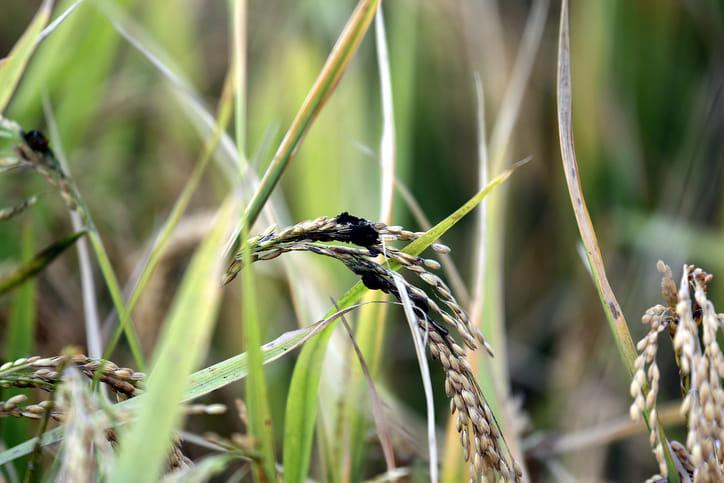
Introduction
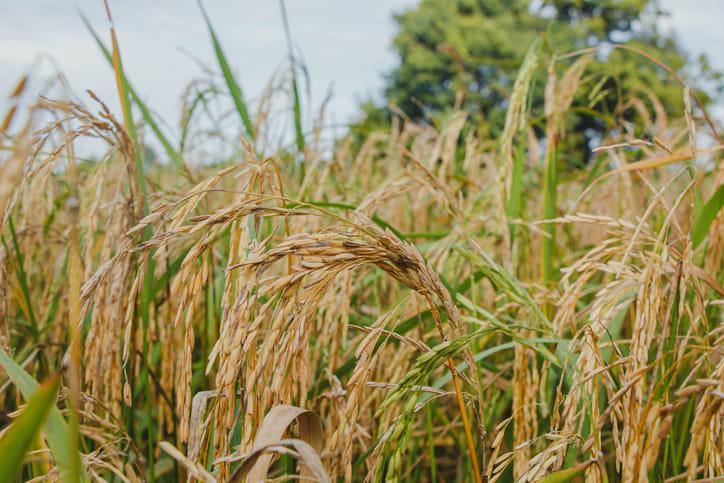
Paddy is grown across India in nearly every state and is the main food crop for our country. During the Kharif season, paddy fields face many insect pests, but paddy stem borer is one of the most damaging. The pest can attack from nursery up to grain filling stage, causing classic symptoms like "dead heart" and "white ear". Many farmers notice the damage only at the panicle stage, by which time most of the loss has already happened. Effective paddy stem borer control depends on regular scouting, light trap monitoring, pheromone traps, and timely use of biological and chemical inputs. Early action protects yield.
What is Stem Borer in Paddy?
Paddy stem borer is a moth whose caterpillars (larvae) bore inside the rice stem and feed on the inner tissue. Several species attack rice in India - the most common is the yellow stem borer (Scirpophaga incertulas). Others include the white stem borer, pink stem borer, and dark-headed striped borer. Eggs are laid in groups on the leaves, and after hatching the small caterpillars enter the stem. Inside the stem, they cut the central part, which leads to the "dead heart" symptom in vegetative crop and "white ear head" symptom in reproductive crop. Early scouting is important because once the caterpillar enters the stem, sprays do not reach it easily.
Symptoms
- Dead heart: At tillering stage, the central shoot of the plant turns yellow, dries up, and can be pulled out easily.
- White ear: At panicle emergence, the entire panicle becomes white, dry, and chaffy with no grain fill.
- Small bore-holes seen on the lower part of the stem when split open.
- Frass (insect waste) and tunnels visible inside the cut stem.
- Yellow or pale brown egg masses covered with buff-coloured hair on the upper leaf surface.
- Increased number of dry, dead tillers in patches across the field.
- Stunted growth and overall reduction in number of productive tillers.
- Yield impact: Each 1% dead heart causes about 1% yield loss; white ear damage causes much higher loss as panicles fail completely.
Farmer Tip: Pull the central shoot of suspected plants. If it comes out easily and the base shows a hollow stem with frass, stem borer attack is confirmed. Check 20 hills in different spots of the field every week.
Favorable Conditions
Stem borer outbreaks are linked closely to weather, fertilizer, and field hygiene. Common favorable conditions are:
- Continuous high humidity and warm temperature (25-30°C), common during Kharif rains.
- Heavy use of nitrogen fertilizer (especially urea) leading to soft, lush, dark green crop.
- Late or staggered transplanting, where different fields are at different stages.
- Carry-over of larvae and pupae from previous crop stubble left in the field.
- Continuous monoculture of paddy without rotation.
- Susceptible varieties without inbuilt resistance.
- Poor weed management on bunds, which act as alternate host plants.
Preventive Measures
- Use certified seed of recommended, less susceptible varieties from your local KVK or State Department.
- Plough the field deeply after harvest to expose pupae and larvae to sun and birds.
- Burn or destroy stubble and crop residue; do not leave it as a carry-over source.
- Plant the crop at the recommended time; avoid very late transplanting.
- Maintain proper spacing (20 x 15 cm) for good air movement.
- Apply nitrogen in 3 split doses; avoid heavy single dose of urea.
- Clip the tip of seedlings (top 3-4 cm) at transplanting to remove egg masses laid in nursery.
- Conserve natural enemies - Trichogramma egg parasitoids, spiders, and predatory bugs.
- Practice scouting weekly and remove visible egg masses by hand.
Management Practices
Stem borer is best managed through Integrated Pest Management (IPM). Combine cultural practices, mechanical methods, biological tools, and selective insecticides. Farmers should not depend only on chemical sprays, because the caterpillar lives inside the stem and is hard to kill once it has entered. Action timing is critical.
Mechanical Control
- Clip the tips of paddy seedlings before transplanting to remove egg masses.
- Hand-pick visible egg masses from the upper surface of leaves and destroy them.
- Use pheromone traps @ 8-10 per acre and replace lures every 30 days.
- Set light traps in the field to catch adult moths.
- Remove and destroy plants showing dead heart symptom.
- Plough the field deeply after harvest to expose pupae.
Product Name | Usage |
10-15 lure in traps/Acre | |
12-16 lure in traps/Acre |
Biological Control
Biological control is most effective during early stages and as a preventive tool. Egg parasitoids and entomopathogenic fungi reduce stem borer populations naturally. Useful BigHaat products include:
Product Name | Technical Content | Dosage |
Bacillus Thuringiensis 5*10⁸ CFU gram/min | 1.5lit/Acre | |
Verticillium Lecanii + Beauveria Bassiana + Metarhizium Anisopliae 2 x 10 * 8 CFU ml/min | 1lit/Acre | |
Bacillus thuringiensis var. kurstaki | 1lit/Acre |
Chemical Control
Use chemical insecticides only after confirming the pest and reaching the action threshold (10% dead heart at vegetative stage or 5% white ear at reproductive stage, or 1 egg mass / m² in nursery). Spray in the early morning or evening, never during strong wind or rain. Rotate chemical groups, follow the label dosage, and wear safety gear.
Product Name | Technical Content | Dosage |
Chlorantraniliprole 0.5% + Thiamethoxam 1% GR | 2.5kg/acre as granular application | |
Chlorantraniliprole 0.4% GR | 4 kg/acre as granular application | |
Chlorantraniliprole 18.5% SC | 60ml/Acre | |
Chlorantraniliprole 18.50% SC | 60ml/Acre | |
Chlorantraniliprole 18.50% SC | 60ml/Acre | |
Cartap Hydrochloride 50% SP | 400gm/Acre |
Safety Tip: Always read the product label, follow the recommended dosage, and consult a local agronomist before spraying.
Best Time to Take Action
Start scouting from the nursery stage. Clip seedling tips just before transplanting. From 25-30 days after transplanting, install pheromone traps and check egg masses on the leaves. Release Trichogramma cards at 7-day intervals (3 releases) starting from 30 days after transplanting. Granular insecticides are most effective when applied at 30 and 50 days after transplanting in standing water (3-5 cm depth). Foliar sprays should be done when fresh moth flight is seen at light traps and dead heart is rising. Avoid late sprays after panicle initiation, as the larvae are already inside the stem.
Common Mistakes Farmers Should Avoid
- Waiting until "white ear" appears - by then most of the damage is already done.
- Applying granules in dry field; granular insecticides need standing water to release the active ingredient.
- Using only sprays repeatedly and ignoring pheromone traps and Trichogramma.
- Heavy single-dose nitrogen application that creates lush, soft tillers.
- Leaving stubble in the field after harvest - this carries pupae to next season.
- Mixing many chemicals in one tank without expert advice.
- Spraying in strong wind or just before rain - chemical wash-off and human exposure.
Conclusion
Paddy stem borer is a hidden enemy that does most of its damage inside the stem. The best paddy stem borer control is built on early identification, regular scouting, and integrated management. Use clean seed, plough deep, and remove stubble to break the pest's life cycle. Monitor adult moths with pheromone and light traps, release Trichogramma cards, and conserve natural enemies. Apply granular insecticides at the right crop stages with proper standing water and use sprays only when the threshold is crossed. Always follow label dosage, rotate chemical groups, and use safety gear. Timely action and IPM together protect both yield and farm ecosystem.
Note: The information contained herein is for informational purposes only. Nothing herein shall be construed to be financial or legal advice. Viewers are advised to do their own research before making any decisions.