Scouting and Early Detection Guide for Pests and Diseases in Soybean
Most soybean losses do not start with a big attack. They start with a few egg masses under a leaf, one wilting plant with a girdled stem, a handful of yellow mosaic plants near the field edge, or tiny rust spots under the lower leaves. A farmer who sees these early signs can often control the problem with hand picking, a trap or one well-timed spray, while the same problem found two weeks later may need several sprays and still cost yield.
This guide explains how to scout a soybean field step by step, what to look for at each crop stage, the earliest signs of the main pests and diseases, how to read traps, and when a pest has crossed the level that calls for action.
Why Scouting Matters in Soybean
Scouting means walking the field regularly and checking plants in a fixed way, so that decisions are based on what is actually in the field rather than on guesswork or a neighbour's spray. It helps farmers catch pests while they are small and easy to control, spot diseases before they spread, avoid sprays that are not needed, and protect the natural enemies that keep pests in check. The official approach, called agro-ecosystem analysis (AESA), is set out in the official AESA based IPM package for soybean.
How to Scout a Soybean Field
Step
What to do
When to start
Check the field soon after germination for gaps and seedling problems, and start regular scouting from about 20 days after sowing
How often
Once a week, and twice a week during flowering and pod filling or after a spell of continuous rain
Time of day
Early morning, preferably before 9 am, when insects are less active and easier to count
Where to check
Five spots: four near the corners, at least 5 feet inside the border, and one in the centre
How many plants
Four plants at each spot, so 20 plants in all; for leaf diseases, check five leaves on each plant from the lower, middle and upper parts
What to record
Pests, natural enemies, diseases, weeds, dead or wilting plants, soil moisture and the weather
Carry a notebook, a pen, a hand lens, a white cloth or sheet for shaking plants, and a knife for splitting stems
To count caterpillars, spread the white cloth between two rows, shake one metre of row over it and count the larvae that fall
Count natural enemies such as ladybirds, spiders, lacewings and parasitised larvae along with the pests; a field with many natural enemies may not need a spray
Do not check only the field edge or the best-looking patch; low, waterlogged and shaded patches often show problems first
What to Check at Each Crop Stage
Crop stage
Pests to watch
Diseases to watch
What to look for
Germination to 3 weeks
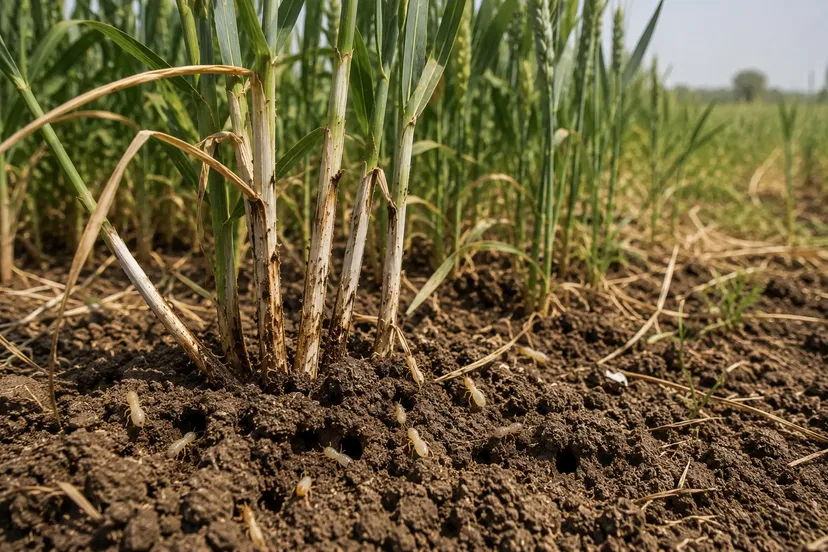
Blue beetle, stem fly, white grub, termites
Seed and seedling rot, collar rot, Rhizoctonia root rot
Gaps in rows, rotted or collapsed seedlings, holes in young leaves, wilting patches
3 to 6 weeks (vegetative)
Stem fly, whitefly, jassids, tobacco caterpillar egg masses, Bihar hairy caterpillar
Yellow mosaic, early leaf spots, bacterial pustule
Egg punctures on leaves, tunnels in split stems, whitefly under leaves, first mosaic plants
Flowering
Girdle beetle, semilooper, tobacco caterpillar, whitefly
Rust, aerial blight, anthracnose, frog eye leaf spot
Girdled and drooping leaves, feeding holes, rust spots under lower leaves, blighted patches after rain
Pod formation and filling
Pod borer, tobacco caterpillar, semilooper
Charcoal rot, pod blight, rust, purple seed stain
Holes in pod walls, wilting plants in dry spells, spots on stems and pod, early leaf drop
Maturity
Pod borer
Purple seed stain, seed decay
Discoloured seed in opened pod, especially after rain at harvest
Early Signs of Major Soybean Pests
Pest
Earliest sign
Where to look
Stem fly (Melanagromyza sojae)
Tiny egg punctures on young leaves; a reddish-brown tunnel when the stem is split open
Split a few stems at random from about 3 weeks after sowing
Girdle beetle (Obereopsis brevis)
Two ring-like cuts on a leaf stalk, branch or main stem; the part above the ring droops and dries
Upper leaves and branches from about 4 weeks after sowing
Tobacco caterpillar (Spodoptera litura)
Egg masses covered with brown hairs; groups of young larvae scraping leaves into thin, papery patches
Undersides of leaves; larvae may hide in the soil by day
Green semilooper (Chrysodeixis acuta and others)
Green larvae that move by looping; irregular holes in leaves and damaged flowers
Middle and upper canopy, mainly at flowering
Pod borer (Helicoverpa armigera)
Round holes in the pod wall, often with the larva half inside
Developing pod, after flowering
Bihar hairy caterpillar (Spilosoma obliqua)
Egg clusters and groups of small hairy larvae skeletonising leaves
Undersides of leaves, often at the field edge
Whitefly (Bemisia tabaci)
Tiny white insects that fly up when the plant is shaken; nymphs and sticky honeydew under leaves
Undersides of young leaves, from early growth
Blue beetle
Shiny blue beetles and small holes in seed leaves and young leaves
Seedlings in the first two to three weeks
White grub
Plants wilting in patches and pulling out easily; C-shaped white grubs in the soil
Root zone of wilting plants, especially in light soils
Pictures of the damage caused by each pest are in our post on soybean pests and their damage, and girdled stems are explained in detail in our guide to girdle beetle in soybean.
Early Signs of Major Soybean Diseases
Disease
Earliest sign
Weather that favours it
Yellow mosaic
Bright yellow specks and patches mixed with green on young leaves of scattered plants, often near the field edge
Warm, dry spells that let whitefly build up
Collar rot and seedling rot
Seedlings wilt and fall over; white cottony growth with small mustard-like bodies at the collar
Warm, wet soil and waterlogging in the first weeks
Charcoal rot
Plants wilt in the afternoon and recover at night at first; lower stem turns grey with tiny black dots under the skin
Hot, dry spells during flowering and pod filling
Rhizoctonia aerial blight
Grey, water-soaked patches on lower leaves that spread upward, with web-like growth joining leaves
Continuous rain, high humidity and a dense, closed canopy
Anthracnose and pod blight
Irregular brown to black spots on stems, leaf stalks and pod walls; veins on the leaf underside may turn brown
Warm, humid weather with frequent rain
Rust
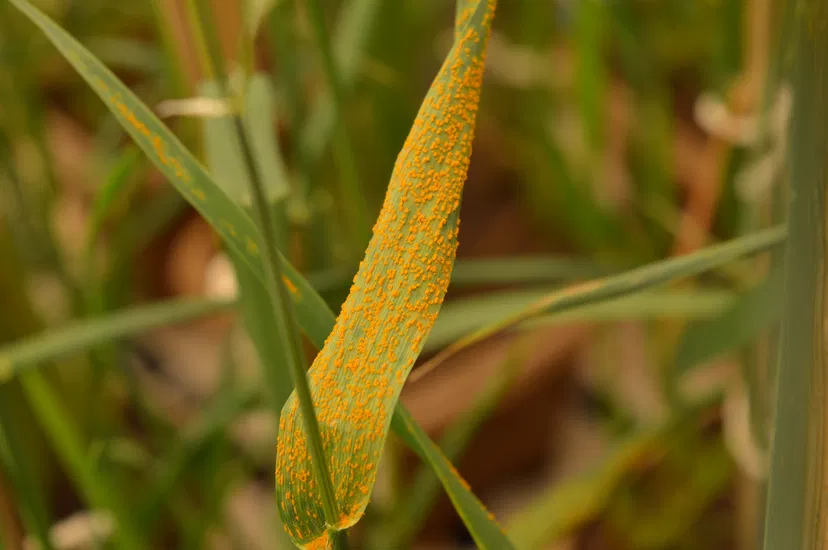
Tiny tan to brown spots on the underside of lower leaves that rise into powdery pustules
Mild temperatures, cloudy weather and long hours of leaf wetness
Bacterial pustule
Small pale green spots with a raised centre, mostly on upper leaves
Warm, wet weather with wind-driven rain
Frog eye leaf spot
Small round spots with grey centres and dark reddish-brown borders on upper leaves
Warm, humid weather from flowering
For yellow mosaic, count the number of infected plants in the top, middle and lower parts of the field, and pull them out early
For charcoal rot, pull a wilting plant and split the lower stem; a grey-black colour with fine black dots confirms it
For rust, turn over the lower leaves; spots appear there first, and our post on rust and leaf spots in soybean shows how they look
Using Traps for Early Warning
Traps catch adult moths and flying insects before their larvae start feeding, so they work as an early warning system.
Trap
Number per hectare
How to read it
Pheromone trap for tobacco caterpillar
5 for monitoring (2 per acre); 10 for mass trapping (4 per acre)
Rising catches mean egg laying has started; search for egg masses and young larvae over the next few days
Pheromone trap for pod borer
5 for monitoring (2 per acre)
When catches reach about 20 to 25 moths per trap, plan an NPV or other recommended spray
Light trap
As advised locally
Shows the arrival of moths and white grub beetles; empty and check it every morning
Yellow sticky trap
A few per acre
Shows when whitefly and jassids arrive; count the insects stuck on the card each week
Keep spare lures in a refrigerator, handle them with a clean cloth rather than bare hands, and replace them as given on the pack. More tips are in our posts on using sticky traps effectively and on pod borer control in soybean.
Action Levels: When to Spray
Pest
Action level
Crop stage
Blue beetle
4 beetles per metre of row
Seedling
Green semilooper
2 larvae per metre of row
Flowering
Tobacco caterpillar
4 larvae per metre of row
Flowering
Girdle beetle
10% of plants infested
Flowering
Pod borer
3 larvae per metre of row
Pod formation
Below these levels, hand picking, traps, natural enemies and neem can generally keep pests in check. For diseases there are no fixed numbers, so act when a disease starts spreading from plant to plant or patch to patch, and do not wait for the whole field to show symptoms. Avoid spraying if heavy rain is expected in the next one or two days.
Weather Watch: When to Scout More Often
After two or three days of continuous rain, check dense patches for aerial blight and anthracnose, and low patches for root rot
During a dry spell at flowering or pod filling, look for wilting plants and check for charcoal rot
In warm, dry weather in the first six weeks, check under young leaves for whitefly and look for the first yellow mosaic plants
In cloudy, humid weather from flowering, turn over lower leaves to check for rust
After a sudden rise in trap catches, search the field for egg masses and young larvae within a few days
A Simple Weekly Scouting Record
Date and stage
What you saw
Action taken
15 July, 35 days, humid with light rain
Tobacco caterpillar 2 per metre and 3 egg masses; spiders and ladybirds present; 2 yellow mosaic plants
Egg masses removed; mosaic plants pulled out; no spray needed
Keeping even a simple record like this each week shows whether a problem is growing or settling down, and helps plan for the next season.
Common Scouting Mistakes to Avoid
Checking only from the bund or the field edge
Spraying at the first sight of a single larva or spot without counting
Missing the underside of leaves, where eggs, whitefly and rust appear first
Ignoring natural enemies, which can make a spray unnecessary
Scouting only once in two or three weeks during flowering and pod filling
Products for Soybean Pest Monitoring
Tapas Tobacco Caterpillar Lure
Tapas Helico Lure
Tapas Funnel Trap
SK Agrotech Spodoptera Litura Pheromone Lure
SK Agrotech Helicoverpa Armigera Pheromone Lure
Once a problem is confirmed, the season plan for soybean diseases is set out in our guide on integrated disease management in soybean.
Conclusion
Ten to fifteen minutes in the field each week can save a soybean crop. Walk the five fixed spots, check twenty plants including the underside of the leaves, split a few stems, read the traps, note what you find and compare it with the action levels. This way farmers can catch egg masses before they hatch, pull out mosaic plants before whitefly spreads them, spot rust and blight before they take over, and spray only when it is really needed.
Frequently Asked Questions
1. How often should a soybean field be scouted?
Once a week, and twice a week during flowering and pod filling or after continuous rain.
2. How many plants should be checked while scouting?
About 20 plants, four at each of five spots spread across the field.
3. What is the action level for tobacco caterpillar in soybean?
About 4 larvae per metre of row at flowering.
4. How can girdle beetle damage be spotted early?
Look for two ring-like cuts on a leaf stalk or branch, with the part above drooping and drying.
5. How do I know if my soybean has charcoal rot?
Wilting plants in a dry spell with a grey lower stem and tiny black dots under the skin generally point to charcoal rot.
6. Where do rust symptoms appear first in soybean?
Tiny tan to brown spots appear first on the underside of the lower leaves.
7. How many pheromone traps are needed for monitoring?
About 5 traps per hectare (2 per acre) for tobacco caterpillar or pod borer.
8. When should I scout more often?
After continuous rain, during dry spells at pod filling, and when trap catches rise suddenly.
Disclaimer: Symptoms, trap numbers and action levels in this guide are general and can vary with variety, region and weather. Confirm unclear symptoms with your local KVK or agriculture officer before deciding on any spray, and use only products recommended for soybean.