Introduction
Paddy (rice) is the most important food crop of India and is grown on more than 45 million hectares. It feeds millions of people and supports the income of farmers in states like West Bengal, Uttar Pradesh, Punjab, Andhra Pradesh, Tamil Nadu, Odisha and Chhattisgarh. During the Kharif season, when rains are heavy and humidity stays high, paddy crops face many problems. Among them, paddy blast disease is one of the most damaging fungal diseases. If a farmer does not notice it early, the loss can go from 10% up to 70% in some fields. Knowing the symptoms, causes, and simple prevention steps can save the crop and protect yield.
What is Blast Disease in Paddy?
Paddy blast is a fungal disease caused by the fungus Magnaporthe oryzae (also called Pyricularia oryzae). The fungus attacks almost all above-ground parts of the rice plant - leaves, collar, node, neck, and panicle. Based on the part affected, farmers call it leaf blast, neck blast, or panicle blast.
The disease can attack the crop right from the nursery stage up to grain filling. Early monitoring is very important because blast spreads through air-borne spores and a small spot on one leaf can spread to the whole field within a week under cloudy and humid weather.
Symptoms
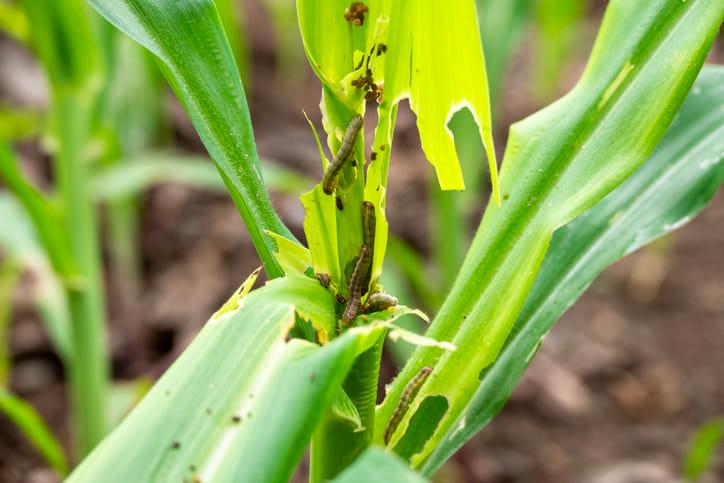
- On leaves: Small bluish-green water-soaked spots that quickly become spindle-shaped or eye-shaped lesions with grey centre and brown margin.
- On collar (collar blast): Brown rotting at the joint where the leaf blade meets the leaf sheath; leaf may break and hang down.
- On stem nodes: Black or brown rot at the node; stem may break easily at this point.
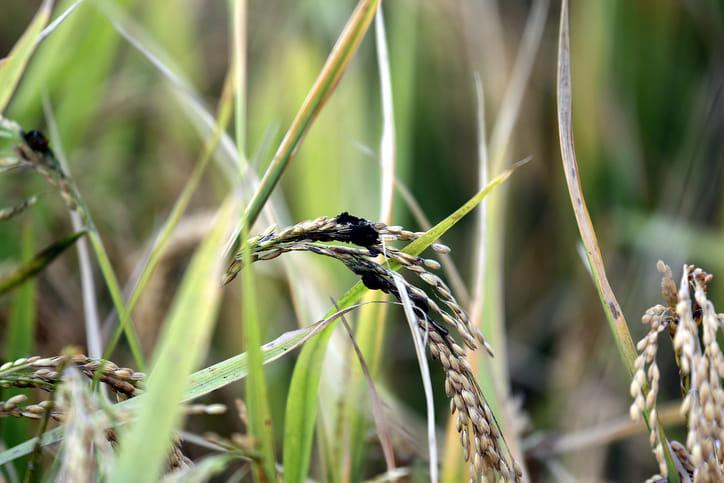
- On neck (neck blast / panicle blast): Brown to black lesion on the neck of the panicle; the panicle bends, dries up, and grains do not fill - called "neck rot" by farmers.
- On grains: Partial filling, chaffy grains, and discolouration; sometimes whole panicle becomes white (white ear).
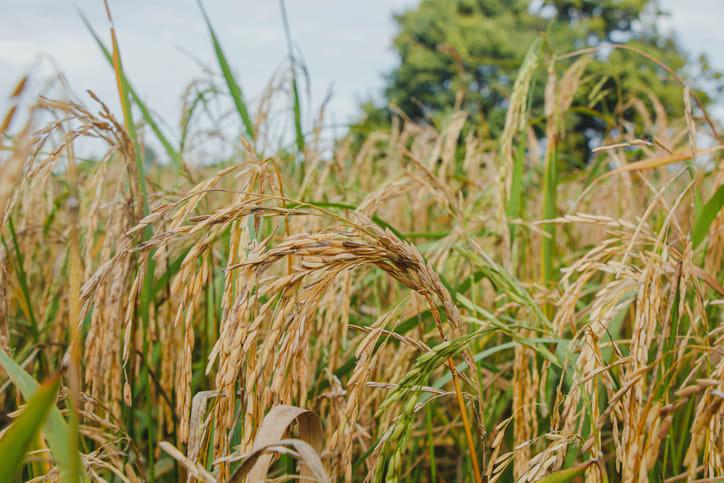
- Whole plant appearance: Patches in the field show drying of leaves and panicles; the field looks burnt in heavy attack.
- Yield impact: Neck blast alone can cause 30-60% yield loss as grains fail to fill.
Farmer Tip: Walk through the field early in the morning andlook for spindle-shaped grey-brown spots on the upper leaves. If 2-3 such spots are seen on most plants, blast has started - take action immediately.
Favorable Conditions
Blast disease becomes severe under specific weather and field conditions. The fungus loves cool nights, warm days, and high humidity. The main favorable conditions are:
- Long hours of leaf wetness (more than 8-10 hours), heavy dew, drizzling, or continuous cloudy weather.
- High relative humidity above 90% and night temperature between 20-26°C.
- Excessive use of nitrogen fertilizer (especially urea), which makes leaves soft and dark green.
- Dense planting with poor air movement inside the canopy.
- Late or staggered transplanting, and growing of susceptible varieties.
- Infected stubble, infected seed, and weeds that act as alternate hosts.
- Upland and aerobic rice fields, where fluctuating moisture supports the fungus.
Preventive Measures
- Use certified, disease-free seed and treat seed before sowing.
- Do seed treatment with bio-agent (Trichoderma viride / Pseudomonas fluorescens) or recommended fungicide.
- Choose blast-tolerant varieties recommended by your local KVK or State Agriculture Department.
- Maintain proper spacing - avoid very dense transplanting.
- Apply nitrogen in 3 split doses; do not give a single heavy dose of urea.
- Apply potash and silicon-rich sources where suggested - they make the plant strong against fungal attack.
- Burn or remove infected stubble after harvest; do not leave it in the field.
- Practice crop rotation with pulses or oilseeds where possible.
- Keep bunds and field channels free from grassy weeds, which can host blast fungus.
- Scout the crop weekly, especially after continuous rainy or cloudy days.
Management Practices
Blast is best managed through Integrated Disease Management (IDM). This means combining good agronomic practices, biological products, and need-based chemical sprays. Farmers should not depend only on chemical sprays - repeated use of the same chemical leads to resistance and poor results.
Mechanical Control
- Rogue out (remove and destroy) badly infected plants from the nursery before transplanting.
- Avoid water stagnation - keep proper drainage in the field.
- Reduce the canopy density by line transplanting and following recommended spacing.
- Burn the infected stubble and crop residue after harvest.
- Clean the bunds and remove grassy weeds regularly.
Biological Control
Biological products are safe, eco-friendly, and useful for both prevention and early-stage control of paddy blast. They build natural defence in the plant and reduce fungal load. The following BigHaat products are commonly used by paddy farmers:
Product Name | Technical Content | Dosage |
Bacillus spp. & Pseudomonas spp | Liquid base 1-2lit/Acre Carrier base 2 -5 kg/Acre | |
Pseudomonas fluorescens | 4 kg/Acre with 40 kg FYM/organic manure | |
Pseudomonas fluorescens 1.5%LF | 2.5lit/Acre |
Chemical Control
Use chemical fungicides only after correct identification and when disease pressure is rising. Spray in the early morning or late evening, never during strong wind or rain. Always rotate fungicide groups to avoid resistance, follow the label dosage, and wear gloves, mask and full-sleeve clothing during spraying.
Product Name | Technical Content | Dosage |
Trifloxystrobin 25% + Tebuconazole 50% WG | 80gm/Acre | |
Azoxystrobin 18.2% + Difenoconazole 11.4% SC | 200ml/Acre | |
Carbendazim 12% + Mancozeb 63% WP | 300gm/Acre | |
Tricyclazole 18 % + Mancozeb 62 % WP | 200-250gm/Acre | |
Tebuconazole 25.9% EC | 300ml/Acre |
Safety Tip: Always read the product label, follow the recommended dosage, and consult a local agronomist before spraying.
Best Time to Take Action
The best time to scout paddy is from the maximum tillering stage onwards, especially when the weather is cloudy, drizzling, or there is heavy dew. Apply preventive bio-fungicides at tillering and again at booting. Biological control works best before the disease reaches more than 5% leaf area infection. Chemical sprays may be needed when fresh blast lesions are visible on flag leaves or just before panicle emergence (to prevent neck blast). A second spray 10-12 days later may be needed if rains continue.
Common Mistakes Farmers Should Avoid
- Waiting too long to spray - by the time neck blast is visible, yield is already lost.
- Using untreated, farm-saved seed without checking for infection.
- Applying urea in a single heavy dose, especially after panicle initiation.
- Spraying the same chemical (like only Tricyclazole) season after season - leads to resistance.
- Spraying just before rain - chemicals get washed off and money is wasted.
- Ignoring field drainage; standing water with poor airflow encourages blast.
- Mixing too many chemicals in one tank without expert advice.
Conclusion
Paddy blast disease is one of the biggest yield robbers in Indian rice fields, but with early identification and timely action, farmers can fully protect their crop. Walk through the field every week, look for spindle-shaped grey-brown spots, and watch the weather closely. Use clean, treated seed, balanced nitrogen, and good drainage as the first line of defence. Combine biological products like Trichoderma and Pseudomonas with need-based fungicide sprays for best results. Always rotate chemical groups, follow label dosage, and use safety gear. Integrated Disease Management not only saves the present crop but also keeps your soil and field healthy for the next season.
Note: The information contained herein is for informational purposes only. Nothing herein shall be construed to be financial or legal advice. Viewers are advised to do their own research before making any decisions.