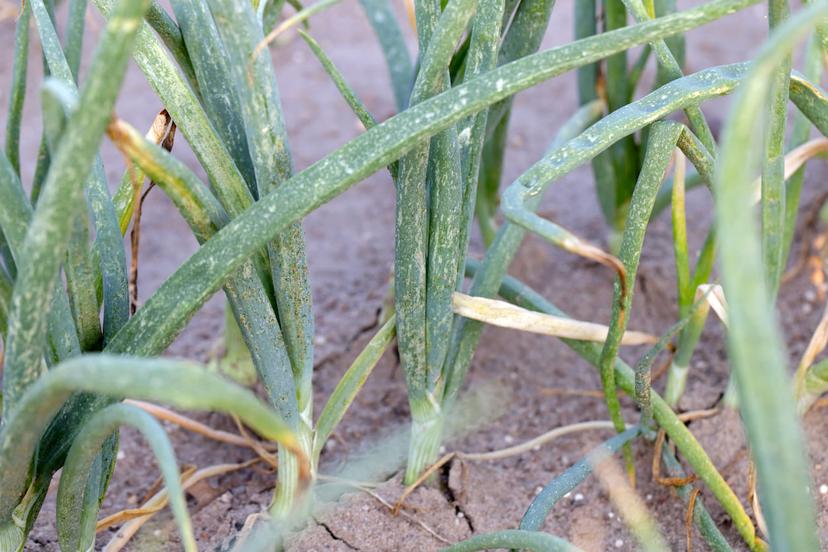
Onion Purple Blotch Disease: Early Signs, Causes & Best Control Methods
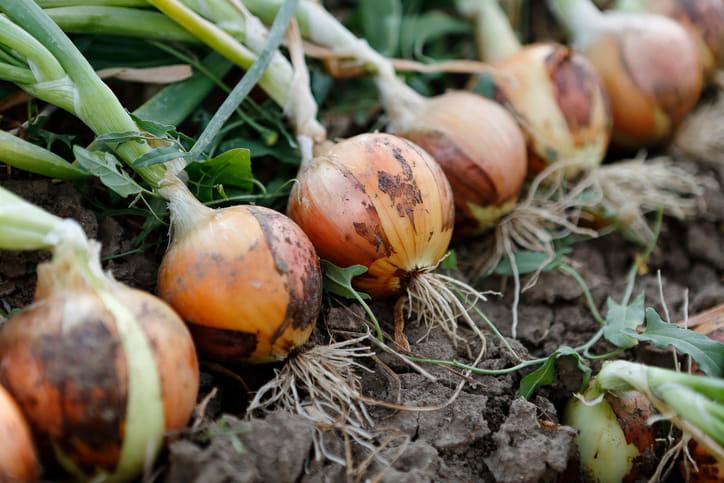
IntroductionOnion is one of India's most important bulb crops, grown extensively across Maharashtra, Karnataka, Andhra Pradesh, and Tamil Nadu, with significant production during both rabi and kharif seasons. Onion purple blotch disease, caused by the fungus Alternaria porri, is a major threat to onion production that can reduce yields by 30-50% if left unmanaged. This fungal disease targets the leaves, severely damaging the photosynthetic capacity of the plant and preventing proper bulb development. Unlike some diseases that attack the bulb itself, purple blotch weakens the entire plant from above, which cascades into poor bulb size, quality, and storability. The disease is particularly problematic during the kharif season when monsoon rains create ideal conditions for fungal spread. Early identification is critical because the disease can spread rapidly across an entire field within 7-10 days during favorable weather. This comprehensive guide will help you recognize purple blotch at its earliest stage and implement proven control strategies to protect your onion crop throughout the growing season.What is Onion Purple Blotch Disease?Onion purple blotch is a fungal leaf disease caused by Alternaria porri (formerly Macrosporium porri). The pathogen is soil-borne and seed-borne, meaning it can survive in soil and on contaminated seed for extended periods. The disease affects onion at any growth stage but becomes most serious from the bulbing stage onwards. Unlike early blight or other leaf diseases that might cause minor damage, purple blotch progressively destroys leaf tissue and severely limits the plant's ability to produce bulbs. The fungus produces spores that spread through water splash from rain or overhead irrigation and through wind. Once established, the disease can be managed but not eliminated, making prevention and early intervention absolutely critical.SymptomsLearn to identify onion purple blotch at every stage:Initial symptoms: Small, circular white spots with purple or dark brown margins appear on lower leaves firstCharacteristic appearance: Spots have concentric rings giving a target-like or bullseye pattern, distinctive of AlternariaProgressive symptoms: Spots enlarge and merge together, affecting entire leaf blade and sheathColor change: Affected leaves turn yellow and eventually brown; severely infected leaves dry and shrivelSpore masses: In wet conditions, dark gray or brown sporulating structures appear on lesionsDownward progression: Disease starts on lower leaves and moves upward as it spreadsWhole plant appearance: Plants show progressive defoliation; upper canopy appears yellowish and sparseBulb impact: Poor leaf development results in small, light-weight bulbs with weak storage lifeYield loss: 30-50% yield reduction in affected fields; bulbs are smaller and more prone to rotting in storage Farmer Tip: Check the undersides of leaves carefully—early lesions are often more visible there. Look for the characteristic concentric ring pattern in spots. Don't confuse purple blotch with normal leaf yellowing or other diseases. Favorable ConditionsPurple blotch thrives under these specific environmental conditions:High humidity (above 85%) and leaf wetness for 12+ hours promote spore germination and infectionHeavy rainfall and overhead irrigation create ideal conditions for fungal spreadTemperature range of 20-25°C is optimal for fungal growth and sporulationDense plant canopy with poor air circulation retains moisture and prevents rapid dryingContaminated seed and soil harboring the fungus perpetuate the diseaseOver-crowded planting reduces air flow and increases humidity around plantsExcess nitrogen promotes soft leaf tissues that are more susceptible to infectionPoor field sanitation with crop residue left in field provides fungal inoculum Preventive MeasuresPrevention is your best strategy against purple blotch:Use certified, disease-free seed from reputable sourcesTreat seed with Trichoderma or Bacillus before sowing for early protectionPractice crop rotation: Don't plant onion in the same field for at least 2-3 yearsMaintain proper spacing: Plant onions at 20 × 10 cm spacing for good air circulationAvoid overhead irrigation: Use drip or furrow irrigation to keep foliage dryRemove and destroy infected crop residue immediately after harvestApply balanced fertilizer: Follow recommended NPK (0:10:10 or soil test recommendation)Regular weeding: Remove weeds that compete for nutrients and reduce air circulationScout field weekly from seedling stage onwards to catch early symptoms Management PracticesIntegrated management combining cultural, biological, and chemical approaches gives best results. IPM principles mean not relying solely on sprays—cultural practices form the foundation.Mechanical and Cultural ControlStart with these non-chemical methods:Remove infected leaves: Carefully pick off leaves showing lesions and destroy themImprove drainage: Ensure field doesn't have standing water; create proper furrowsThin canopy: Remove dense growth to improve air circulation and faster dryingAvoid evening irrigation: Water in morning to allow foliage to dry quicklyDeep plough infected field: After harvest, incorporate residue deep to destroy fungal spores Biological ControlApply these biological products to suppress the disease:Product NameTechnical ContentDosageTrichoderma Viride WPTrichoderma viride 1 × 10⁷ CFU/g5-6 g/L waterBacillus subtilis WPBacillus subtilis 1 × 10⁸ CFU/g10 ml/10 L waterNeem Oil 3% ECCold-pressed neem oil 3% w/v5% solution (50 ml/L water)Pseudomonas fluorescensPseudomonas fluorescens 1 × 10⁸ CFU/ml10 ml/L waterSulphur Wettable PowderElemental sulphur 80% w/w3-4 g/L water Chemical ControlUse chemical fungicides when disease pressure becomes serious:Product NameTechnical ContentDosageMancozeb 75% WPMancozeb 75% w/w2.5-3 g/L waterTebuconazole 25% ECTebuconazole 25% w/v1 ml/L waterHexaconazole 5% ECHexaconazole 5% w/v1-1.5 ml/L waterChlorothalonil 75% WPChlorothalonil 75% w/w2.5-3 g/L waterCopper Oxide 50% WPCopper oxide 50% w/w3 g/L water Safety Tip: Always read product labels carefully. Follow recommended dosage and safety precautions. Never spray during rain or if rain is expected. Wear protective clothing including gloves, mask, and full sleeves. Best Time to Take ActionEarly scouting: Begin monitoring from 45 days after transplantingPreventive treatment: Apply biological products every 10-14 days from bulbing stage onwardsDisease appearance: At first sign of symptoms, begin fungicide sprays every 10-12 daysCritical period: Most damaging during monsoon months (June-October) when humidity is highHarvest timing: Stop sprays 14 days before harvest to ensure food safety Common Mistakes Farmers Should AvoidStarting treatment too late: By the time symptoms are obvious, significant damage is done. Scout early.Using overhead irrigation: This creates ideal humid conditions. Use drip irrigation during kharif.Ignoring field sanitation: Don't leave infected residue. Proper cleanup reduces inoculum for next season.Over-crowding plants: Tight spacing prevents air circulation. Maintain recommended spacing.Repeated chemical use: Rotate fungicide groups to prevent resistance development.Spraying during rain: Rainfall washes off fungicides. Never spray if rain is expected.Using contaminated seed: Always source certified, disease-free seed. ConclusionOnion purple blotch disease can devastate your crop and reduce yields dramatically, but it is highly preventable with proper knowledge and consistent management. The disease thrives in humid, wet conditions typical of the kharif season, so prevention and early intervention are absolutely critical. Begin by sourcing certified, disease-free seed and treating it with biological products. Maintain proper spacing to ensure good air circulation and use drip irrigation to keep foliage dry. Scout your field regularly from the seedling stage onwards, and at the first sign of symptoms, implement control measures immediately. Combine cultural practices like sanitation and leaf removal with biological products applied preventively and chemical fungicides only when necessary. Rotate fungicide classes to prevent resistance, and always follow label directions carefully. With commitment to integrated disease management, you can keep purple blotch under control and produce high-quality onions with good bulb size, color, and storage life that command premium prices in the market.Note: The information contained herein is for informational purposes only. Nothing herein shall be construed to be financial or legal advice. Viewers are advised to do their own research before making any decisions.