The tomato is an important protective food due to its rich vitamins, amino acids, and organic acids like citric, formic, and acetic acids. The red colour comes from lycopene, while the yellow colour is due to carotenoids, which are sensitive to temperature. The unique flavour is due to ethanol, acetaldehyde, and other compounds. In this article, we will discuss in detail the package of practices of tomato.
Tomato Crop at a Glance
Botanical Name: Solanum lycopersicum
Common Name: Tomato (English), Tamatar (Hindi and Punjabi), Takkali (Tamil and Malayalam), Tameto pandu (Telugu), Tomato hannu (Kannada), Toamater (Bengali), Bilati Baigana (Odia).
Crop Season: Kharif and Rabi
Crop type: Horticulture
Varieties/Hybrids: Pusa Early Dwarf, Sioux, Pusa Uphar, Pusa Ruby, Pusa Sadhabahar, Pant Bahar, Arka Samrat etc.
Tomato Package of Practices
Soil Requirements
Tomatoes can grow in many soil types, from sandy to heavy soils. For better tomato crop growth, well-drained, fertile loam with good moisture retention is ideal. Waterlogging is harmful, so proper drainage is necessary. The ideal pH range is between 6 and 7. Liming is advised if the soil is acidic, with a pH of 5.0 or lower.
Climatic Requirements
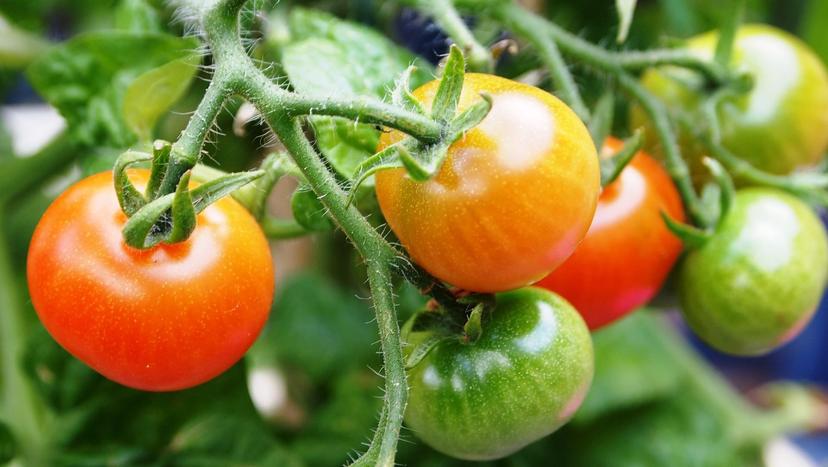
For successful tomato cultivation, maintain a temperature of 21-24°C. Fruit set, colour, and quality depend on temperature and light. The ideal soil temperature for tomato seed germination is 20 to 25°C. Temperatures between 15 and 20˚C during the night are optimal for fruit set. Low humidity, dry winds, and a high temperature (38˚C) all have a negative impact on the fruit set. At the ripe stage, the tomato contains the red pigment lycopene and the yellow pigment carotene. Lycopene generation is prevented or reduced at extremely high temperatures.
Sowing and Land Preparations for Tomato
1. Nursery Management
Tomato is a transplanted crop. A raised bed measuring 225 square meters is sufficient to grow the seedlings required for a one-hectare area. Apply 3 kg well-decomposed FYM per sq.m along with 0.5 kg NPK per bed for healthy seedlings.
2. Seed Rate and Spacing
Tomato seeds are very lightweight. So, about 400 to 500 g of seeds are sufficient to raise a nursery and transplant in one hectare.
Indeterminate types and hybrids
- Row to row spacing: 60 to 120 cm
- Plant to plant distance: 45 to 75 cm
Determinate types
Spacing: 45 to 60 cm x 30 to 40 cm
3. Main field preparation
The land used for tomato cultivation should be well pulverised with one to two deep ploughings and two to four harrowing and broad bed furrows or ridges and furrows are made in the field, depending on farmers' requirements.
4. Transplanting
In general, 20 to 30-day-old seedlings are used for tomato planting on raised beds or the slope of the ridge.
5. Irrigation Schedule
Furrow irrigation is the most popular method followed in tomato farming. The frequency of irrigation is influenced by the soil and climatic variables. Crop grown throughout the summer should be watered every 3 to 4 days. Water stress during flowering reduces yield and fruiting. Sudden heavy irrigation after drought can cause fruit cracking.
6. Manures and Fertilizers
The recommended amount of manure and fertilizer for tomatoes varies from state to state and relies on the type of soil, variety’s growth habits and production.
Use 15-20 tonnes of FYM along with 100-125 kg nitrogen (N), 50-60 kg phosphorus (P), and 50-60 kg potassium (K) per acre for tomato cultivation. Apply FYM to the soil during final ploughing.
For basal application, apply one-third of the nitrogen and the full dose of phosphorus and potassium either just before transplanting or 5-10 days after transplanting. Apply the remaining two-thirds of nitrogen in two equal splits at 20 and 45 days after transplanting.
Intercultivation Practices for Tomato
Weeding
Regular weeding, hoeing, and earthing up are needed to keep the field clean. Pre-emergence application of Stomp Xtra (Pendimethalin 38.7% CS) at 600 - 700 ml per acre or BACF Quash (Oxyfluorfen 23.5% EC) at 200 ml per acre to control initial weed flush. Mulching with plastic or straw is also efficient in controlling weeds and controlling soil temperature.
Training and Pruning
To avoid lodging and fruit loss due to soil contact, all indeterminate types should be supported with stakes or wires to prevent lodging and fruit damage. While indeterminate cultivars are also typically pruned to enhance fruit size, shape and quality.
Crop Protection for the Tomato Plant
Pests
1. Tomato fruit borer
Scientific Name: Helicoverpa armigera or Spodoptera litura
Symptoms
Fruit borer is a serious pest in tomato cultivation, causing significant damage to both flowers and fruits. The larvae feed on fruit, leading to visible entry holes and extensive rotting. During the fruiting stage, young caterpillars of both pests burrow into fruits. The larva of Helicoverpa typically remains partially outside the entry hole while feeding, whereas Spodoptera caterpillars usually stay completely inside the fruit. In most cases, the bore holes are plugged with excreta, which is a common sign of infestation.
Management
- During the last ploughing, it is recommended to apply 100kg/acre of neem cake to the tomato farm.
- Neem oil (1500-3000 ppm) at 5 ml/lit water should be sprayed during the early stages of an infestation to kill eggs.
- Use of Fame Insecticide (flubendiamide) at 0.3 ml/lit water, Coragen Insecticide (Chlorantraniliprole) at 0.3 ml/lit water or Tracer Insecticide (Spinosad) at 0.4 ml/lit water is advised when the severity of the infestation rises.
2. Serpentine leaf miner
Scientific Name: Liriomyza trifolii
Symptoms
- Leaves show serpentine veins
- In extreme cases, leaf drop may occur
Management
At the early stages of an infestation, mined leaves should be gathered and destroyed. With increasing severity, spray 5% GreenPeace Neemol Bio Neem Oil Insecticide (Neem Seed Kernel Extract) and in extreme situations use Benevia Insecticide (cyantraniliprole) at 1.7-2 ml/lit water.
3. Pinworm
Scientific Name: Tuta absoluta
Symptoms
To mine through leaves, newly born larvae first spin a superficial web covering. Next, they tunnel through leaves and make slender, straight or serpentine mines. At mine entrances, a single pile of frass (insect faeces) is dumped. Blotch mines are created by older instars near their leaf fold. Most harm occurs when larvae penetrate fruit near the stem, mining just below the fruit surface or in the core. Liquid content oozes out from the pinholes when infested fruit is pressed with fingers.
Management
To eliminate pinworm pupae, deep ploughing is advised. In order to gauge the extent of the infestation, it is crucial to set about 10 to 15 Tapas yellow sticky traps per acre. It is also advised to spray Coragen Insecticide (Chlorantraniliprole), Fame Insecticide (Flubendiamide) or Benevia Insecticide (Cyantraniliprole) at a rate of 60 ml per acre for case of severe infestation.
4. Thrips
Scientific Name: Thrips tabaci
Symptoms
The infested leaves curl upward, crumble, and shed. Both the nymphs and the adults consume the tomato’s blossoms, leaves and stem while sucking the sap, which results in the vegetative and reproductive organs being malformed.
Management
To control the infestation below ETL, systemic insecticides like Admire Insecticide (imidacloprid) can be applied to the tomato farm at a dosage of 0.4 gm per litre of water.
5. Mites
Symptoms
The infested leaves curl downwards. Both the nymphs and the adults consume the tomato’s blossoms, leaves, and stem while sucking the sap, which results in the vegetative and reproductive organs being malformed.
Management
The infestation can be controlled by spraying phosalone 3 ml/l, diafenthiuron 1.5 gm/lit water or Intrepid Insecticide (chlorfenapyr) 2 ml/lit water.
6. Root Knot Nematode
Symptoms
There is a delay in growth and chlorotic leaves. Roots will show root gall and even if plants survive, fruiting is greatly reduced.
Management
Practice crop rotation by incorporating non-host crops. During transplantation, only seedlings with roots free of galls should be chosen. Soil solarisation can help prevent this infestation. Application of neem cake at the rate of 200 kg per acre during land preparation also helps reduce nematode infestation. In severe cases, apply carbofuran 3G granules at the rate of 1kg per hectare.
Diseases
1. Septoria leaf spot
Scientific Name: Septoria lycopersici
Symptoms
On leaves, small, uneven patches with a black border and a grey centre will be visible. Spots usually begin on the lower leaves and gradually move up the leaves with time. Then congregate, causing complete defoliation of damaged leaves. Sometimes, flowers and stems are attacked. Fruits are mostly not infected.
Management
Remove infected crop debris and apply Indofil Z78 Fungicide (zineb) or Indofil M45 Fungicide (mancozeb) at the rate of 0.2 per cent.
2. Tomato Spotted Wilt Virus (TSWV)
Symptoms
A typical sign of TSWV infection is stunting. The leaves develop chlorotic or necrotic rings. As a mature tomato’s usual red skin develops concentric circular markings, it turns pale red or yellow in certain regions.
Management
Since thrips is the vector, remove infested crops and use systemic insecticides like Admire Insecticide (imidacloprid) at the rate of 0.4g per litre of water to control them.
Physiological Disorders
1. Blossom end rot
Symptoms
A black patch forms and engulfs ½ - ⅔ of the fruit. The tissues contract, resulting in dark grey to black skin. It could cause a secondary fungal infection, making it unsafe for ingestion.
Management
Early transplanting of seedlings in the month of April instead of June is highly recommended. If the disorder occurs foliar spray of Multiplex Chlorocal (calcium chloride) is advised.
2. Fruit cracking
Symptoms
Fruit cracking is a result of a boron deficiency in the soil. It mostly manifests in two ways:
- Concentric cracking during the mature green stage.
- Radial cracking during the ripe stage.
Management
Apply 10-15 kg of borax to the soil per hectare or foliar spray of water-soluble Linnfield Boron 20% Micronutrient Fertilizer (boron) at the rate of 0.3-0.5 gm/lit water.
Harvesting and Grading
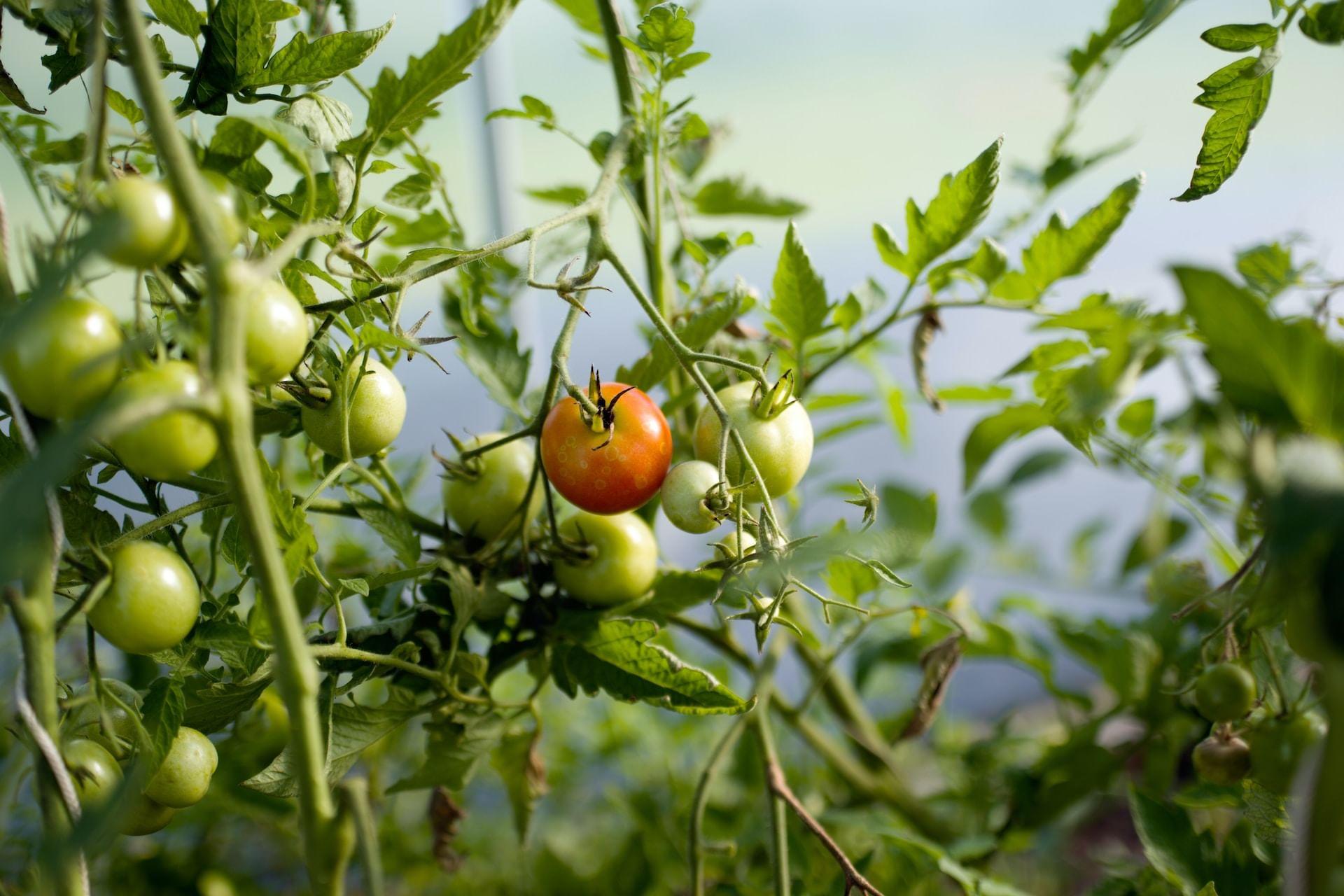
Fruiting starts around 70 days after planting. Fruits are hand-picked with a slight twist to keep the plant’s stalk attached. Green fruits are used for distant markets, while ripe fruits are for local markets. The Bureau of Indian Standards has four grades: Super A, Super, Fancy and Commercial.
Yield
Depending on a number of variables, an open-pollinated tomato cultivation will typically yield 250-300 quintals per hectare. Up to 500 quintals per hectare can be produced by hybrids.
Frequently Asked Questions
How many tomato seeds are required per hectare?
About 400-500 g of tomato seeds are sufficient for one hectare.
What are the important stages of tomato growth for fertilization?
The basal stage, 20 days, and 45 days after transplanting are key stages.
Which fertilizer promotes fruiting in tomatoes?
Potassium-rich fertilizers and balanced NPK help in better fruiting.
How to increase tomato yield in farming?
Proper irrigation, fertilizer use, pest control, and good management practices improve yield.