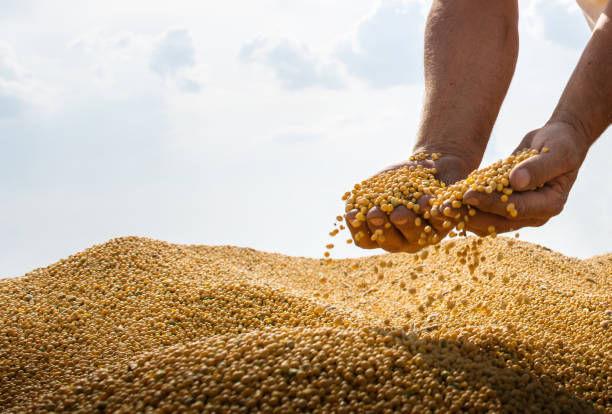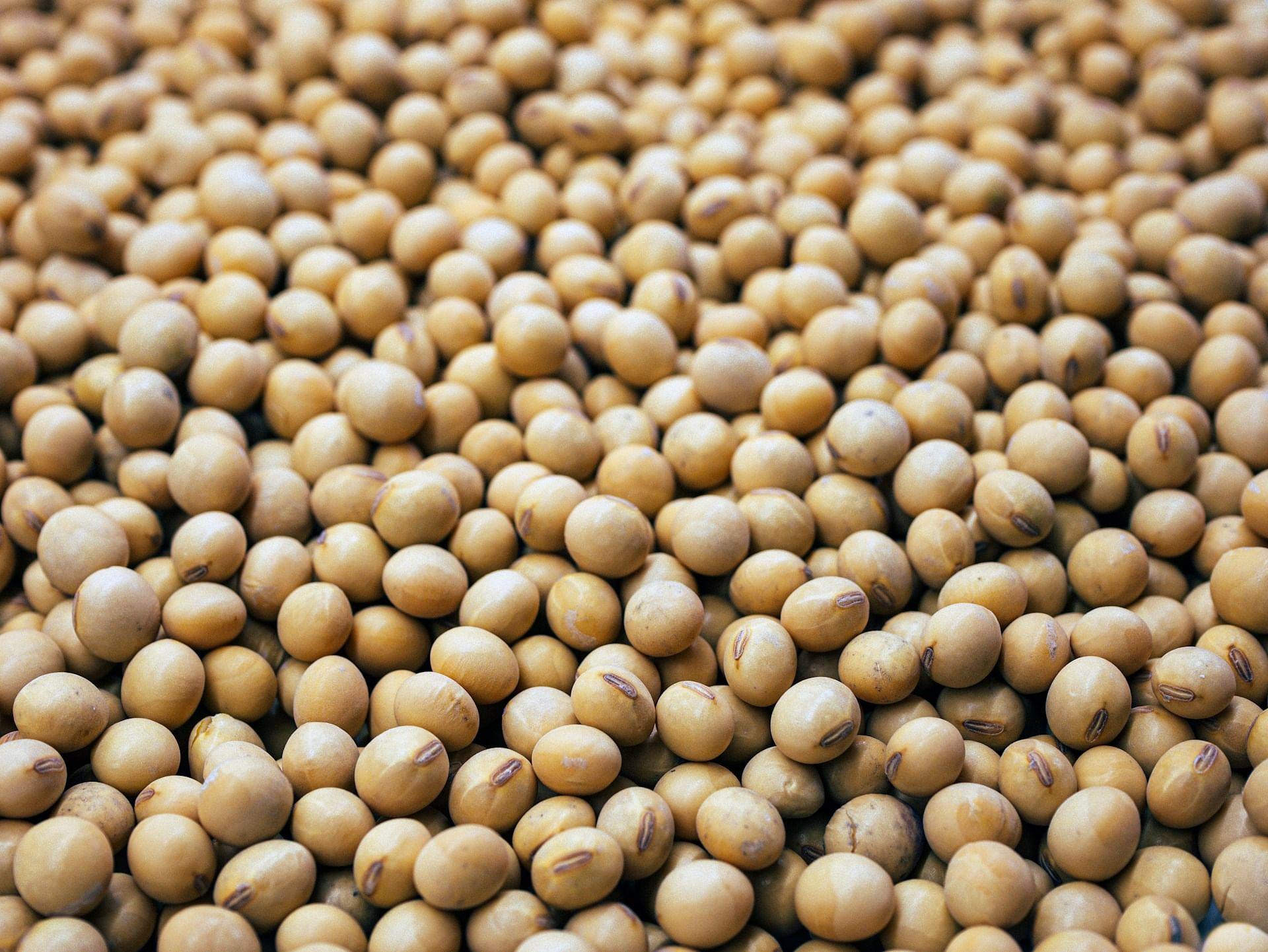
Soybean, known as the Golden Bean or Miracle Crop, is valued for its high protein and oil content. Originally from China, the soybean crop was brought to India across the Himalayan Mountains and is now widely grown in Madhya Pradesh, Maharashtra, Andhra Pradesh, Karnataka, Uttar Pradesh, and Rajasthan. This article covers the complete soybean package of practices (POP) for healthy cultivation.
Soybean cultivation is done primarily for its seeds and is India's second largest oilseed crop after groundnut. The soyabean plant provides 40–50% high-quality protein, 20–22% oil, and 5% of the essential amino acids, carbohydrates, vitamins (thiamine and riboflavin), and minerals.
Soybean Crop at a Glance
Biological name: Glycine max
Crop season: Rabi and Kharif
Crop type: Oilseed crop
Production (2021): 128.92 lakh tonnes
Estimated production: 129.95 lakh tonnes
Quantity exported (2021): 3.78 t
Soybean Varieties
Commonly grown soybean varieties in India are VL Soya 21, Ahilya 2 (NRC 12), MACS 124, JS 75-46, Ahilya 1 (NRC 2), and Ahilya 3 (NRC 7). Other varieties include Ankur, Alankar, Gorav, T-49, and Punjab-1.
Planting and Package of Practices
Soil Requirements
Soybean cultivation requires well-drained, fertile loamy soil with a pH range of 6.0 to 7.5. Soybean seed germination is inhibited by saline and sodic soils. Waterlogging is harmful, so effective drainage throughout the rainy season is essential.
Climatic Requirements
Soybean crops require a temperature range of 15° - 32°C for germination, with 25°- 30°C being ideal for growth. The soybean cultivation requires 60-65 cm of annual rainfall. Drought during or just before flowering causes flower and pod drop, while rain during maturity reduces grain quality.
Land & Sowing Preparations for Soybean Seeds
Soybean farming begins with deep summer ploughing, followed by levelling the field. Make ridges and furrows with proper spacing, sow seeds with a seed drill, apply basal fertilisers, and give light irrigation.
Seed Rate and Spacing
Seed rate: 55 - 65 kg/ha with a
Seed spacing: 30 - 45 cm, which can be reduced using broad-bed-furrow or ridge-furrow methods.
Time of Sowing
The optimum time for sowing is from mid-June to the end of June, subject to the availability of soil moisture/rainfall.
Method of Sowing
Treat soybean seeds with Carbendazim or Thiram at 2 g/kg, 24 hours before sowing, to reduce seed-borne fungal infection. Line sowing by seed drill is recommended as it uses fewer seeds per hectare, weeding and hoeing may be done conveniently.
Irrigation Schedule
Irrigation is not required for Kharif soybean crops. However, soybean planting for summer cultivation must ensure irrigation;
Count: 5-6 irrigations are needed.
Irrigate at the following critical stages:
- Germination stage
- Flowering, pod initiation, and bean filling stages
Manures and Fertilizers
- FYM: 10-15 t/ha
- N: 20-30 kg/ha
- P: 60-80 kg/ha
- K: 40-60 kg/ha
Inter-Cultivation
Proper intercultivation practices help maintain soil health, reduce weed competition, and promote healthy growth for the soybean crop.
Weeding
- Keep the soybean crop weed-free up to 60 days after sowing (DAS).
- One or two hoeings with two hand weedings at 20 DAS and 40 DAS are sufficient for higher yield.
- Use Pendimethalin at 0.75 a.i/ha for pre-emergence control, followed by one hand weeding at 40 DAS, gives higher seed yield.
Crop Protection: Pests
Bihar Hairy Caterpillar (Spilosoma obliqua)
Symptoms: Young larvae feed on chlorophyll on the lower leaf surface, causing brownish-yellow discolouration. In later stages, larvae devour leaves from the border, giving them a net-like appearance. Severely infested soybean farms appear sick.
Management:
- Avoid soybean planting during the pre-monsoon.
- Use healthy seeds.
- Collect and destroy infected plant parts, egg masses, and immature larvae.
- Install one light trap per hectare for nocturnal pests.
- Spray Chlorpyriphos 20 EC at 1.5 lit/ha, Triazophos 40 EC at 0.8 lit/ha, or Quinalphos 25 EC at 1.5 lit/ha.
Gram Pod Borer (Helicoverpa armigera)
Symptoms: Young larvae feed on the chlorophyll and skeletonize young leaves, defoliate the plant, and later damage flowers and pods.
Management:
- Avoid soybean planting during pre-monsoon.
- Install pheromone traps at 5 traps/ha, 50 m apart.
- Clip terminal shoots after 100 days of sowing.
- Set light traps at 1 per acre.
- Spray Chlorpyriphos 1.5% DP at 1200 ml/ha or Quinalphos 25 EC at 1.0 lit/ha.
Crop Protection: Diseases of Soybean
Anthracnose / Pod Blight (Colletotrichum truncatum)
Symptoms: Seeds shrivel, show mould growth and turn brown. Dark brown sunken cankers appear on cotyledons. Irregular brown lesions form on leaves, stems, and pods. Advanced stages show black fungal fruiting structures. High humidity causes veinal necrosis, leaf rolling, and premature defoliation.
Management:
- Plough the field clean after harvest to remove all plant residue.
- Remove diseased stubble from the previous year.
- Soybean seed treatment with Thiram, Captan, or Carbendazim at 3 g/kg.
- Spray Mancozeb at 2.5 g/L or Carbendazim at 1 g/L.
Charcoal Rot / Stem Blight / Dry Root Rot (Macrophomina phaseolina)
Symptoms: It occurs under moisture stress, nematode attack, soil compaction, or nutrient deficiency. Lower leaves turn chlorotic; wilting and drying are visible. Infected tissues show greyish discolouration. Roots blacken and crack, resembling charcoal, hence the name. The fungus thrives in dry conditions at 25°- 35°C.
Management:
- Destroy the previous year's infected stubble.
- Treat seeds with Trichoderma viride at 4 g/kg, Pseudomonas fluorescens at 10 g/kg, or Carbendazim/Thiram at 2 g/kg.
- Drench infected spots with Carbendazim at 1 g/L or P. fluorescens / T. viride at 2.5 kg/ha with 50 kg FYM.
Collar Rot / Sclerotial Blight (Sclerotium rolfsii)
Symptoms: Infection starts at or just below the soil surface. Sudden yellowing or wilting is the first sign. Light brown lesions enlarge and darken, encircling the stem. Brown dried leaves stick to dead stems. Round, tan to brown sclerotia form on infected material.
Management:
- Treat seeds with Trichoderma viride at 4 g/kg, Pseudomonas fluorescens at 10 g/kg, or Carbendazim/Thiram at 2 g/kg.
- Spot drench with Carbendazim at 1 g/L or P. fluorescens / T. viride at 2.5 kg/ha with 50 kg FYM.
Frogeye Leaf Spot (Cercospora sojina)
Symptoms: Small, circular to irregular leaf lesions, gray with reddish-brown borders, appear mostly on the upper leaf surface. Lesions start as dark water-soaked spots, turning gray to light brown with dark red-brown margins as they age. Severe infection causes premature leaf drop and spreads to stems and pods.
Management:
- Plough field clean after harvest to remove plant residue.
- Soybean seed treatment with Thiram + Carbendazim (1:1) at 2 g/kg.
- Spray Mancozeb at 2 g/L or Carbendazim at 500 mg/L.
Harvesting and Threshing
Harvest soybean at the proper stage as recommended in the package of practices. At maturity, soybean plants begin shedding leaves, while the leaves turn yellow and the pods dry rapidly. The seeds usually contain 45 - 55% moisture during this stage. Harvest the crop when the seed moisture content reaches around 15% by cutting the plants at ground level using a sickle or by hand. Thresh the harvested crop carefully using a mechanical thresher or conventional methods, and avoid severe beating or trampling to prevent damage to the seed coat. For efficient threshing, the ideal seed moisture content is 13 - 14%.
Yield
After following a proper package of practice of soybean we can get the yield upto 25-30 qt/ha under irrigation condition and 15-20 qt/ha under rainfed condition.
Frequently Aasked Questions
Q1. What is the best method of soybean seed treatment before sowing?
Treat soybean seeds with Carbendazim or Thiram at 2 g/kg, 24 hours before sowing, to protect against seed-borne fungal infections. For soil-borne diseases, Trichoderma viride at 4 g/kg or Pseudomonas fluorescens at 10 g/kg is also recommended.
Q2. When is the ideal time to sow soybean crops in India?
The optimum sowing period for soybean cultivation is mid-June to end of June, subject to adequate soil moisture or rainfall. Sowing in this window gives the best germination and yield results.
Q3. What is the expected soybean yield per hectare in India?
Under irrigated conditions, soybean yield can reach 25–30 qt/ha. Under rainfed conditions, yield ranges from 15–20 qt/ha, following the recommended package of practices.