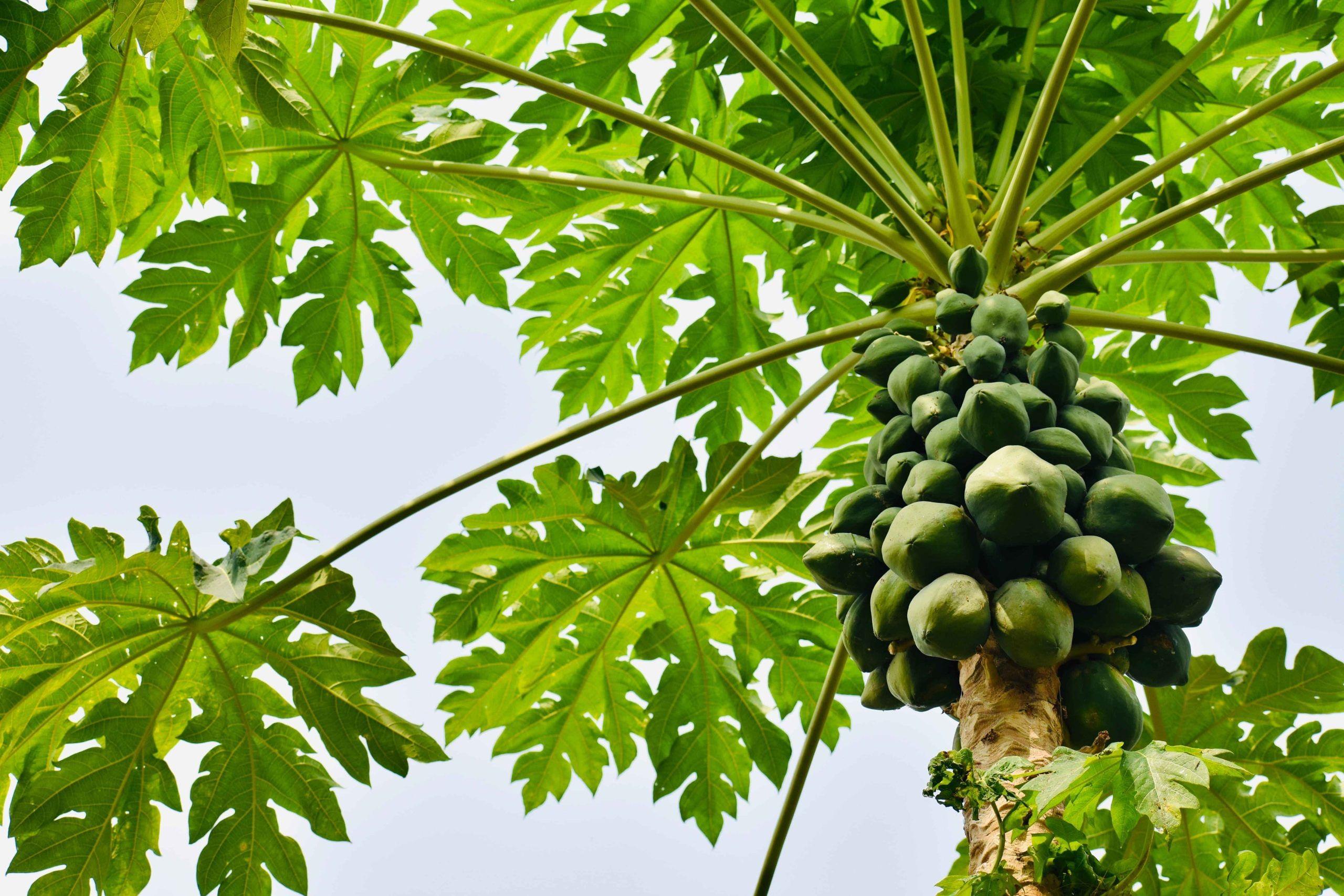
Papaya (Carica papaya)is a tropical fruit crop valued for its exceptional nutritional and medicinal value. One of the most interesting aspects of papaya trees is their unique sexual characteristics and the nature of their flowering. Unlike most other fruit trees, papaya trees are able to change their sex and produce both male and female flowers at different stages of their development. Papaya plants/trees may be categorized to male, female or hermaphrodite trees based on type of flowers they produce. Depending on the tree’s type, the flowers and fruit (if found) vary in appearance, function and size. Typically, a papaya plant’s gender may change depending on the temperature during the developmental stages.
Papaya Trees - Male type
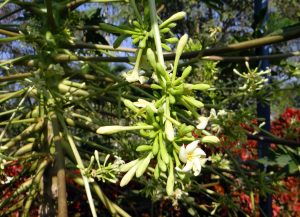
Male papaya trees produce small flowers in clusters on long stalks (peduncle) and have a thin, tube-like structure. Male flowers have both male and female reproductive organs, with stamens producing pollen and pistils not functioning for fruit production.
Under normal conditions, male papaya trees cannot produce fruit. However, in certain environmental conditions, such as high temperatures in the summer, the tree may undergo a temporary gender change, becoming a hermaphrodite, and in this case, the previously non-functional pistil can become active, allowing the tree to produce fruit after pollination.
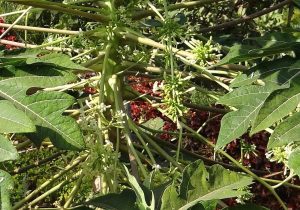
Papaya Trees - Female type
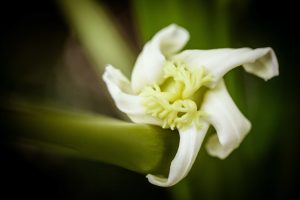
Female papaya plants bear larger flowers singly or in small clusters, and are typically larger than male flowers. They develop on shorter stalks and have a distinctive bulbous base that contains the ovary, which develops into the fruit when fertilized. The petals (5 in number) of female papaya flowers are broad and thick. Even though the male reproductive organ (stamen) is absent, the pistil is capable of producing fruit through pollination. Pollination is usually done by bees or other insects.
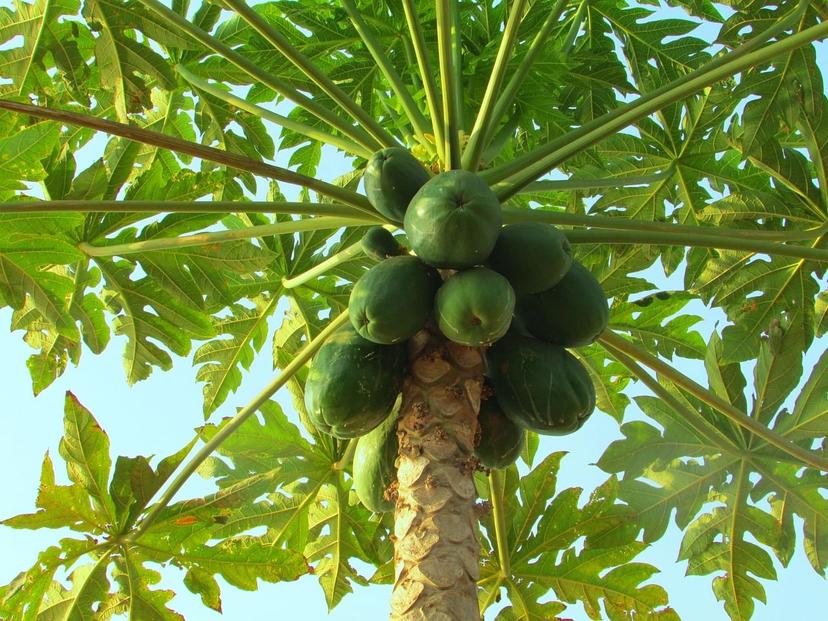
The fruit produced by pollinated female flowers is typically a green-skinned, melon-like fruit that ranges in size from 6 to 15 inches and contains yellow or orange flesh and black seeds. Unpollinated female papaya tree may produce seedless papaya fruit.
Papaya Trees - Hermaphrodite type
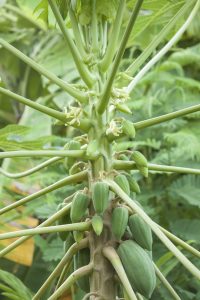
Hermaphrodite papaya plants have both male and female parts in the same flower, making them capable of self-pollination and fruit production. Fruits produced from hermaphrodite papaya plants are generally medium to large in size, with an oval or elongated shape. They have a smooth, thin and slightly waxy skin that ranges in color from green to yellow orange when ripe and have fewer small, black seeds.
During hot weather, hermaphrodite papaya trees may act as male trees, while under certain timing or training conditions, they may behave as female trees. These types of trees are preferred by commercial growers as they are more reliable and produce more fruit than female trees. However, they may require hand-pollination in some cases to ensure optimal fruit production.
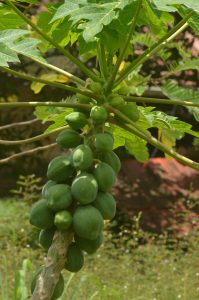 Fruits in a Female Papaya Tree
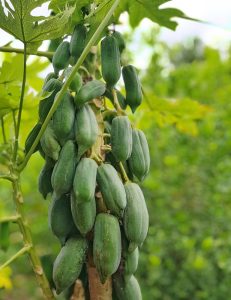 Fruits in a Hermaphrodite Tree
Causes of Flower dropping in Papaya trees:
1. Temperature and Relative Humidity (RH):
For optimal pollination and fertilization of papaya fruits, the temperature should be between 20 to 33°C, while the RH should be between 70 to 85 percent. Any temperature or humidity levels below or above this range can negatively impact the pollination process and result in flower dropp. In cases where the temperature is too low, chemical growth regulators can be used to compensate, but this may result in seedless or low-quality fruit.
2. Cultural Factors:
Factors such as inadequate or excessive nitrogen (N) fertility levels can lead to flower dropping in papaya trees. Even medium levels of ammonical nitrogen can affect flower and fruit settings. This can also trigger viral infections, leading to flower dropping.
3. Water management:
Papaya trees are sensitive to both flooding and drought. Moisture can have a direct effect on flower development, pollination, fertilization and fruit setting in papaya trees. Uneven water supply to the papaya plants can induce stress, resulting in irregular flower production and fruit setting.
4. Light Exposure:
Reduced or increased duration of light exposure can have negative consequences, potentially affecting flower development, pollination, fertilization and fruit setting.
5. Wind:
Excessive wind can result in physical damage to flowers, causing them to fall off and causing pollen to be swept away, potentially leading to inadequate pollination and fertilization.
6. Pests:
Insects feeding on flowers or fruits can damage them. Fruit flies are especially problematic and can cause premature flower droppings.
7. Diseases:
Fungal, viral, and bacterial diseases can affect flower development, leading to flower dropping. Fungal infections: Powdery mildew, Downy mildew, Black spot.
- Bacterial infections: Bacterial spot, Speck disease.
- Viral infections: Papaya Ring spot infections, Leaf Curl viral infections etc.
8. Nutrient deficiency:
Soils with poor water and nutrient-holding capacity are prone to nutrient deficiencies, especially micronutrients like boron and calcium, which is common in sandy and light soils.
Control Measures to prevent Papaya Flower Drop:
- Environmental factors like temperature and light cannot be fully controlled. However, proper management can reduce losses.
- In some cases, the only option for the grower is to wait for favorable weather conditions, while in extreme conditions, regulating irrigation practices can help to control the microclimatic conditions.
- To protect papaya plants from high winds, physical wind barriers can be erected along the borders, allowing necessary airflow while preventing damage from excessive wind.
- By monitoring disease and pest management, flower drops can be avoided, and maximum yield can be achieved in papaya cultivation.
- Ensure the papaya plants receive consistent and adequate watering, particularly during the flowering stage, to avoid water stress.
- Provide balanced fertilization and micronutrients to the papaya plants, as nutrient deficiencies or toxicity can cause flower drop.
- Ensure adequate pollination by introducing pollinators like honeybees, or hand-pollinate using a soft brush, as poor pollination can cause flower drops.
|
Management |
Products |
|---|---|
|
Micronutrients |
- Spray Allbor (20% Boron) micronutrient at 1 gm/lit during flowering and fruit setting stage. - Spray Multiplex Magnum Mn (Manganese 12%) at 0.5 gm/lit of water. It helps to resist viral multiplication in plants. |
|
Pests |
- Spray Econeeem plus at 2 - 3 ml/lit of water. - Spray Confidor Insecticide at 0.7 - 1 ml/lit water or Anant Insecticide at 0.3 - 0.5 gm/lit of water. |
|
Diseases |
Fungal Diseases: - Spray Hifield Ridomet 35 Fungicide at 1.5 gm/lit water or - Drench/Spray with Blitox Fungicide at 3 gm/lit water or - Spray Dhanuka M45 at 3 - 4 gm/lit water. Bacterial Disease: - Spray Conika Fungicide at 1.5 - 2 gm/lit of water or - Spray Borogold at 1.5 gm/lit water. Viral Diseases: - Spray Geolife no virus at 3 - 5 ml/lit water or - Spray VC 100 at 5 gm/lit of water. |
Frequently Asked Questions
What causes flower drop in papaya plants?
Flower drop in papaya is mainly caused by temperature changes, poor irrigation, nutrient imbalance, pests, and diseases.
How can I control papaya flower drop?
Follow proper papaya flower drop control by managing irrigation, balanced fertilization, pest control, and improving pollination.
Which nutrients are important to reduce flower drop in papaya?
Micronutrients like boron and calcium are important. Their deficiency can lead to poor flowering and low fruit set in papaya plants.