Key Highlights
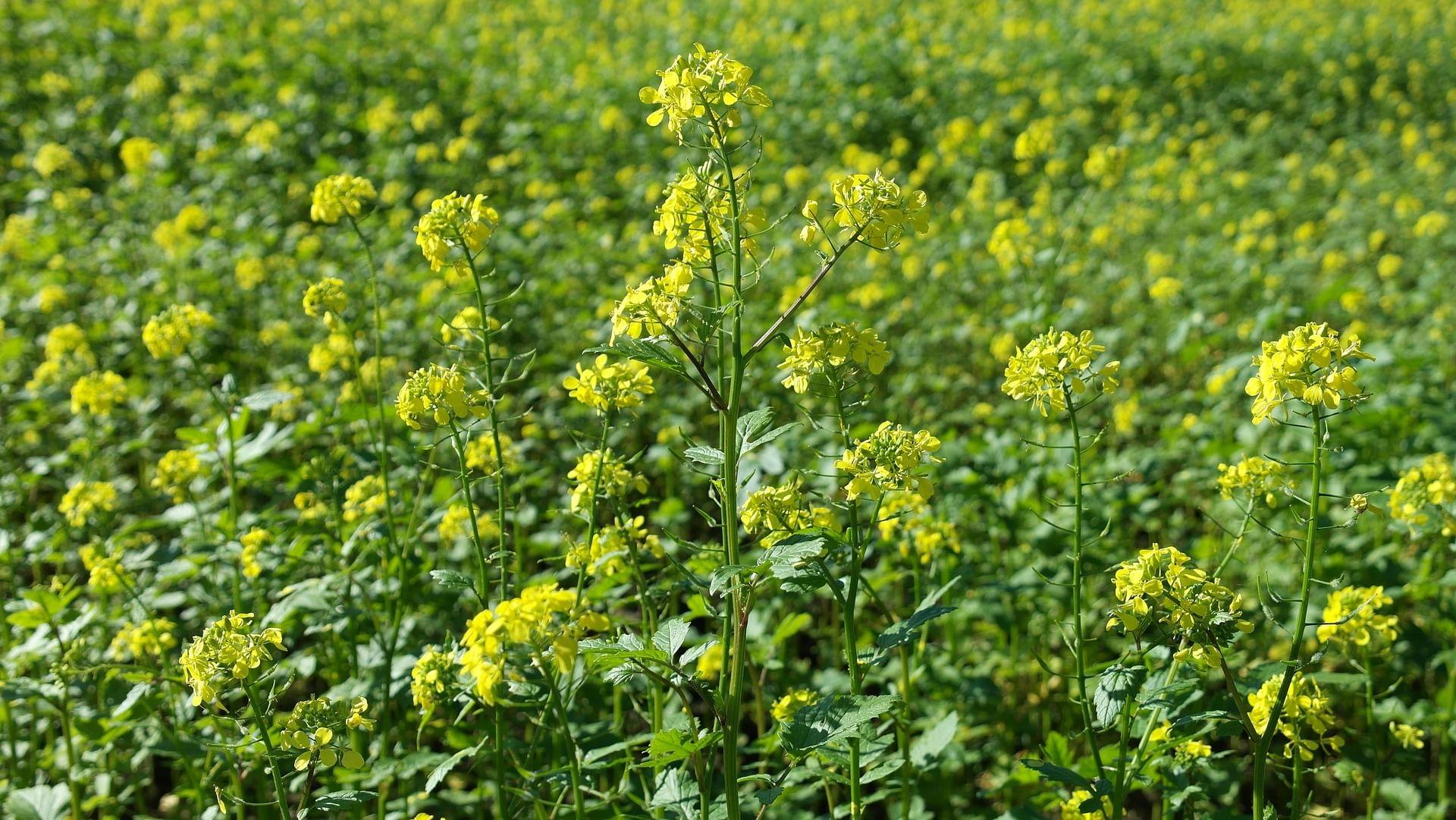
Mustard cultivation is an important oilseed farming activity in India and contributes significantly to edible oil production. This blog explains the entire process of mustard crop cultivation, including land preparation, mustard sowing time, seed rate per hectare, irrigation management, and harvesting time.
It also discusses key mustard cultivation practices that help farmers improve crop productivity and quality. Farmers looking to start mustard farming or improve their mustard crop production can use this guide to understand the best methods for growing mustard successfully under Indian agricultural conditions.
Mustard Crop Overview
Mustard crop belongs to the Brassicaceae family and is mainly grown as a Rabi crop in India. The mustard seeds crop is known for its high oil content and is an important source of edible oil.
|
Feature |
Details |
|---|---|
|
Crop Type |
|
|
Season |
Rabi |
|
Scientific Name |
Brassica juncea |
|
Major Producing States |
Rajasthan, Haryana, Uttar Pradesh, Madhya Pradesh |
|
Mustard Time Period |
110–140 days |
The crop is cultivated extensively because mustard farming provides good economic returns when managed properly.
Climate and Soil Requirements for Mustard Cultivation
Successful mustard cultivation depends on suitable climate and soil conditions.
Climate Requirements
Mustard grows well in cool and dry climatic conditions. The ideal temperature range for mustard crop cultivation is between 10°C and 25°C. Excess rainfall during flowering may negatively affect crop yield.
Soil Requirements
Suitable soil types include:
- Sandy loam soil
- Loamy soil
- Well-drained alluvial soil
The ideal soil pH for mustard cultivation ranges between 6.0 and 7.5.
Land Preparation for Mustard Farming
Proper land preparation for mustard farming is essential for successful mustard farming and healthy crop growth.
Important steps include:
- Ploughing the field 2–3 times to make the soil fine and loose.
- Removing weeds and crop residues from the previous crop.
- Leveling the land to ensure uniform irrigation.
- Applying organic manure or farmyard manure (FYM) before mustard planting.
Good land preparation improves seed germination and early plant development.
Mustard Sowing Time in India
Selecting the correct mustard sowing time is very important for achieving higher yields in mustard crop cultivation.
|
Region |
Recommended Mustard Sowing Time |
|---|---|
|
Northern India |
Late September to mid-October |
|
Central India |
Early October |
|
Eastern India |
Mid October |
Timely sowing ensures better plant establishment and proper crop growth.
Mustard Seed Rate per Hectare
Using the right mustard seed rate per hectare ensures proper plant population and healthy crop development.
|
Sowing Method |
Seed Rate |
|---|---|
|
Line Sowing |
4 - 5 kg per hectare |
|
Broadcasting |
5 - 6 kg per hectare |
Seeds should be sown at a depth of 2–3 cm with row spacing of 30 - 45 cm for better growth.
Important Mustard Cultivation Practices
Following proper mustard cultivation practices helps farmers improve crop yield and quality.
Fertilizer Management
Balanced fertilizer application is essential for better mustard crop production.
|
Nutrient |
Recommended Quantity per Hectare |
|---|---|
|
Nitrogen (N) |
60 - 80 kg |
|
Phosphorus (P₂O₅) |
40 kg |
|
Potassium (K₂O) |
20 kg |
Half of the nitrogen and the full dose of phosphorus and potassium are applied during sowing.
Irrigation Management
Mustard crop requires limited irrigation compared to many other crops.
Critical irrigation stages include:
- Flowering stage
- Pod formation stage
Generally, 2–3 irrigations are sufficient for mustard farming depending on soil moisture levels.
Weed Management
Weeds compete with mustard plants for nutrients and water, which may reduce crop productivity.
Effective weed control practices include:
- Manual weeding after 20–25 days of sowing
- Mechanical inter-cultivation
- Maintaining clean fields
Proper weed management supports healthy mustard crop development.
Mustard Crop Duration and Growth Stages
The mustard time period from sowing to harvesting usually ranges between 110 and 140 days, depending on the variety and growing conditions.
|
Crop Stage |
Duration |
|---|---|
|
Germination |
5–7 days |
|
Vegetative Stage |
30–40 days |
|
Flowering |
50–60 days |
|
Pod Formation |
70–90 days |
|
Crop Maturity |
110–140 days |
Understanding these growth stages helps farmers manage their mustard crop efficiently.
Mustard Harvesting Time
Mustard harvesting time generally occurs in February to March, depending on the sowing period and variety.
Signs that the crop is ready for harvesting include:
- Leaves turning yellow
- Pods are changing color from green to brown
- Seeds are becoming hard and fully developed
Timely harvesting helps prevent seed loss due to shattering and ensures better mustard crop production.
Conclusion
Mustard cultivation is an important agricultural practice in India because of its economic value and role in edible oil production. By following proper mustard cultivation practices such as correct mustard sowing time, balanced fertilizer use, appropriate seed rate per hectare, and effective irrigation management, farmers can achieve better crop productivity.
Understanding crop duration, growth stages, and mustard harvesting time also helps improve yield and seed quality. With proper planning and management, mustard farming can be a profitable option for farmers across many regions of India.
Frequently Asked Questions
What is the best mustard sowing time in India?
The ideal mustard sowing time is from late September to mid-October in most northern regions of India.
What is the seed rate for mustard crop cultivation?
The recommended mustard seed rate per hectare is 4–5 kg for line sowing.
How long does the mustard crop take to mature?
The mustard time period from sowing to harvesting generally ranges between 110 and 140 days.
Which states are major producers of mustard in India?
Major mustard-producing states include Rajasthan, Haryana, Uttar Pradesh, and Madhya Pradesh.
When is mustard harvesting time?
Mustard harvesting time usually occurs between February and March, depending on the sowing period.