Organic Farming: Promoting Healthier Soil, Food, and Environment
Organic farming in India has witnessed a remarkable surge in recent years, positioning itself as an example of sustainable agricultural practices in the country. As concerns about food safety, environmental impact, and human health have grown, organic farming has emerged as a compelling alternative to conventional methods. The growing demand for organic produce, both within India and globally, presents a lucrative market opportunity. By transitioning to organic farming, you tap into this expanding market, potentially increasing your profitability and securing a sustainable future for your farm.
Benefits of Organic Farming
Organic farming practices promote soil health, reduce water pollution and preserve biodiversity.
It focuses on building and maintaining healthy soil through practices like composting, crop rotation and cover cropping. This leads to improved soil fertility, structure and nutrient content.
It prohibits the use of synthetic pesticides, herbicides, fertilizers and genetically modified organisms (GMOs). As a result, organic produce is free from harmful chemical residues, making it safer for consumption and reducing health risks.
It provides habitats for a variety of beneficial insects, birds and wildlife, which helps maintain a balanced ecosystem and promotes natural pest control.
It helps in conserving water resources and reducing soil erosion.
Organic farming practices, such as using organic matter and cover crops help carbon sequestration in the soil and reduce greenhouse gas emissions which contribute to mitigating climate change.
It promotes the preservation of indigenous seeds, traditional crop varieties and local farming knowledge, fostering agricultural diversity and cultural heritage.
The increasing demand for organic products offers farmers an opportunity to tap into a growing market, command premium prices for their organic produce and potentially increase their profitability.
Additionally, organic farming can reduce the input costs associated with chemical fertilizers and pesticides.
Organic Certification Process
Are you engaged in organic farming and seeking guidance on navigating the organic certification process? Here are the step-by-step instructions to help you through the certification process:
Step 1: Familiarize Yourself with Organic Farming Practices
Familiarize yourself with organic farming principles and practices, which include the avoidance of synthetic pesticides and fertilizers, use of organic inputs, crop rotation, composting and proper soil and water management.
Step 2: Prepare your Farm for Organic Certification
Start practicing organic farming methods for a specific period (minimum 5 years) and maintain records of your farming practices including inputs used, seed sourcing and pest and disease management.
Step 3: Choose a Certification Body
Research and select a recognized organic certification body accredited by the National Program for Organic Production (NPOP) or other authorized agencies.
Consider factors such as credibility, cost and the certification body’s expertise in your specific agricultural sector.
Step 4: Application Submission
Contact the chosen certification body and submit an application for organic certification.
Provide all necessary information, including farm details, crops or products to be certified and documentation of your organic farming practices.
Step 5: Inspection and Documentation Review
Once your application is received, the certification body will schedule an on-site inspection of your farm.
During the inspection, the inspectors will assess your farm’s compliance with organic standards and review your documentation and records.
Ensure that all necessary documents, such as land records, seed sourcing details and farm management plans, are readily available for inspection.
Step 6: Compliance Assessment
The certification body will evaluate the inspection findings and document review to determine if your farm meets the organic certification requirements.
Step 7: Certification Decision
Once the evaluation is complete, the certification body will inform you of their decision regarding organic certification.
If your farm meets the required standards, you will be issued an organic certification certificate.
Step 8: Compliance and Renewal
After certification, continue practicing organic farming methods and maintain accurate records of your farming activities.
Undergo regular inspections by the certification body to ensure ongoing compliance.
Organic certification is typically valid for one to three years. Renew your certification by applying for recertification before the expiration date.
Step 9: Labeling and Marketing
Upon receiving organic certification, you can use the organic certification logo or label on your products.
Market your organic produce by highlighting its certification status, emphasizing its health and environmental benefits.
Major Components of Organic Farming
Green manure crops: Crops like sesbania, sunhemp and dhaincha are intentionally grown and then incorporated into the soil to improve soil fertility, structure and nutrient content.
Vermicomposting: It involves utilizing earthworms to break down organic waste materials such as kitchen scraps, crop residues, and animal manure into nutrient-rich compost. It is an organic fertilizer that enhances soil fertility and promotes plant growth.
Crop Rotation: It helps disrupt pest and disease cycles, prevents soil erosion, enhances soil health, and improves overall crop productivity. Example: green gram – wheat/maize, dhiancha – rice.
Biological Management: It involves the use of natural processes and organisms to manage pests, diseases, and weeds. Example: Using disease-resistant crop varieties, plant extracts, biocontrol agents, and managing crop rotations.
Animal husbandry: Raising livestock using organic methods, including providing access to organic feed, grazing in organic pastures, and avoiding the use of antibiotics and growth hormones. It promotes animal welfare and ensures the production of organic meat, milk, eggs, and other animal products.
Biofertilizers: They enhance nutrient availability, improve soil fertility and health, promote plant growth, suppress diseases and contribute to overall environmental sustainability. Examples: Rhizobium, Azotobacter, Azospirillum – fixes nitrogen in the soil; Mycorrhizal fungi – improves nutrient uptake, disease resistance & drought tolerance.
Manures: Utilizing organic manures, such as compost, farmyard manure, and other plant and animal-based materials, to enrich the soil with essential nutrients and improve microbial activity.
Natural Pest and Disease Management
Organic Practices
Examples
Crop Rotation
Crops having different susceptibility to pests and diseases can be rotated to help break the continuous cycle of pests, reduce disease pressure, and maintain soil fertility.
Rotating tomatoes with legumes, such as beans or peas, as legumes fix nitrogen in the soil, improving soil health and reducing pests and diseases specific to tomatoes.
Companion Planting
Planting marigolds alongside tomatoes to repel pests like nematodes and whiteflies,
Resistant varieties
Planting disease-resistant varieties. Example: Urja Jhalri Supreme bitter gourd is resistant to powdery mildew, Ashoka Malgudi Beans is resistant to common, mosaic virus and halo blight.
Biological Control
Releasing ladybugs to control aphids, or Predatory mites to control spider mites.
Applying Trichoderma spp., a beneficial fungus, to the soil to control soil-borne fungal pathogens.
Traps and Barriers
Using netting or covers to protect crops from birds or insects or installing yellow sticky traps to monitor and trap flying pests like whiteflies, aphids, and thrips.
Cultivating trap crops like mustard in cabbage fields to control diamondback moth.
Cultural Practices
Pruning plants to improve air circulation, removing weeds that may harbor pests, practicing proper irrigation to prevent water stress and removing infected plant material to prevent disease susceptibility.
Organic extracts
Using neem oil as a natural insecticide.
Applying Bacillus thuringiensis (Bt), a microbial insecticide, to target specific caterpillar pests.
Garlic extracts can repel and kill various insect pests, such as aphids, caterpillars, and beetles.
Buttermilk can be used against fungal diseases.
Cow milk helps to control leaf spot diseases.
Using panchagavya, dasagavya and mineral oils can help to control certain pests and diseases.
Organic Marketing and Market Opportunities
Organic marketing in India is experiencing significant growth due to increasing consumer demand for organic products and a rising awareness of the benefits of organic farming. The market for organic products is expanding rapidly, offering ample opportunities for organic farmers and producers. Large retail chains, specialty organic stores, and online platforms are actively promoting and selling organic products to meet the increasing consumer demand. Indian Government also facilitates market access for organic products. e-NAM allows organic farmers to sell their produce directly to buyers, eliminating intermediaries and ensuring fair prices.
Government Initiatives and Support
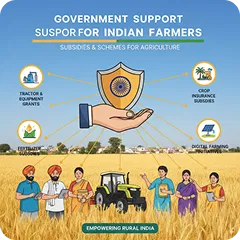
The Indian government provides support through schemes, financial assistance, training programs, and initiatives to promote organic farming and its adoption across the country. Here are some of the initiatives;
Paramparagat Krishi Vikas Yojana (PKVY) encourages farmers to adopt organic farming methods on a large scale by providing them with financial and technical support.
Mission Organic Value Chain Development for North-Eastern Region (MOVCDNER) aims to encourage farmers in the Northeast region to adopt organic farming practices and support them in obtaining organic certification for their farms.
Capital Investment Subsidy Scheme (CISS) for commercial production units of organic inputs.
The National Mission for Sustainable Agriculture (NMSA) provides financial support for organic farming projects, capacity building, organic input distribution, and market linkages.
Mission for Integrated Development of Horticulture (MIDH) provides financial assistance for adopting organic farming, establishing vermicompost units, and procurement of organic inputs.
Rashtriya Krishi Vikas Yojana (RKVY) supports various agricultural initiatives, including organic farming. It provides financial assistance to states for implementing organic farming projects, organizing training programs, and promoting organic input distribution.
Pradhan Mantri Krishi Sinchayee Yojana (PMKSY): While not specific to organic farming, PMKSY includes provisions for water conservation and efficient irrigation practices, which are vital for sustainable and organic agriculture.
Challenges and Solutions in Organic Farming
The transition from conventional to organic farming can be financially challenging as farmers may experience lower yields and need time to build soil health. Seeking financial support through government schemes may help farmers during this period.
Organic farming requires specialized knowledge and skills. Farmers may face challenges in acquiring the necessary training and expertise. Attending workshops, training programs, and seeking guidance from experienced organic farmers or agricultural extension services may help to solve this problem.
Organic farmers often face challenges in accessing markets and obtaining fair prices for their produce. Building a strong network with organic retailers, participating in farmers’ markets, joining organic farmers’ associations or cooperatives, and leveraging digital platforms for direct sales may tackle this challenge.