How to Save Your Crop from Waterlogging — DIY Drainage and Recovery Steps
Introduction
Waterlogging is one of the most common crop problems during heavy rainfall and monsoon. It happens when excess water stays in the field and fills the soil pores. Due to this, crop roots do not get enough air.
Most crops need both water and oxygen in the root zone. When water remains standing for a long time, roots become weak, nutrient uptake reduces, and disease risk increases.
Waterlogging damage can be reduced if farmers act quickly. The first step is safe drainage, followed by root recovery, nutrient correction, disease monitoring, and field preparation for the next rainfall.
What is Waterlogging in Crops?
Waterlogging means excess water remains in the field or root zone for longer than the crop can tolerate. Even if water is not visible on the surface, the soil may remain fully saturated below.
In waterlogged soil:
Roots do not get enough oxygen
Beneficial soil microbes are affected
Nutrient uptake becomes poor
Root growth slows down
Soil-borne diseases increase
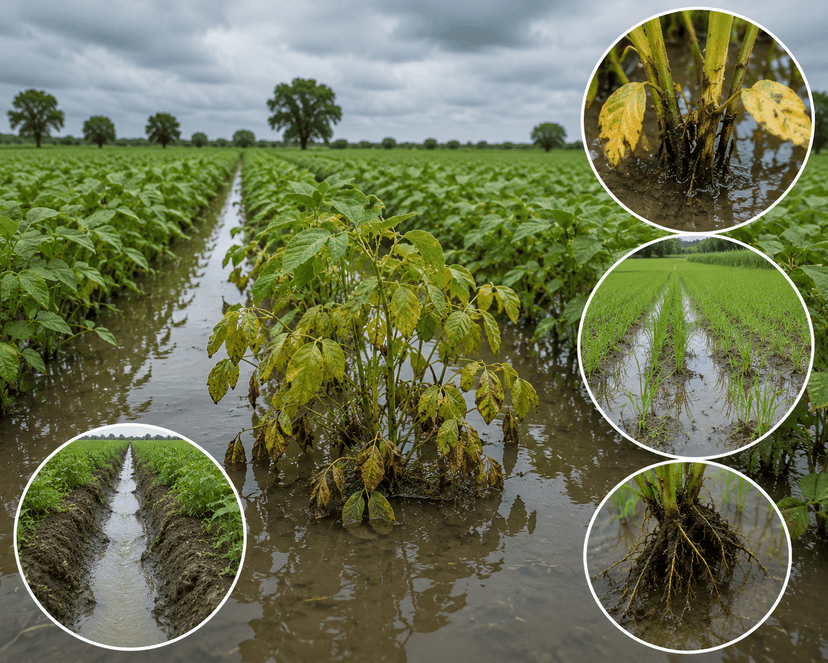
Leaves may turn yellow
Plants may wilt even when water is present
Why Waterlogging Damages Crops
Waterlogging does not damage all crops in the same way. Paddy can tolerate standing water better than crops like soybean, cotton, maize, pulses, vegetables, and oilseeds.
Most upland crops suffer because their roots need air. When the soil remains full of water, the plant cannot breathe properly through the roots.
Main effects of waterlogging
Root suffocation
Yellowing of leaves
Poor nutrient uptake
Flower and fruit drop
Root rot and stem rot
Slow crop growth
Plant death in low patches
Reduced yield and quality
The damage becomes more serious when water remains for more than 24–48 hours in sensitive crops, especially at seedling, flowering, or fruiting stages.
Common Signs of Waterlogging Stress
Waterlogging symptoms may appear within a few days after heavy rain.
Above-ground symptoms
Yellowing of lower leaves
Wilting even when soil is wet
Drooping plants
Slow growth
Leaf reddening or purpling in some crops
Flower drop
Fruit or boll drop
Patchy drying in low areas
Root symptoms
Brown or black roots
Rotten smell from soil
Poor root branching
Soft roots
Reduced nodules in legume crops
Plants easily pulled from soil
Field symptoms
Standing water in low patches
Water trapped near bunds
Blocked outlet drains
Soil crusting after water dries
Weed and disease increase
Crops Most Affected by Waterlogging
Some crops are more sensitive to standing water than others.
Crop
Waterlogging Risk
Soybean
High risk of root rot and yellowing
Cotton
Root stress, reddening, boll drop, disease risk
Maize
Poor root growth, lodging, stem/root rot
Pulses
Root rot, poor nodulation, plant death
Vegetables
Root rot, wilting, fruit drop
Groundnut
Poor pegging, root disease
Sesame
Very sensitive to standing water
Paddy
More tolerant, but excess stagnant water can still harm young or stressed crop
Local crop stage, soil type, rainfall intensity, and drainage condition decide the final damage level.
Step-by-Step DIY Drainage and Recovery Plan
1. Check the Field Safely After Rain
Visit the field only when it is safe. Avoid entering during lightning, strong water flow, or deep standing water.
First check:
Where water is standing
Which side has natural slope
Whether outlet drains are blocked
Which crop patches are most affected
Whether bunds are trapping water
Whether water from nearby fields is entering your field
Do not take a tractor or heavy machine into wet soil. It can increase compaction and make drainage worse.
2. Open a Main Outlet Drain
The first drainage step is to give water a clear exit path.
Identify the lowest side of the field. Open or clean the main outlet so water can move out naturally.
Useful actions:
Remove mud blocking the outlet
Cut a small safe opening in the bund where needed
Clean weeds and crop waste from the outlet
Connect field water to an existing drainage channel
Avoid sending water into another farmer’s field without coordination
Keep the outlet wider than small internal channels so water does not get blocked again.
3. Make Small Field Channels
After opening the outlet, make small channels from waterlogged patches toward the main drain.
This is useful in soybean, cotton, maize, pulses, vegetables, and groundnut fields.
Simple method
Use a spade, hoe, or small blade
Start from standing water patches
Connect each patch to the nearest outlet
Keep channels shallow but continuous
Avoid cutting too close to plant roots
Give gentle slope toward the drain
Even a small channel can save plants if water starts moving.
4. Break Water-Trapping Bunds Carefully
Sometimes water remains in the field because bunds are too high or outlets are closed.
If water is trapped, create small openings at safe points. Do not cut the whole bund suddenly. Fast water movement can wash away soil and damage young plants.
Use controlled openings so water drains slowly.
Best practice:
Make one small opening first
Watch water flow
Increase opening only if needed
Protect the outlet from soil erosion
Close or repair the bund later when field dries
5. Clear Blocked Furrows Between Rows
In row crops like cotton, maize, soybean, chilli, tomato, and vegetables, water often gets trapped between rows.
Clear furrows to allow water movement.
Check:
Furrows blocked by weeds
Soil clods stopping water
Crop residue blocking flow
Field ends where water collects
Row-to-row drainage is very important in heavy rainfall areas.
6. Use Raised Beds or Ridges Where Possible
If the crop is already planted, full raised bed preparation is not possible. But in vegetable, cotton, chilli, and other row crops, farmers can still improve drainage by clearing furrows between raised rows.
For future sowing, raised beds or ridges are useful in waterlogging-prone fields.
Benefits:
Roots stay above standing water
Excess rainwater moves through furrows
Soil aeration improves
Root rot risk reduces
Intercultural operations become easier
Crop Recovery Steps After Water Drains
1. Do Not Disturb Wet Soil Immediately
After water drains, soil remains soft and sticky. Avoid hoeing, ploughing, or tractor movement immediately.
Working in wet soil can:
Break roots
Increase compaction
Damage plant base
Reduce soil aeration later
Create hard soil layers after drying
Wait until the soil reaches workable moisture.
2. Check Root Health
Pull out a few plants from affected and healthy patches.
Check:
Root colour
Root smell
New white root growth
Soft or rotten roots
Nodules in soybean and pulses
Collar region near soil surface
If roots are firm and new roots are forming, crop recovery is possible. If roots are black, soft, and rotten, recovery may be poor.
3. Remove Severely Damaged Plants
In small patches, remove dead or rotten plants. Do not leave diseased plant material in the field.
Remove plants showing:
Complete wilting
Rotten roots
Fungal growth near stem base
Bad smell
Dead patches
Stem rot or collar rot
This helps reduce disease spread to nearby healthy plants.
4. Watch for Root Rot and Stem Rot
Waterlogging increases fungal and bacterial disease risk. Crops like soybean, cotton, maize, pulses, and vegetables need close monitoring after rain.
Check for:
Sudden wilting
Brown or black roots
Collar rot near soil level
Stem softening
Leaf spots after humid weather
Fruit rot in vegetables
Boll rot in cotton
Use fungicide or bactericide only as per local agriculture department, KVK, or state agriculture university recommendation. Avoid random chemical mixing.
5. Correct Nutrient Stress Carefully
After heavy rain, nutrients like nitrogen may leach from the soil. Leaves may become yellow. But do not apply heavy fertilizer immediately.
First confirm:
Water has drained
Roots are still active
Soil is workable
Crop is showing signs of recovery
Yellowing is not due to root rot
Nutrient correction should be crop-specific. In flood-hit areas, Punjab Agricultural University advisories have recommended crop-specific nutrient support such as foliar sprays in paddy and cotton, but these recommendations vary by crop and local situation.
For exact nutrient spray, fertilizer dose, and timing, follow local KVK or agriculture university guidance.
6. Manage Weeds After Soil Becomes Workable
Weeds grow fast after rainfall. They compete for nutrients and keep the field humid.
Remove weeds when the soil becomes workable. Avoid deep hoeing near weak crop roots.
Weed management helps:
Improve air movement
Reduce pest hiding places
Reduce disease humidity
Improve crop recovery
Support nutrient use by the main crop
7. Avoid Immediate Heavy Irrigation
After waterlogging, do not irrigate again until the soil moisture reduces. Extra irrigation can restart root stress.
Check the soil by hand. If soil remains wet below the surface, wait.
Irrigation should restart only when the crop and soil need it.
DIY Drainage Methods for Different Field Conditions
Low-Lying Field
Low-lying fields need permanent drainage planning.
Recommended steps:
Keep one main drain ready before monsoon
Maintain field slope where possible
Avoid blocking natural water flow
Use raised beds for sensitive crops
Clean outlets before heavy rain forecast
Flat Field
Flat fields hold water for longer.
Recommended steps:
Make shallow channels across the field
Connect channels to a main outlet
Use broad bed and furrow system in future
Avoid over-irrigation before expected rain
Maintain proper spacing
Heavy Clay Soil
Clay soil drains slowly and remains wet for longer.
Recommended steps:
Avoid machinery when wet
Make surface drains before monsoon
Add organic matter as per local practice
Use ridge and furrow planting for suitable crops
Avoid very dense sowing
Vegetable Field
Vegetables are highly sensitive to root zone waterlogging.
Recommended steps:
Open furrows immediately
Remove rotten fruits and leaves
Support weak plants where needed
Watch for fruit rot and root rot
Use raised beds in future sowing
Orchard or Plantation Crop
In orchards, standing water near the root zone can damage trees.
Recommended steps:
Remove water from the basin area
Keep drainage away from the trunk
Avoid soil piling directly around the stem
Check for gum, root rot, or collar rot
Do not apply heavy fertilizer until roots recover
What Not to Do After Waterlogging
Do not enter the field with a tractor immediately
Do not apply heavy urea without checking roots
Do not spray chemicals randomly
Do not ignore low patches
Do not keep drainage outlets blocked
Do not remove all bunds at once
Do not irrigate again too early
Do not leave rotten plants in the field
Do not assume yellowing is always nutrient deficiency
Do not delay field inspection after water drains
Correct timing is very important in waterlogging recovery.
Crop-Wise Recovery Focus
Crop
Main Risk After Waterlogging
Recovery Focus
Paddy
Stagnant water, nutrient loss, disease
Maintain safe water level, monitor diseases
Soybean
Root rot, yellowing, poor nodulation
Drain quickly, check roots, avoid heavy urea
Cotton
Root stress, reddening, boll drop
Drain furrows, watch boll rot and sucking pests
Maize
Root damage, lodging, stem rot
Remove water, support weak plants, check stem base
Pulses
Root rot, poor nodules, plant death
Drain fast, avoid water stagnation
Vegetables
Wilting, root rot, fruit rot
Raised beds, furrow drainage, disease monitoring
Groundnut
Poor pegging, root disease
Drain water, avoid soil disturbance when wet
Preventive Steps Before Next Heavy Rain
Waterlogging prevention is easier than recovery.
1. Prepare Drainage Before Monsoon
Clean field channels, outlets, and bund openings before heavy rain. Do not wait until water stands in the field.
2. Follow Proper Land Levelling
Uneven fields create water pockets. Land levelling helps water move evenly and reduces low-patch damage.
Laser land levelling and proper field layout can improve water movement and irrigation efficiency in suitable areas. ICAR-CSSRI has worked on land development and drainage systems for improved water management.
3. Use Ridge and Furrow or Broad Bed Furrow System
For waterlogging-prone crops and soils, raised planting systems help drain excess rainwater.
Suitable in many areas for:
Soybean
Cotton
Maize
Pulses
Vegetables
Groundnut
Follow local spacing and bed design recommendations.
4. Select Suitable Crop and Variety
In fields that get waterlogged every year, choose crops and varieties that can tolerate local rainfall and soil conditions better.
Consult the local agriculture officer or KVK for crop selection. Avoid sensitive crops in fields where drainage is very poor.
5. Maintain Soil Organic Matter
Good soil structure improves water movement and root growth. Organic matter also supports soil microbes.
Use farmyard manure, compost, green manure, or crop residue management as per local recommendation and availability.
6. Keep Community Drains Clean
Sometimes one farmer’s field cannot drain because the village drain or common outlet is blocked.
Before monsoon, coordinate with nearby farmers to clean:
Common field drains
Roadside channels
Outlet points
Culverts
Water passages
Waterlogging is often a field-level and community-level issue.
When to Re-Sow or Gap Fill
In some cases, crop recovery is not economical.
Consider re-sowing or gap filling only after checking:
Crop stage
Plant population left
Root condition
Time left in the season
Seed availability
Rain forecast
Local advisory
Cost of re-sowing
Do not take this decision only by looking at yellow leaves. Check surviving plant stand and root health first.
For major crop loss, contact local agriculture officials for assessment and crop insurance guidance where applicable.
Safety Precautions During Drainage Work
Do not work during lightning or heavy rain
Avoid deep water flow areas
Use proper footwear
Do not allow children near drainage cuts
Avoid sudden bund cutting
Work with neighbours if water flow is strong
Keep tools safely after work
Be careful near electric pumps and wires
Farmer safety comes first.
Conclusion
Waterlogging can damage crops quickly, especially during heavy rainfall and monsoon. The most important step is to drain excess water as early as possible.
After drainage, check root health, remove rotten plants, avoid heavy fertilizer use, monitor diseases, and support crop recovery with balanced management. For future protection, prepare field drains, maintain outlets, follow proper land levelling, and use raised beds or ridges in waterlogging-prone fields.