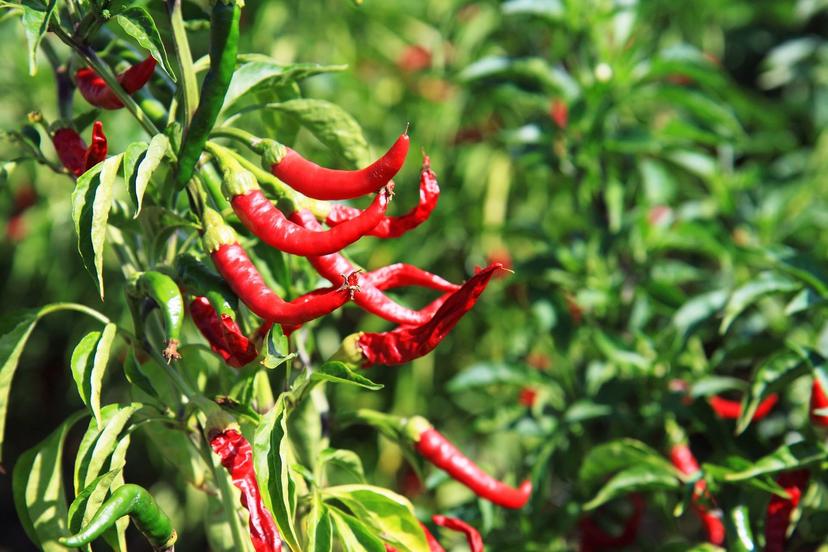
Chilli anthracnose, caused by the fungus Colletotrichum capsici, is a serious threat to chilli crops worldwide. This disease affects both plant foliage and fruit, causing yield losses and poor crop quality. Knowing its symptoms and management is essential for farmers to protect their chilli harvest.
Mode of Spread and Survival
- Temperature around 28°C, relative humidity of 92-95%, and rainfall during fruit ripening favour disease development.
- The fungus is seed-borne and spreads through airborne conidia.
- It survives on dead twigs and plant debris in the field.
Symptoms
The disease appears in two phases: dieback and ripe fruit rot.
Dieback Phase
- Tender twigs show necrosis starting from the tip and progressing downward.
- Affected twigs may turn straw-coloured.
- Black dots (fungal acervuli) appear on necrotic spots.
- Severe infection can wither the entire chilli plant. The fungus may also affect the fruit stalk and stem.
Ripe Fruit Rot Phase
- Small, black, circular sunken spots with black margins appear on the fruit skin, developing a pinkish mass of fungal spores.
- As the disease progresses, concentric markings with dark acervuli form, causing premature fruit drop and yield loss.
- Cut fruits show tiny black stromatic masses on the inner skin.
- In advanced stages, seeds are covered by fungal hyphae, giving them a rusty colour.
Preventive Measures
- Inspect seeds and fields regularly for signs of anthracnose.
- Ensure proper field drainage.
- Follow a 3-4 year crop rotation with non-host crops.
- Use disease-free chilli seeds for planting.
- Remove infected plant debris from the field.
- Harvest early to reduce symptom severity.
Management of Chilli Anthracnose
A combination of biological and chemical control measures is often required to effectively manage anthracnose infections in chilli crops. Fungicides that can be used to control are mentioned in the table below:
|
Product Name |
Technical Content |
Dosage |
|---|---|---|
|
Biological Management |
||
|
Botanical Extracts |
1-2 ml/lit of water |
|
|
Natural Extracts & Antioxidants |
0.5-1 gm/lit of water |
|
|
Pseudomonas fluorescence |
3 gm/lit of water
|
|
|
Chemical Management |
||
|
Copper Hydroxide 53.8% DF |
2 gm/lit of water |
|
|
Fluopyram 17.7% + Tebuconazole 17.7% SC |
1 ml/lit of water |
|
|
Fluxapyroxad 250 G/L + Pyraclostrobin 250 G/L SC |
0.4-0.5 ml/lit of water |
|
|
Mancozeb 75% WP |
3 gm/lit of water |
|
|
Thiophanate Methyl 70% WP |
0.5 g/lit of water |
|
|
Kresoxim-methyl 15% + Chlorothalonil 56% WG |
2 gm/lit of water |
|
|
Kresoxim-methyl 44.3% SC |
0.6 ml/lit of water |
|
|
Azoxystrobin 18.2% + Difenoconazole 11.4% SC |
1 ml/lit of water |
|
|
Azoxystrobin 23%SC |
1-1.5 ml/lit of water |
|
|
Chlorothalonil 75% WP |
2.5 gm/lit of water |
|
|
Difenoconazole 25% EC |
0.5 ml/lit of water |
|
|
Copper Oxychloride 50% WP |
2 gm/lit of water
|
|
|
Azoxystrobin 8.3% + Mancozeb 66.7% WG |
3 gm/lit of water |
|
|
Metiram 55% + Pyraclostrobin 5% WG |
3-3.5 gm/lit of water |
|
Frequently Asked Questions
Q1. What causes anthracnose disease in chilli?
Chilli anthracnose is caused by the fungus Colletotrichum capsici. It thrives in warm, humid conditions of around 28°C and 92-95% relative humidity, especially during fruit ripening.
Q2. Can chilli anthracnose spread through seeds?
Yes. The fungus is seed-borne and can also spread through airborne spores (conidia). Always use certified, disease-free chilli seeds to reduce the risk of infection.
Q3. How do I prevent anthracnose in chilli crops?
Use disease-free seeds, maintain field drainage, rotate crops for 3-4 years, remove infected plant debris, and harvest early when disease pressure is high.