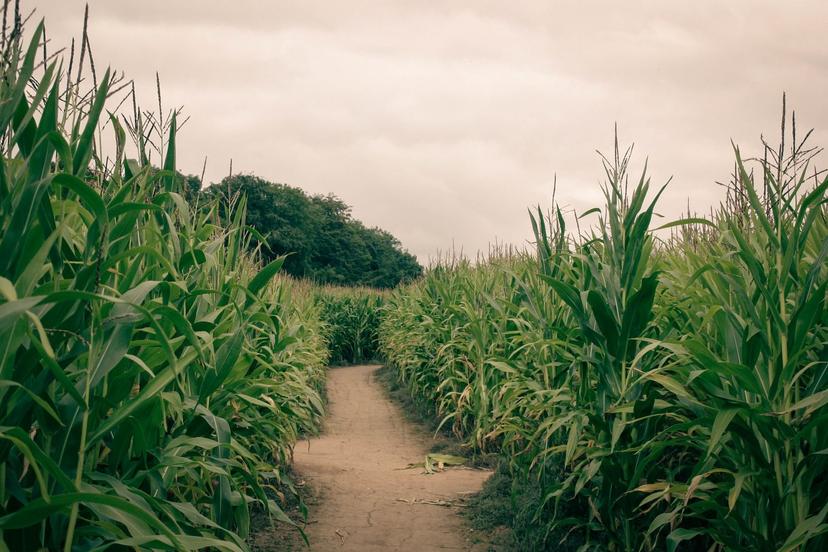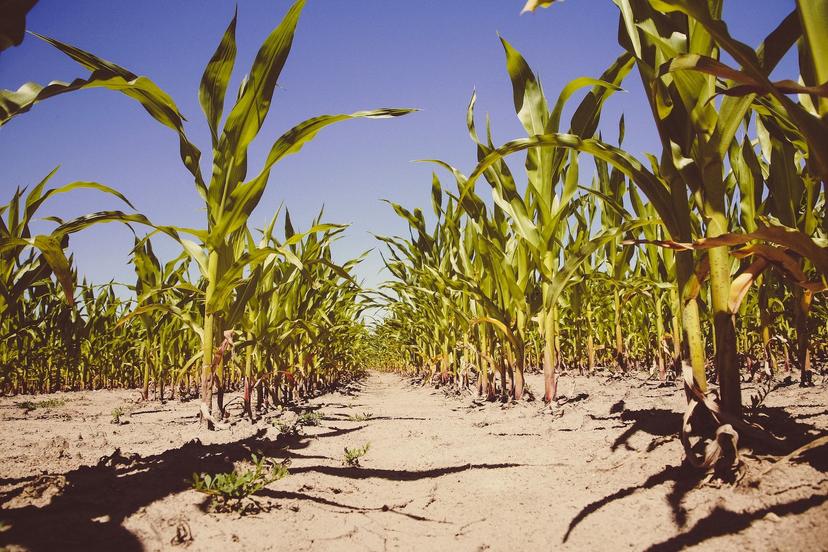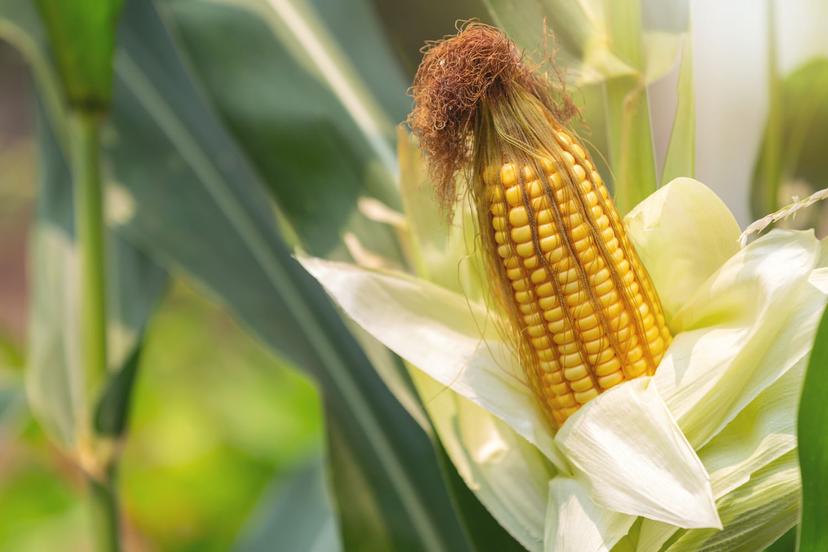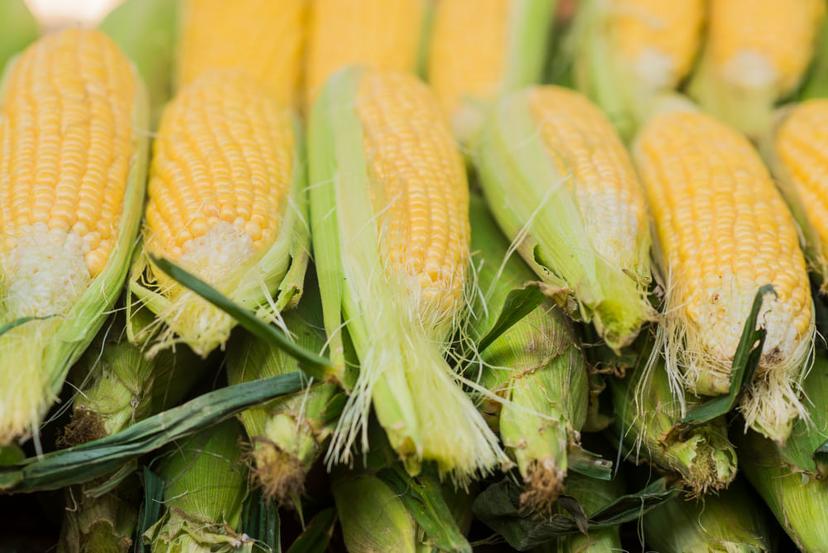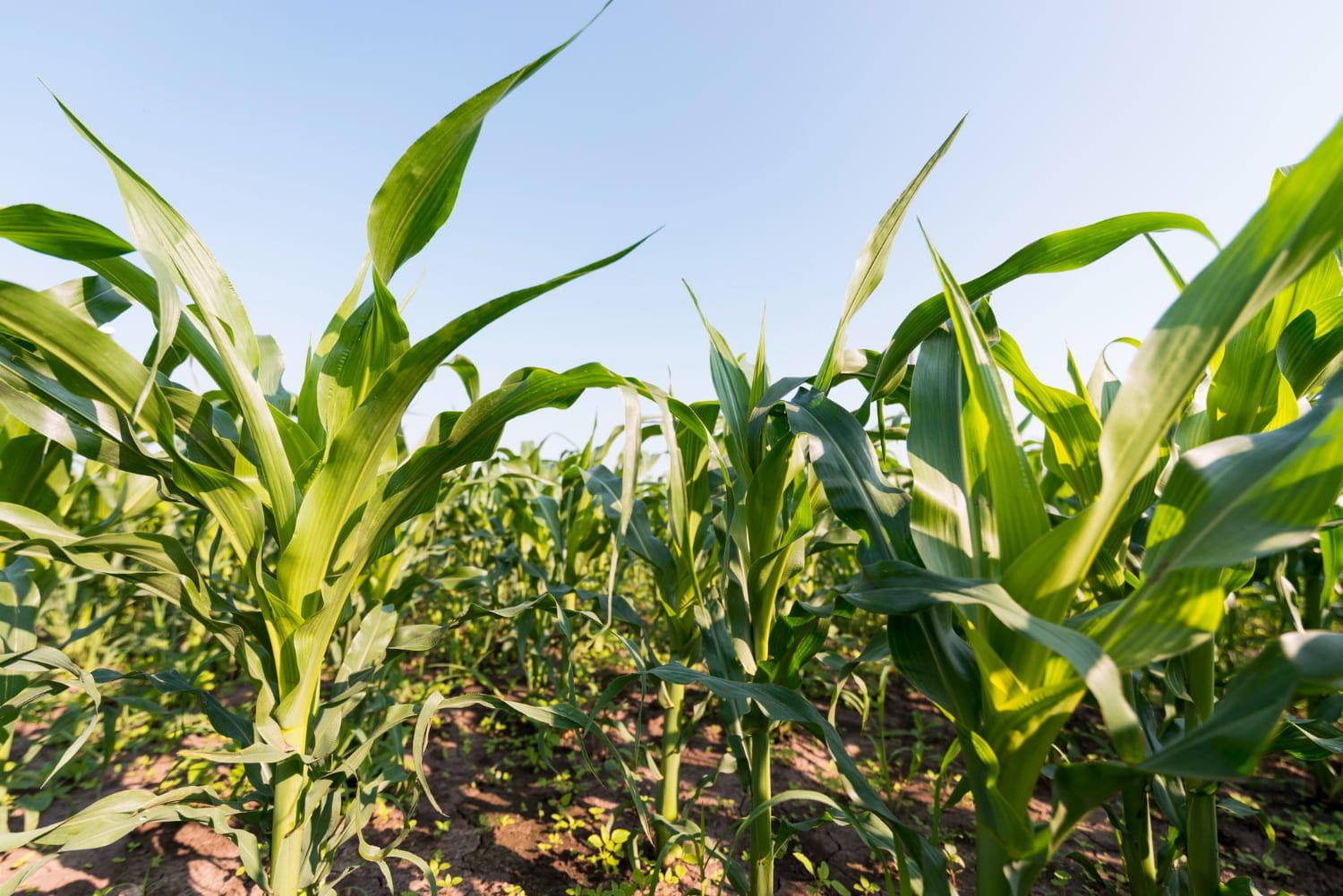
Maize (Zea mays L.) is one of the most adaptable crops that can thrive in a wide range of agro-climatic conditions.It has the highest genetic yield potential and is referred to as the “Queen of cereals” worldwide. In India it is seen as a food crop for the rural populace however, it also has enormous industrial potential. To ensure optimal yields and quality, it is essential to follow a well-defined package of practices of maize (POP). Read further to know the complete guidelines on how to grow maize crops for a successful harvest.
Maize Crop at a Glance
Botanical Name: Zea mays
Common Name: Corn (English), Makka (Hindi), Makka cholam (Tamil and Malayalam), Mokka jonna (Telugu).
Crop Season: All seasons [Kharif and Rabi]
Crop type: Field crop
Soil Requirements
The maize crop requires soil that is deep, fertile, abundant in organic matter and well-drained. The soil should have a medium texture and good water-holding capacity. Sandy loam soils with pH ranging between 6.5 to 7.5 are highly preferred for maize cultivation. Since maize is mostly cultivated during the rainy season, it is particularly vulnerable to waterlogging. Hence, black clayey soils (which hold excessive water) are not suitable for maize cultivation.
Climatic Requirements
From planting to emergence, maize requires a temperature range of 9° to 30°C. As temperature and photoperiod (day length) increase, the leaf number rises from emergence through silking. Time to tasseling increases when temperatures range between 0° to 17°C. Maize grows fastest at around 30°C.As long as there is no frost, a longer grain-filling period leads to higher yield. Higher sunlight also increases the rate of photosynthesis in maize.
Package of Practices for Maize
Land Preparation for Maize Cultivation
- Prepare the field by ploughing the land 2-3 times with a mouldboard plough.
- Form the seedbed by ploughing the land twice.
- Then, crush the clods using a rotavator to bring the soil to fine tilth.
- Add FYM or compost at the rate of 10 t/acre during the last ploughing and level the land.
Varieties/Hybrids
|
Hybrids |
DHM-11, DHM-113, DPCH-6, Pioneer-3342 |
|---|---|
|
Sweet corn |
Madhuri, Priya, Win Orange |
|
Baby corn |
VL-42, Him-123, Him-129 |
|
QPM |
Shakti-1, HQPM-1, HQPM-5 |
Seed rate and Spacing
|
Type of Maize |
Seed Rate (kg/ha) |
Spacing (cm) |
|
|---|---|---|---|
|
Row to Row spacing |
Plant to Plant spacing |
||
|
Grain |
20 |
60 |
20 |
|
Pop corn |
12 |
60 |
20 |
|
Sweet corn |
8-10 |
75 |
25 |
|
Baby corn |
25-30 |
45 |
20 |
|
Fodder maize |
45-50 |
30 |
10 |
Seed Treatment
Before planting, it is recommended to treat the maize seeds with Cyantraniliprole 19.8 %+Thiamethoxam 19.8% FS at a rate of 6 ml/kg of seeds to manage seed-borne pests.
Irrigation Schedule
The maize crop is sensitive to both moisture stress and excess moisture, so irrigation should be given as needed.Maintain maximum moisture during the critical stage, 45–65 days after planting, to avoid yield loss. Important stages are the sixth leaf, late knee height, tasselling, 50% silking, and dough stage. Tasselling and silking are the most critical stages.Ridge and furrow irrigation is preferred for maize farming.
Manures and Fertilizers
During the last ploughing, apply 12.5 t/ha FYM and 10 packets of 1 kg Azospirillum. A NPK fertilizers should be applied as nearly as possible to the soil test’s recommendations. In the absence of soil test recommendations, use a general guideline of 120:60:60 kg/ha N:P₂O₅:K₂O both during kharif and rabi. Apply a full dose of P₂O₅ and K₂O and 25% nitrogen before or during sowing.
Inter-cultivation Practices
Weeding
Weeds are a major problem in maize and can reduce yield by up to 35%.It is believed that the first 4 to 6 weeks are the most crucial time for weed competition in maize. It is advised to inter-cultivate the soil between the rows using some animal-drawn or mechanical implements that push the soil towards the plant base. Using herbicides is also effective in keeping weeds at bay. Pre-emergence applications like Atrazine, pendimethalin or simazine at a rate of 1 kg/ha in 500 litres of water or in case of post-emergence, herbicidal combinations like Mesotrione + Atrazine (2.27%+22.7% SC), Topramezone (33.6% SC) or Tembotrione (34.4% SC) can help control weeds of maize.
Crop Protection: Pests and Diseases
Pests Infesting Maize Field
a) Stem borer (Chilo partellus)
Symptoms
- It infests the crop a month after planting and until the maize cobs appear.
- The common damage sign is “dead heart” or withering of the central shoot. Bore holes appear near the nodes near the stem.
- Young larvae feed on folded leaves, causing “shot hole” symptoms.
Management
- Remove the weeds that act as an alternate host.
- Release Trichoderma chilonis eggs by placing 2 to 3 eggs per acre.
- In case of severe infestation, use Chlorantraniliprole at 0.3 ml/lit water or Chlorantraniliprole 0.5% + Thiamethoxam 1% GR at the rate of 2.5 kg/acre, along with 7 to 10 kg sand.
b) Fall armyworm (Spodoptera frugiperda)
Symptoms
- Young larvae feed on leaf tissue from one side.
- Later, larvae feed from leaf edges and make holes, causing rows of “shot holes.”
- In severe cases, larvae enter the corn ear and feed on kernels.
Management
- Hand-pick and destroy the egg masses and larvae by crushing or submerging in kerosene.
- Apply dry sand as soon as you notice the occurrence of fall army worm in the field to the whorl of the damaged maize plants.
- Use a fall armyworm-specific pheromone trap at a rate of 15 per acre to mass-trap male moths.
- Squirt 5% Neem seed kernel extract (NSKE) at a rate of 5 ml/lit of water to stop fall armyworm larvae and reduce egg laying or hatching.
- The following pesticides may be used up to the early tasselling stage to control larvae in their second and third instars: Emamectin benzoate 5% SG, Chlorantraniliprole 18.5% SC, Tetraniliprole 18.18% SC.
- Seed treatment with Cyantraniliprole 19.8% + Thiamethoxam 19.8% FS at 6 ml/kg seed helps control early pests.
Diseases affecting Maize field
a) Turcicum Leaf blight (Helminthosporium turcicum)
Symptoms
- Long, elliptical, greyish green or tan lesions appear on leaves.
- In the early stages, small yellowish, round to oval spots are visible on the leaves.
- In the later stages, the spots gradually grow larger and are straw to greyish brown in colour in the centre with dark brown margins.
- Under extreme humidity, the entire leaf region becomes necrotic, giving the illusion that the plant is dead.
Management
- Use potassic fertilizers and cut down on the use of excessive nitrogenous fertilizers, there shouldn’t be any water stress.
- Under severe infection, use mancozeb at the rate of 0.2% or Avtar fungicide (Zineb 68% + Hexaconazole 4% WP) at the rate of 2.5 gm/lit water.
b) Charcoal rot (Macrophomina phaseolina)
Symptoms
- Plants that are about to mature are frequently attacked by charcoal rot.
- The infection begins in the roots, where the fungus causes brown, water-soaked lesions that later turn black.
- As the plant ages, the disease spreads to the lower stem, producing grey streaks on the lower internodes. causing the crown to ripen prematurely, shatter, and break.
- The presence of numerous black sclerotia inside split stalks gives a burnt appearance, which is a key symptom of the disease.
Management
- Remove infected plant debris.
- Rotate crops often with plants that aren’t fungus’s natural hosts.
- Grow resistant varieties of maize.
- Irrigate the crop at regular intervals from ear head emergence to maturity.
- Increase the dose of potassium application.
- Application of FYM enriched with Trichoderma viride during the last ploughing to reduce the intensity of disease.
- Under severe infestation, to manage the disease spray Nativo (Tebuconazole 50% + Trifloxystrobin 25% WG) at the rate of 0.6 gm/lit water or Amistor top (Azoxystrobin 18.2% + Difenoconazole 11.4% SC) at the rate of 1 ml/lit water.
c) Sheath Blight (Rhizoctonia solani)
Symptoms
- The condition is characterised by broad, discoloured patches that alternate with erratic black bands.
- Pre-flowering is typically observed when disease first manifests.In addition, the stalk and the internodes split open in infected regions.
Management
- Destroy infected plant debris.
- Spray of Propiconazole or carbendazim at 0.1% is recommended or spray Hexaconazole 5% SC @ 2 ml/lit water.
d) Rust (Puccinia sorghi)
Symptoms
- Brown colour pustules are observed on the leaf surface.
- In severe infections, the whole leaf may wither completely presenting a scorched appearance to the field.
Management
- Removal and destruction of alternate hosts (Oxalis corniculate).
- Spray Mancozeb 64% + Metalaxyl 8% WP at the rate of 1.5-2 gm/lit water or 300-400 gm/acre.
- In severe situations, apply Tilt (Propiconazole 25 % EC) at 200 ml/acre.
e) Bacterial Stalk Rot (Erwinia chrysanthemi pv zeae)
Symptoms
- The condition is characterized by the development of soft rot on basal internodes giving a water-soaked appearance.
- An unpleasant odour usually accompanies such rotting.
- Leaves sometimes show signs of wilting and affected plants topple down.
Management
- Soil should be drenched with bleaching powder containing 33% chlorine @ 10 kg/ha at pre-flowering stage.
- Spray Zineb 68% + Hexaconazole 4% at the rate of 2.5 gm/lit water or 500 gm/acre.
Harvesting
Maize can be harvested at physiological maturity, when the stalks and leaves are still somewhat green, but the husk has dried and turned brown. In general stalks along with cobs are harvested and stacked. Further, a dehusker - cum - sheller can be used for shelling of unhusked cobs. For better results maize should be shelled when the moisture ranges between 15 to 20%.
Yield
The feasible yield for the maize crop ranges from 20-25 qntl/acre since it has the best production potential among the grains.
Frequently Asked Questions
What is the best season for maize farming in India?
Maize can be grown in all seasons, mainly kharif and rabi, depending on local climate and irrigation.
What are common pests in maize crop?
Stem borer and fall armyworm are common pests in maize crops and should be managed early.
What are the key steps for successful maize cultivation in India?
Proper land preparation, quality maize seed selection, correct spacing, timely irrigation, and pest management are essential.