Early blight is a common fungal disease affecting tomato plants. Caused by Alternaria solani, it appears early in the season and is a serious problem in warm, humid conditions. The fungus can infect leaves, stems, and fruits of the tomato plant, reducing fruit quality. This article covers how to identify early blight symptoms, its causes, and how to prevent and manage it in your fields.
Symptoms of Early Blight in Tomato
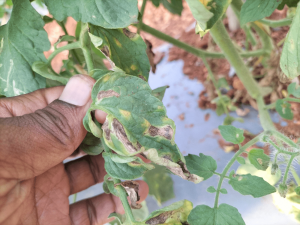
- Circular, dark brown to black spots with concentric rings, typically 1-1.5 cm in diameter, appear on affected leaves.
- These spots resemble a "Bull's eye."
- As the infection progresses, spots may merge, causing leaves to turn yellow and fall off.
- This disease first affects older tomato leaves and then spreads to stems and fruits.
- In severe cases, stem lesions cause the plant to wilt and die.
- On fruits, similar circular lesions with concentric rings appear, which later enlarge and turn dark and sunken.
How Is It Caused?
The fungus survives on plant debris and soil, and can enter a field through contaminated seeds or transplants.It thrives in wet, humid conditions and rainy weather or overhead irrigation can promote disease development. Tomato plants with nutrient deficiencies are more susceptible to early blight.
Preventive Measures
- Rotate crops with non-Solanaceae families such as legumes (beans, peas), brassicas (cauliflower, cabbage), or grains (wheat, barley) to reduce fungal spore buildup in the soil.
- Avoid transplanting seedlings showing early blight symptoms.
- Space tomato plants adequately to improve air circulation and lower humidity.
- Grow disease-tolerant varieties like Indus 1030 tomato or Bangalore red tomato.
- Maintain balanced crop nutrition to improve disease resistance.
- Always remove and destroy plant debris properly after harvest to prevent the spread of the disease.
- Avoid doing any intercultural activities during moist days.
- Keep the field weed-free as weeds can act as alternate hosts for the pathogen.
- Avoid overhead irrigation which can promote fungal growth.
Management of Early Blight Disease in Tomato
|
Product name |
Technical content |
Dosage |
|---|---|---|
|
Biological Management |
||
|
Natural extracts & antioxidants |
1 gm/lit of water |
|
|
Pseudomonas fluorescence & Bacillus subtilis |
Spray: 5 - 10 gm/lit of water Soil Application: 5 kg of product + 100 kg of FYM per acre |
|
|
Chemical Management |
||
|
Dimethomorph 50% WP |
2 gm/lit of water |
|
|
Ziram 27% SC |
2 ml/lit of water |
|
|
Fluxapyroxad 250 G/L + Pyraclostrobin 250 G/L SC |
0.5 ml/lit of water |
|
|
Azoxystrobin 11% + Tebuconazole 18.3% SC |
1 ml/lit of water |
|
|
Kasugamycin 5% + Copper Oxychloride 45% WP |
1.5 gm/lit of water |
|
|
Copper Hydroxide 53.8% DF |
2 gm/lit of water |
|
|
Mancozeb 75% WP |
3 gm/lit of water |
|
Note: Follow the product label for the correct time of application.
Explore our comprehensive guide on tomato farming for more insights. CLICK HERE
Frequently Asked Question
Q1. What causes early blight in tomato plants?
Early blight of tomato is caused by the fungus Alternaria solani. It spreads through infected soil, plant debris, and contaminated seeds, and thrives in warm, wet conditions.
Q2. How to identify early blight on tomato plant leaves?
Look for dark brown circular spots with concentric rings resembling a "Bull's eye," that are typically 1 to 1.5 cm wide. Infected leaves turn yellow and drop. Similar sunken spots will also appear on stems and fruits.