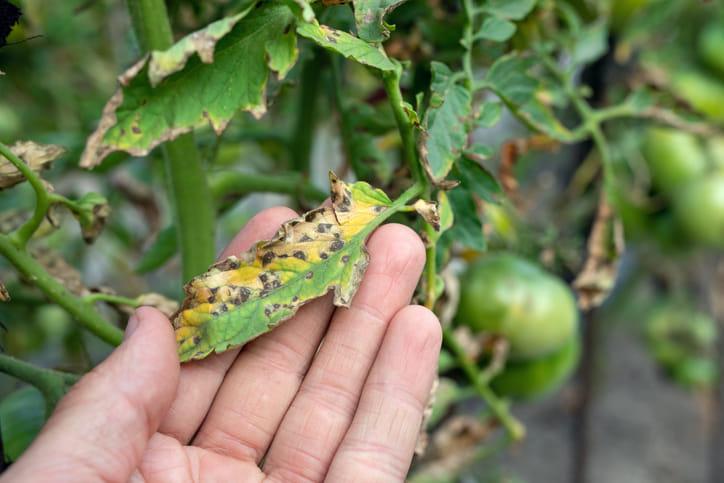
Yellowing of leaves, also called chlorosis, is one of the most common complaints from Indian farmers across crops. It looks like a single problem but can have many different causes — nutrient deficiencies, water stress, pests, diseases, or even poor soil pH. Correct diagnosis is the key to the right treatment.
Understanding Leaf Yellowing
A green leaf gets its colour from chlorophyll, the compound that drives photosynthesis. When chlorophyll production drops or breaks down, the leaf turns pale, yellow, or even white. The pattern of yellowing (old leaves vs young leaves, whole leaf vs between veins) helps identify the cause.
1. Nitrogen Deficiency (Most Common)
Symptoms: Pale yellow colour starts from older lower leaves and moves upward. Plants look stunted and thin.
Solution: Apply nitrogen as urea or DAP based on soil test. Split nitrogen into 2 or 3 doses for cereals. Consider neem-coated urea to reduce losses. Add organic manure for long-term improvement.
2. Iron Deficiency (Iron Chlorosis)
Symptoms: Young upper leaves turn yellow while veins remain green (interveinal chlorosis). Common in alkaline or calcareous soils, and in waterlogged conditions.
Solution: Spray ferrous sulphate (FeSO4) at 0.5 to 1 percent on leaves. Repeat at 10 to 15 day intervals if needed. Correct underlying issues like high pH or poor drainage.
3. Sulphur Deficiency
Symptoms: Uniform yellowing of younger leaves, common in oilseeds and pulses.
Solution: Apply gypsum 100 to 200 kg per acre, or use sulphur-containing fertilizers like SSP or ammonium sulphate.
4. Magnesium Deficiency
Symptoms: Interveinal yellowing of older leaves, with veins still green. Often in sandy soils after heavy rains.
Solution: Spray magnesium sulphate at 1 to 2 percent, or apply 25 to 50 kg per acre in soil.
5. Zinc Deficiency
Symptoms: Yellowing or bronzing of leaves with smaller leaf size and shortened internodes. Very common in paddy and wheat after years of high-NPK farming.
Solution: Apply zinc sulphate 10 to 25 kg per acre once in 2 to 3 years; foliar spray of 0.5 percent ZnSO4 corrects acute deficiency.
6. Waterlogging or Drought
Symptoms: Lower leaves yellow rapidly. Roots may turn brown or rot under waterlogging; plants wilt under drought even when leaves look pale.
Solution: Open drainage channels for waterlogged fields, raise beds for vegetables, and irrigate well in drought conditions. Healthy root function is the foundation of leaf colour.
7. Sucking Pests and Mites
Symptoms: Yellow patches, leaf curling, and stippling on leaves. Aphids, jassids, whiteflies, and mites all cause yellowing.
Solution: Monitor with sticky traps and identify the pest. Use neem-based sprays at low pressure or recommended insecticides above ETL. Always follow label instructions.
8. Viral and Fungal Diseases
Symptoms: Mosaic yellow patterns (virus), yellow halos around dark spots (fungal leaf spots), or general yellowing in root rots.
Solution: Remove and destroy infected plants for viruses (no chemical cure). Use approved fungicides (Mancozeb, Carbendazim, Hexaconazole, Azoxystrobin) for confirmed fungal diseases. Always follow label dose and pre-harvest interval.
9. Poor Soil pH
Highly acidic (pH below 5.5) or highly alkaline (pH above 8.5) soils lock up nutrients even if applied. Yellowing despite fertilization is a clue.
Solution: Apply lime to acidic soils or gypsum to sodic soils based on a soil test.
Diagnosis Table at a Glance
Pattern of Yellowing | Likely Cause |
|---|---|
Old leaves yellow first, uniform | Nitrogen deficiency |
Young leaves yellow, veins green | Iron deficiency |
Younger leaves uniformly yellow | Sulphur deficiency |
Old leaves interveinal yellow | Magnesium deficiency |
Yellow + smaller leaves + short nodes | Zinc deficiency |
Lower leaves yellow + root rot | Waterlogging |
Yellow patches + curling | Sucking pest / mite attack |
Mosaic, mottled yellow | Virus disease |
Practical Steps for Farmers
- Walk through the field and look at which leaves are yellowing first.
- Check soil moisture, root condition, and drainage.
- Look on the underside of leaves for pests.
- Take photos and a fresh leaf sample to your nearest KVK or extension officer.
- Do not over-spray fertilizer or pesticide before confirming the cause.
Conclusion
Yellow leaves are a signal, not a disease in themselves. Identifying the pattern, location, and crop stage helps you reach the right cause and the right solution. A balanced soil test, good drainage, integrated pest management, and timely advice from your local KVK or agriculture officer remain the strongest tools to keep crops healthy and green.