Introduction
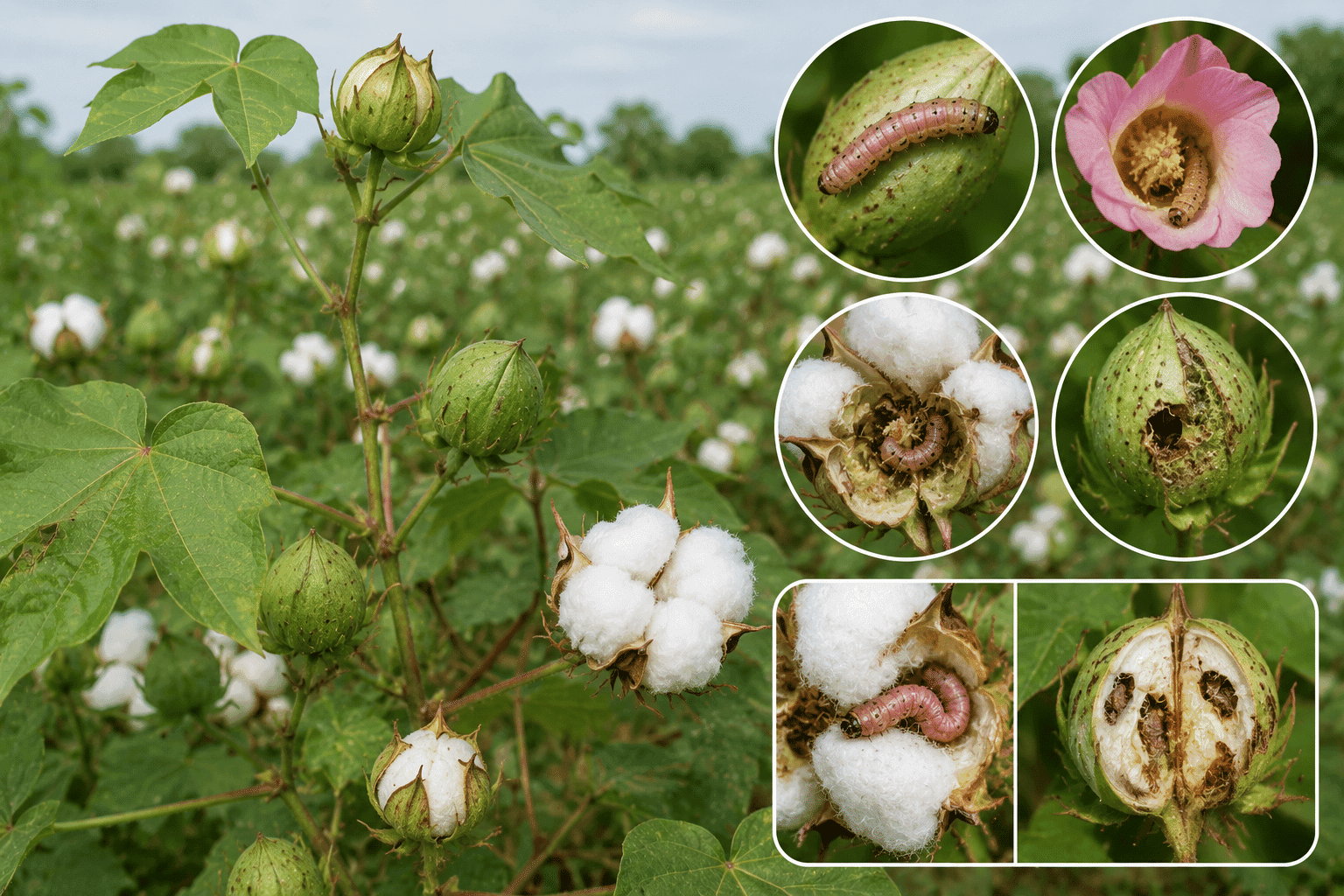
Pink bollworm is one of the most damaging pests of cotton during the Kharif season. The pest mainly attacks flowers and bolls. The larvae enter inside the boll and feed on developing seeds, so the damage is often hidden in the early stage.
Once the larva enters the boll, control becomes difficult. This is why early monitoring is very important. ICAR-CICR advisories recommend regular scouting, removal of rosette flowers, boll inspection, pheromone trap monitoring, and need-based control for pink bollworm management in cotton.
Pink bollworm management should not depend only on insecticide spray. A better approach is field monitoring, clean cultivation, timely destruction of affected parts, trap-based warning, and proper crop termination after picking.
What is Pink Bollworm in Cotton?
Pink bollworm is a caterpillar pest of cotton. The adult moth lays eggs on squares, flowers, and bolls. After hatching, small larvae enter the flower or boll and feed inside.
The pest is difficult to detect because most of the damage happens inside the boll. By the time external symptoms are clearly visible, the larva may already be protected inside the boll.
Pink bollworm is especially serious during flowering and boll formation stages. In late-season cotton, the pest population may increase if old bolls, crop residues, and continuous cotton availability remain in the area.
Why Pink Bollworm is Dangerous
Pink bollworm is not like many leaf-eating pests. It does not always show damage openly on leaves.
It damages:
- Flowers
- Squares
- Green bolls
- Seeds inside bolls
- Lint quality
- Boll opening
- Final kapas quality
TNAU notes that pink bollworm damage includes rosette flowers, excreta near bore holes, damaged seed kernels, discoloured lint, burrowed seeds, and dropping of attacked buds and immature bolls.
This pest directly affects the marketable part of cotton. So early action is important.
Why Pink Bollworm Increases in Kharif Cotton
Pink bollworm usually becomes more noticeable from flowering and boll formation stages.
Risk increases when:
- Cotton is sown very early or very late
- Crop stays in the field for a long duration
- Rosette flowers are not removed
- Fallen flowers and bolls remain in the field
- Old cotton stalks are not destroyed
- Cotton is grown continuously in the same area
- Pheromone trap monitoring is not done
- Farmers depend only on late chemical spray
Symptoms of Pink Bollworm in Cotton
Pink bollworm symptoms must be checked carefully because early damage is often hidden.
1. Rosette Flowers
This is one of the most important early symptoms.
In healthy cotton, flowers open normally. In pink bollworm attack, flower petals may remain tied together and form a rosette-like shape.
2. Bore Holes on Bolls
Larvae enter the boll by making small holes. Sometimes excreta may be seen near the entry hole.
But many times the hole closes and becomes difficult to see from outside. So boll cutting is necessary for proper detection.
3. Larvae Inside Green Bolls
When affected green bolls are opened, larvae may be found inside. The larva may be whitish in the early stage and pinkish later.
This is a clear sign of active infestation.
4. Damaged Seeds
Pink bollworm feeds on developing seeds. When bolls are opened, damaged seed kernels may be seen.
5. Discoloured Lint and Poor Boll Opening
In later stages, affected bolls may open poorly. Lint may become discoloured and quality may reduce.
This affects kapas price and picking quality.
Crop Stage Most at Risk
Pink bollworm can attack from square formation onward, but the most sensitive period is:
- Flowering stage
- Boll formation stage
- Boll development stage
- Late picking stage
Close monitoring should begin before flowering and continue until final picking.
Step-by-Step Management of Pink Bollworm in Cotton
1. Start Monitoring Before Flowering
Do not wait until bolls are damaged.
Start checking the field from square formation and early flowering stage. Walk in a zig-zag pattern and check different parts of the field.
Observe:
- Squares
- Flowers
- Rosette flowers
- Green bolls
- Fallen flowers and bolls
- Pheromone trap catches
Early monitoring helps detect pest activity before heavy boll damage starts.
2. Install Pheromone Traps
Pheromone traps help monitor adult male moth activity. They give early warning about pest presence in the field.
Use traps as per local agriculture department, KVK, or ICAR-CICR advisory. Change lures as recommended by the supplier or local advisory.
ICAR-CICR has advised pheromone trap installation for monitoring pink bollworm activity from August in cotton-growing areas.
Pheromone traps are for monitoring. They should be used along with field scouting, flower checking, and boll inspection.
3. Remove and Destroy Rosette Flowers
Rosette flowers are an early warning sign of pink bollworm.
Collect and destroy them regularly. Do not throw them on the field bund.
Recommended practice:
- Check flowers during field visits
- Remove rosette flowers
- Collect in a bag or container
- Destroy away from the crop
- Repeat every few days during flowering
This helps reduce larvae before they move to bolls.
4. Inspect Green Bolls by Cutting
External checking is not enough for pink bollworm. Larvae may remain hidden inside bolls.
At boll formation stage, collect green bolls randomly from different parts of the field and cut them open. ICAR-CICR advisories recommend plucking and dissecting 20 green bolls per acre from different plants for checking pink bollworm presence and damage.
Check for:
- Small larvae
- Pink larvae
- Damaged seeds
- Internal feeding
- Burrowed lint
- Exit holes
Boll cutting gives a clearer picture than only looking at the plant from outside.
5. Collect Fallen Squares, Flowers, and Bolls
Fallen squares, flowers, and bolls may contain larvae. If they remain in the field, the pest can continue its life cycle.
Collect and destroy:
- Fallen flowers
- Fallen squares
- Damaged green bolls
- Opened affected bolls
- Leftover cotton fruiting bodies after picking
NCIPM pink bollworm IPM guidance includes collection and destruction of fallen squares, flowers, and bolls as part of integrated management.
6. Avoid Keeping Cotton Crop Too Long
Long-duration cotton supports pink bollworm multiplication. If cotton remains in the field after the normal picking period, the pest gets continuous food.
After final picking, remove and destroy crop residues properly. Do not allow ratoon cotton or leftover green bolls to remain in the field.
NCIPM guidance includes crop termination by December and destruction of crop residues as part of pink bollworm IPM.
Crop termination timing may vary by state and sowing window, so follow local advisory.
7. Destroy Cotton Stalks After Harvest
Pink bollworm can survive in leftover bolls, seed cotton, and crop residues. After harvest, remove cotton stalks and destroy remaining bolls.
Good post-harvest sanitation reduces pest carryover to the next season.
Recommended steps:
- Remove leftover unopened bolls
- Do not keep affected bolls in the field
- Destroy crop residues properly
- Avoid storing infested kapas near fields
- Prevent ratoon growth
- Deep plough where suitable after harvest
8. Use Refugia and Follow Local Bt Cotton Guidelines
In Bt cotton areas, refuge planting is important for resistance management. Do not ignore refuge requirements.
Pink bollworm has become a major concern in Bt cotton areas because of resistance-related issues in some regions. IPM studies and advisories highlight that depending only on Bt cotton or chemical sprays is not sustainable.
Follow seed packet and local agriculture department guidance on refugia and resistance management.
9. Protect Natural Enemies
Natural enemies help reduce pest pressure in cotton. Unnecessary insecticide spray can kill useful insects and disturb field balance.
Avoid frequent chemical sprays without scouting. Use need-based control only when pest level crosses the local economic threshold.
This helps reduce cost and slows resistance development.
10. Use Need-Based Insecticide Spray
Chemical control should be used only after field scouting, trap monitoring, and boll inspection show active infestation.
Use only locally recommended and registered insecticides for cotton pink bollworm. Follow the advice of the local agriculture department, KVK, or state agriculture university.
Avoid:
- Spraying without checking bolls
- Using unlabelled chemicals
- Mixing many insecticides together
- Increasing dose without recommendation
- Repeating the same insecticide group
- Spraying during strong wind
- Spraying just before rain
Pink bollworm larvae remain inside bolls, so late spray may not give expected results. Timely action is more important than repeated late sprays.
Economic Threshold Level for Pink Bollworm
Economic threshold level means the pest level at which control action becomes necessary to prevent economic loss.
A PPQS pink bollworm package of practices mentions ETL as 10% damaged flowers, 10% damaged green bolls, or moth catch-based threshold for consecutive days, depending on monitoring method.
However, farmers should follow the latest local advisory because thresholds and recommended actions may vary by state, crop stage, and monitoring system.
Field Action Plan During Kharif
|
Crop Stage |
What to Check |
Action Required |
|
Square formation |
Squares and early flowers |
Start scouting |
|
Early flowering |
Rosette flowers |
Remove and destroy |
|
Flowering |
Pheromone trap catch |
Monitor moth activity |
|
Boll formation |
Green bolls |
Cut and inspect bolls |
|
Boll development |
Internal larvae and seed damage |
Take need-based local advisory |
|
Picking stage |
Damaged bolls and leftover bolls |
Remove and destroy |
|
After final picking |
Stalks and crop residues |
Complete crop sanitation |
What to Do When Pink Bollworm is First Seen
Use this immediate action plan:
- Mark the affected area in the field
- Remove rosette flowers
- Collect and destroy fallen flowers and bolls
- Cut open green bolls and check larvae
- Check pheromone trap catches
- Avoid unnecessary insecticide mixing
- Take local expert advice if damage is increasing
- Plan timely picking and crop termination
Early field action reduces further spread.
Management During Rainy and Humid Weather
During Kharif, rainfall and humid weather may make scouting difficult. But pink bollworm monitoring should continue during flowering and boll formation.
Follow these steps:
- Check the field after rain when it is safe to enter
- Remove fallen flowers and bolls
- Inspect green bolls regularly
- Avoid spraying just before expected rain
- Keep pheromone traps functional
- Replace damaged traps or lures as needed
- Watch late-sown cotton carefully
Rain may delay spray operations, but it should not delay scouting.
Common Mistakes to Avoid
- Checking only leaves and ignoring flowers and bolls
- Not removing rosette flowers
- Not cutting green bolls for inspection
- Depending only on pheromone traps
- Spraying after larvae are already deep inside bolls
- Keeping cotton crop too long after final picking
- Leaving cotton stalks and unopened bolls in the field
- Using the same insecticide repeatedly
- Ignoring refuge and resistance management
- Storing infested seed cotton near the field
Pink bollworm management is more successful when farmers act before heavy boll damage appears.
Can Cotton Recover After Pink Bollworm Attack?
Cotton can continue producing if infestation is detected early and healthy bolls are protected. But damaged bolls and seeds cannot fully recover.
Recovery depends on:
- Crop stage
- Level of boll damage
- Number of healthy bolls
- Timely removal of affected parts
- Pest pressure in nearby fields
- Weather conditions
- Need-based control action
If infestation is severe during boll development, yield and lint quality may reduce. Early scouting is the best protection.
Preventive Steps for Next Cotton Season
Pink bollworm prevention should begin before sowing and continue after harvest.
Recommended preventive practices
- Sow within the recommended sowing window
- Avoid very late sowing
- Follow refuge requirements in Bt cotton
- Start pheromone trap monitoring before flowering
- Remove rosette flowers regularly
- Collect fallen flowers and bolls
- Inspect green bolls during boll formation
- Avoid unnecessary insecticide sprays
- Complete picking on time
- Destroy crop residues after harvest
- Avoid ratoon cotton
- Follow crop rotation where possible
These steps reduce carryover of the pest and support better cotton health.
Safety Precautions During Spray
- Wear gloves, mask, full-sleeve shirt, and long pants
- Do not eat, drink, or smoke during spraying
- Avoid spray drift to nearby crops and water bodies
- Keep children and animals away from sprayed fields
- Wash hands, face, and equipment after spraying
- Follow label waiting period before picking
- Store pesticides safely away from food and animal feed
Conclusion
Pink bollworm control in cotton needs early and regular action. The pest hides inside flowers and bolls, so waiting for visible boll damage can lead to loss.
During Kharif, farmers should start monitoring before flowering, install pheromone traps as per local advisory, remove rosette flowers, cut green bolls for checking, collect fallen flowers and bolls, and use need-based insecticide only when required.