cabbageHeroBanners

Latest Articles

Image

07 January 2026

|

Crops

Tiny Terror - Diamondback Moth Threat to Cabbage Fields

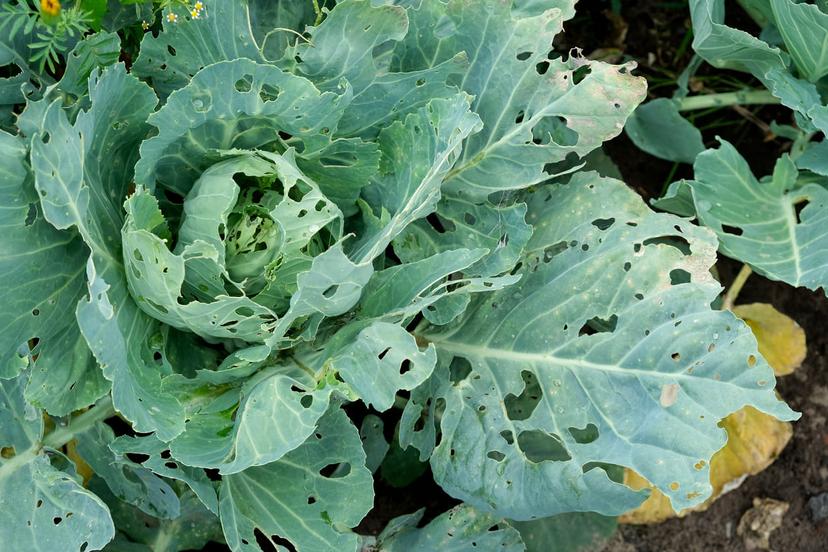
IntroductionDiamondback moth (Plutella xylostella) is one of the major pests that affects cabbage crops. These are the tiny insects that have potential to cause economic losses that may range between 30% to 90%. They also attack other crop of the family such as cauliflower, knol-khol, etc. Diamondback moth feeds aggressively on the crop canopy leading to huge loss at market value, hindered plant growth leaving the crop unfit for sale. These insects are a major challenge for the growers due to their commendable ability to develop resistance to insecticides. This may limit the use of insecticides multiple times leading to higher cost of production. For farmers, this means increased spending on pest management, reduced profitability, and significant threats to food security. In a world where vegetable production is vital to nutritional and economic wellbeing, managing the diamondback moth is no longer optional-it is a necessity for ensuring healthy crops and stable livelihoods.Cabbage Diamondback Moth SymptomsYoung larvae scrape the lower sides of leaves, resulting in thin, transparent patches. These transparent patches dry out eventually and appear as holes on leaves.Young caterpillars feed on the leaves in an irregular pattern making them look like shot holes. In severe cases, larvae feeding on leaves, sometimes between the veins leads to skeletonization of the canopy. This impacts the photosynthetic activity of the plant, thus reduced yield. Fine silk webbing and small, dark frass pellets may be found on the underside of leaves. This is a clear sign of active larval feeding.Damaged plants exhibit stunted growth and look deformed.Larvae often hide within cabbage heads, and feed on them making them unfit for marketing.Favorable ConditionsThe pest can be transported by human activity to new areas. They usually thrive well in hot temperatures ranging between 100 C to 300 C accompanied by high humidity. Rainfall can greatly influence the population dynamics of DBM.Diamondback Moth in Cabbage Preventive MeasuresAvoid transportation of pests by human activity which leads to its introduction in new areas.Grow cabbage varieties that are resistant or tolerant to diamondback moth attack.Avoid planting during the hot season or dry areas, which is favorable for the moth to reproduce.Remove and destroy alternate hosts and all debris and stubbles.Maintain plant hygiene and keep plant promptly and sanitize field before planting.Diamondback Moth Management PracticesCultural PracticesFollow crop rotation with non-cruciferous crops. Since non-crucifers do not host diamondback moths, they can be eradicated from the field completely.Adopting intercropping system with tomatoes in 20:1 ratio can reduce damage (20 lines of cabbage and one line of tomato)Frequent irrigation can reduce moth reproduction thereby their populationMarigold can be planted as a trap crop to avoid damage to the main crop. Marigold acts as an alternate host to these insects, hence insect damage can be avoided on the main crop, i.e. cabbage.Remove and destroy all the debris and stubbles after harvesting crops and plough the land to disrupt the development of pests.Collect and destroy diamondback moth larva during the initial stage of pest attack.Use pheromone traps @12 per hectareBiological Control Methods The damage can be reduced by using biocontrol agent Bacillus thuringiensis. It disrupts the digestive system of DBM when it eats leaves treated with Bacillus thuringiensis.Beauveria bassiana can also be used as biocontrol agent to control DBMDiadegma semiclausum, a parasitic wasp can be released at 50000/ha after 60 days of planting cabbageNeem seed kernel extract can be used at 5%Chemical Control MethodsFollowing chemicals at prescribed rate can be used to control the insect damage:Product nameTechnical contentDosagePager InsecticideDiafenthiuron 50% WP0.8-1.2 g/liter of waterGracia InsecticideFluxametamide 10% EC 0.8 ml/liter of waterProclaim InsecticideEmamectin benzoate 5% SG0.4 g/liter of waterBrofreya InsecticideBroflanilide 20% SC 0.25 ml/liter of waterTakumi Insecticide Flubendiamide 20% WG 0.5 g/liter of waterConclusionTo conclude, diamond back moths pose a serious threat to crucifers, especially cabbage. The amount of losses incurred may last up to 90% if not managed during the early stages. To prevent these tiny monsters from devouring your crops within a short duration and to safeguard your crop from further losses, an effective control strategy is very important. Instead of going for single management practice, it is better to adapt to integrated pest management strategies to protect your crop from dangerous diamondback moths in an environmentally safe way. Effective control not only protects yield and crop quality but also supports farmer profitability and long-term agricultural sustainability.

INDIA’S LARGEST AGRICULTURE PLATFORM

400+

Brands

30M+

Farmers Served

9K+

Products

95%+

Pincodes Served