Identifying and Correcting Common Nutrient Deficiencies in Paddy (Rice)
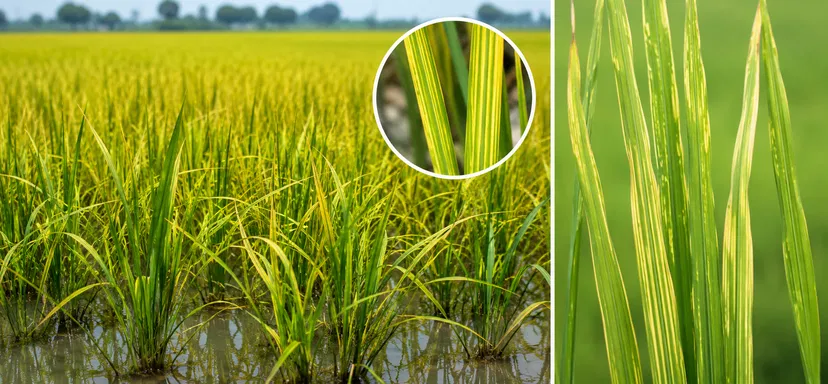
A paddy field can look healthy from the bund, yet patches of yellow, rusty or burnt leaves inside often show the crop is hungry for a nutrient. If farmers spot these signs early, most deficiencies can be corrected before tillers and grain filling suffer.
This guide explains how to identify the most common nutrient deficiencies in paddy by looking at the leaves, and what farmers can do to correct each one.
Quick Answer
The most common deficiencies in paddy are nitrogen (yellow lower leaves), phosphorus (dark green, stunted plants), potash (brown burnt leaf tips), zinc (rusty brown patches, often called Khaira), sulphur (pale young leaves) and iron (yellow white new leaves in upland or aerobic paddy). They can generally be corrected with split fertilizer doses, zinc sulphate, foliar sprays and better organic matter, based on soil test.
How to Read Deficiency Signs in Paddy
The position of the symptom on the plant gives the first clue. Nutrients that move inside the plant, such as nitrogen, phosphorus, potash and magnesium, show first on older lower leaves. Nutrients that do not move easily, such as sulphur, iron and zinc in some cases, show on younger leaves or as patches in the field.
Where Symptoms StartLikely Nutrient
Older lower leavesNitrogen, phosphorus, potash, magnesium
Younger top leavesSulphur, iron
Patches of stunted plants with rusty leavesZinc
Common Nutrient Deficiencies in Paddy at a Glance
NutrientKey SymptomsHow to Correct
Nitrogen (N)Pale yellow older leaves, short plants, few tillersTop dress urea in splits; keep thin water layer
Phosphorus (P)Dark green narrow upright leaves, poor tillering, delayed maturityFull basal phosphorus; 2% DAP spray (20 g/L) if needed
Potassium (K)Bluish green leaves, brown burnt tips and edges, lodgingSplit potash at basal and panicle initiation; 1% MOP spray (10 g/L)
Zinc (Zn)Rusty brown spots on lower leaves, stunted patches, poor tilleringAbout 10 kg zinc sulphate per acre at transplanting; 0.5% zinc sulphate spray (5 g/L)
Sulphur (S)Pale yellow young leaves, thin plants, slow growthUse sulphur containing fertilizers such as SSP, ammonium sulphate or gypsum as per soil test
Iron (Fe)Yellow to white young leaves with green veins, mostly in upland or aerobic paddy1% ferrous sulphate spray (10 g/L), 2 to 3 times at weekly gap
Magnesium (Mg)Yellowing between veins on older leaves, droopy leavesMagnesium sulphate as soil or foliar application
Nitrogen Deficiency
Nitrogen shortage is the most common problem in paddy, especially in sandy soils and after heavy rain. Leaves turn light green to yellow from the bottom, and the crop stays short with few tillers. Farmers can top dress urea in small splits and use a Leaf Colour Chart to time it. Too much urea, however, can make the crop soft and invite sheath blight in paddy.
Phosphorus Deficiency
Phosphorus deficient plants look stunted and unusually dark green with narrow, upright leaves. Tillering stays poor and roots remain weak. Since phosphorus moves slowly in soil, the full dose is best applied as basal. In cold or acidic soils, phosphate solubilizing biofertilizers can help release fixed phosphorus.
Potassium Deficiency
Older leaves first turn dark bluish green, then the tips and edges become yellow brown and dry. Stems weaken, the crop may lodge, and diseases like brown spot often increase. Splitting potash between basal and panicle initiation can keep the crop strong up to grain filling.
Zinc Deficiency (Khaira)
Zinc deficiency usually appears 2 to 4 weeks after transplanting as rusty brown spots on lower leaves, with stunted plants in patches. It is common in flooded, alkaline and heavily cropped soils. Applying zinc sulphate at transplanting mixed with dry sand can prevent it, and a foliar spray can help a crop that already shows signs. Learn more about correcting zinc deficiency in paddy.
Sulphur and Iron Deficiency
Sulphur shortage looks similar to nitrogen shortage, but it starts on younger leaves. It is more likely where farmers use only urea and DAP for many years. Iron deficiency is uncommon in flooded paddy but can appear in upland, direct seeded or aerobic paddy, where new leaves turn yellow white.
In some waterlogged acidic soils the opposite problem occurs: too much iron causes bronzing of leaves. In such fields, short periods of drainage and good organic matter may help.
Prevention: Build the Soil First
Most deficiencies can be avoided with a soil test, balanced NPK, zinc and good organic matter applied during field preparation. Adding FYM or green manure and a humic product such as Tapas HumiQ may improve root activity and nutrient uptake, especially in tired soils.
Top 5 Products for Nutrient Support in Paddy
ProductNutrient SupportSuggested Dose
Vijaya N Freelancer (Azospirillum)Nitrogen fixing biofertilizer1 L per acre
Arihant PhosolvePhosphate solubilizing biofertilizer1 L per acre
FIB SOL K-Gel Potassium Mobilizing BacteriaPotash mobilizing biofertilizer1 pouch per acre in water
Katyayani Zinc Solubilizing BacteriaZinc solubilizing biofertilizer1 to 2 L per acre (soil)
Katyayani Paddy Growth Special KitGrowth kit with NPK 19:19:19 and biostimulantsRefer description for full dosage of all products
Common Mistakes to Avoid
Adding more urea every time leaves turn yellow, without checking for zinc or sulphur shortage.
Mixing zinc sulphate with DAP or phosphatic fertilizers.
Spraying micronutrients in hot afternoon sun.
Skipping the soil test and following the same dose every season.
Conclusion
Leaf colour is the crop's way of asking for help. By checking where the symptom starts and how it looks, farmers can identify the missing nutrient early and correct it with the right fertilizer, spray or soil practice, saving both yield and money.
Frequently Asked Questions
Why are my paddy leaves turning yellow?It is often nitrogen shortage, but sulphur or zinc deficiency can also cause yellowing.
What is Khaira disease in paddy?It is zinc deficiency, seen as rusty brown spots on lower leaves and stunted patches.
How much zinc sulphate is needed for one acre of paddy?About 10 kg per acre, mixed with dry sand at transplanting, is generally recommended.
What causes brown leaf tips in paddy?Brown, burnt tips on older leaves are usually a sign of potash shortage.
Can foliar sprays correct deficiencies quickly?Yes, sprays can give quick relief, but soil application is needed for lasting correction.
Does paddy suffer from iron deficiency?It is rare in flooded fields but can appear in upland or aerobic paddy.
Disclaimer: Deficiency symptoms in paddy can look similar to disease or pest damage. Farmers should confirm with a soil or leaf test where possible and follow product labels and local advice before applying fertilizers or sprays.