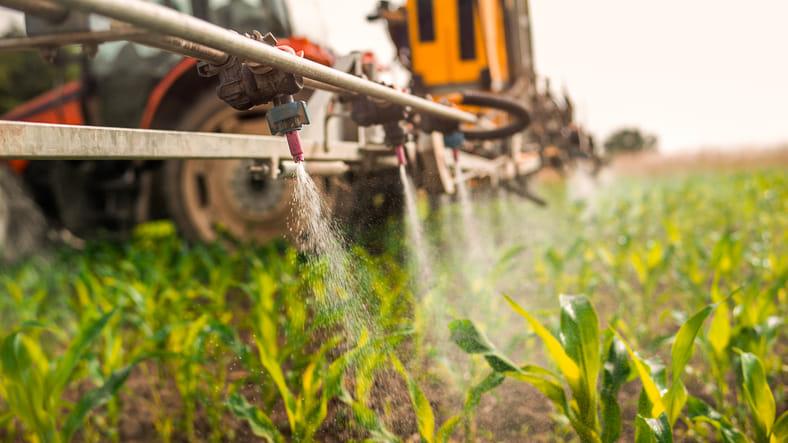
Most farmers spray when they have time, not necessarily when the spray works best. But the time of day decides how much chemical actually reaches the leaf, how long it stays active, and whether it harms pollinators. A well-timed spray can give 30 to 40 percent better control with the same dose.
Why Time of Day Matters
Pesticides work best when leaves are dry, temperatures are moderate, wind is calm, and the target pest is active. All four conditions are rarely available in the middle of the day. The window of effectiveness is usually early morning or late afternoon to evening, with each having its own pros and cons.
Morning Spraying (6 AM to 9 AM)
Advantages
- Cool temperatures (20 to 28 °C) — less evaporation.
- Calm wind — minimal drift.
- Leaves are fully turgid — good chemical absorption.
- Most pests like sucking insects and caterpillars are actively feeding.
- Less chance of operator heat stress.
Disadvantages
- Dew on leaves may dilute the spray and cause runoff.
- Bees are most active early morning — risk to pollinators during flowering.
Evening Spraying (4 PM to 6 PM)
Advantages
- Bees and pollinators return to hives by late evening — safer for them.
- Temperatures drop, reducing evaporation.
- Lepidopteran (caterpillar) and many nocturnal pests are active.
- Spray deposits remain active overnight for longer contact time.
Disadvantages
- If sprayed too late, dew can wash off the chemical.
- Humidity rises overnight, which can favour fungal diseases.
- Low light makes uniform coverage harder.
When to Avoid Spraying
- Between 11 AM and 3 PM — high heat causes rapid evaporation and phytotoxicity.
- Wind speed above 10 km/h — causes drift.
- Just before forecasted heavy rain.
- When leaves are still wet from dew or recent rain.
- During peak flowering hours if a non-bee-safe chemical is used.
Best Time by Product Type
|
Product Type |
Best Time |
Reason |
|---|---|---|
|
Contact insecticide |
Morning |
Targets active sucking pests |
|
Systemic insecticide |
Morning or Evening |
Both work; pick safer window |
|
Fungicide (protectant) |
Morning |
Dry leaves, low evaporation |
|
Fungicide (systemic) |
Morning or Evening |
Avoid pre-rain |
|
Pre-emergence herbicide |
Morning after sowing |
Moist soil, less drift |
|
Post-emergence herbicide |
Morning |
Active weed growth, calm winds |
|
Bio-pesticides (Trichoderma, NSKE) |
Evening |
Avoid UV degradation |
Pollinator Safety Rules
- Avoid spraying during peak flowering hours.
- Switch to bee-safer formulations during flowering.
- Spray after 5 PM when bees are returning to hives.
- Inform nearby beekeepers if using neonicotinoids near bee zones.
Other Spray-Day Best Practices
- Calibrate the sprayer before each season.
- Use 150 to 200 litres of water per acre for foliar sprays.
- Choose the right nozzle: flat-fan for herbicides, hollow cone for insecticides/fungicides.
- Wear PPE — gloves, mask, full sleeves, eye protection.
- Never reuse a herbicide sprayer for insecticide or fungicide.
Conclusion
There is no single best time for every situation. Morning works for most insecticides and herbicides; evening works for bio-pesticides and bee-sensitive products. Watch the weather, the crop stage, and the pest behaviour. Always follow product label instructions and consult your local KVK for region-specific recommendations.