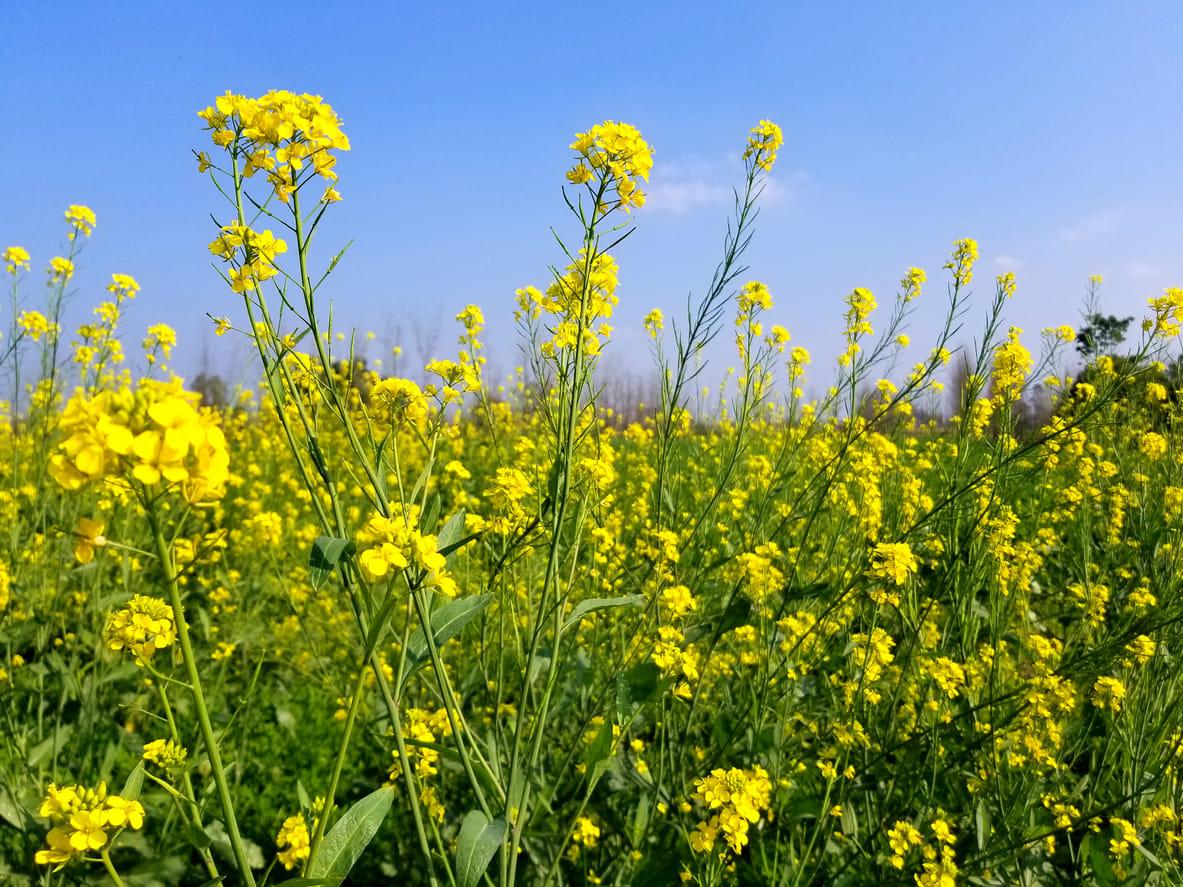
Mustard is one of the most important oilseed crops grown in India. The mustard crop is mainly cultivated during the rabi season and is known for its low cost and good returns. Many farmers prefer the mustard crop because it requires less water compared to wheat and other winter crops.
In this guide, you will learn how to grow a healthy mustard crop, which varieties to choose, the correct seed rate, sowing time, and expected yield per acre.
Climate and Soil Requirement
The mustard crop grows well in a cool and dry climate. It needs a temperature between 10°C and 25°C for good growth. Too much rainfall or waterlogging can damage the mustard crop.
Well-drained loamy soil is best. The field should not have standing water. Soil pH between 6.0 and 7.5 is ideal for good root development.
Best Sowing Time for Mustard
In North India, the ideal sowing time is from mid-October to early November. In Central and Western India, sowing can be done from late September to October.
Timely sowing helps the mustard crop to avoid frost damage and pest attack. Late sowing may reduce flowering and seed formation, which affects yield.
Seed Rate Per Acre
For normal varieties, use 1.5 to 2 kg of seed per acre. For bold-seeded or hybrid types, 2 to 2.5 kg per acre may be required.
Proper spacing is important:
- Row spacing: 30–45 cm
- Plant spacing: 10–15 cm
Correct spacing improves air movement and sunlight, helping the mustard crop grow evenly.
Hybrid Mustard Varieties in India
Choosing the right variety is very important. Many farmers now prefer hybrid mustard varieties in India because they give higher yields and better oil content.
Some popular types include:
- Pusa Bold
- Pusa Mustard 25
- RH 749
- NRCHB hybrids
These improved and hybrid mustard varieties in India are suitable for different states depending on climate and soil conditions.
Fertiliser Management
Before sowing, apply well-decomposed farmyard manure. For good growth, apply nitrogen, phosphorus, and potash as recommended by the soil test.
Split the nitrogen dose into two parts:
- Half at sowing
- Half after 25–30 days
Balanced nutrition helps improve flowering and pod formation in the mustard crop.
Irrigation Management
The mustard crop needs 2–3 irrigations during the season:
- At the flowering stage
- At the pod formation stage
Avoid excess irrigation because waterlogging can damage roots. Proper irrigation improves seed filling and increases mustard production per acre.
Weed and Pest Control
Keep the field clean during the first 30 - 40 days. Weeds compete for nutrients and reduce yield.
Common pests include aphids and painted bugs. Timely monitoring and proper control measures help protect the mustard crop from heavy damage.
Yield Per Acre and Production
Many farmers ask how much yield they can expect. On average, mustard production per acre ranges between 8 and 12 quintals under normal conditions.
Under good management and improved varieties, mustard production per acre can increase further. When calculated on a larger scale, the mustard yield per hectare is generally 20 - 25 quintals, depending on variety and farming practices.
India is one of the top producers of mustard. Overall,l mustard production in India has been increasing due to better seed varieties and farming methods. With proper irrigation and fertiliser use, mustard production per acre can give a stable income.
Improved practices also increase mustard yield per hectare, contributing to higher mustard production in India every year. Farmers using hybrids and timely sowing often see better mustard production per acre compared to traditional methods.
If weather conditions are favourable, the mustard yield per hectare improves significantly. Good seed selection and pest control play a major role in overall mustard production in India.
Harvesting and Storage
The mustard crop is ready for harvest when the pods turn yellow and the seeds become hard. Harvest before pods start shattering.
Cut the plants, dry them properly, and then thresh. Clean and dry seeds to a safe moisture level before storage.
Proper harvesting ensures ba etter market price and reduces losses.
The mustard crop is a reliable option for farmers during the rabi season. With correct sowing time, proper seed rate, good fertiliser management, and timely irrigation, farmers can increase income. By choosing improved and hybrid varieties, it is possible to improve mustard production per acre and overall profitability.
Careful planning and field management can help every farmer grow a healthy and productive mustard crop.
Frequently Asked Questions
1. What is the best sowing time for mustard in India?
Mid-October to early November is ideal in North India.
2. How much seed is required per acre?
About 1.5-2 kg per acre for normal varieties.
3. What is the average mustard production per acre?
Usually, 8-12 quintals per acre under good management.
4. Which are the best hybrid mustard varieties in India?
Pusa Mustard 25, RH 749, and other improved hybrids are popular.
5. How many irrigations are needed for mustard?
Generally, 2–3 irrigations are required during the flowering and pod formation stage.