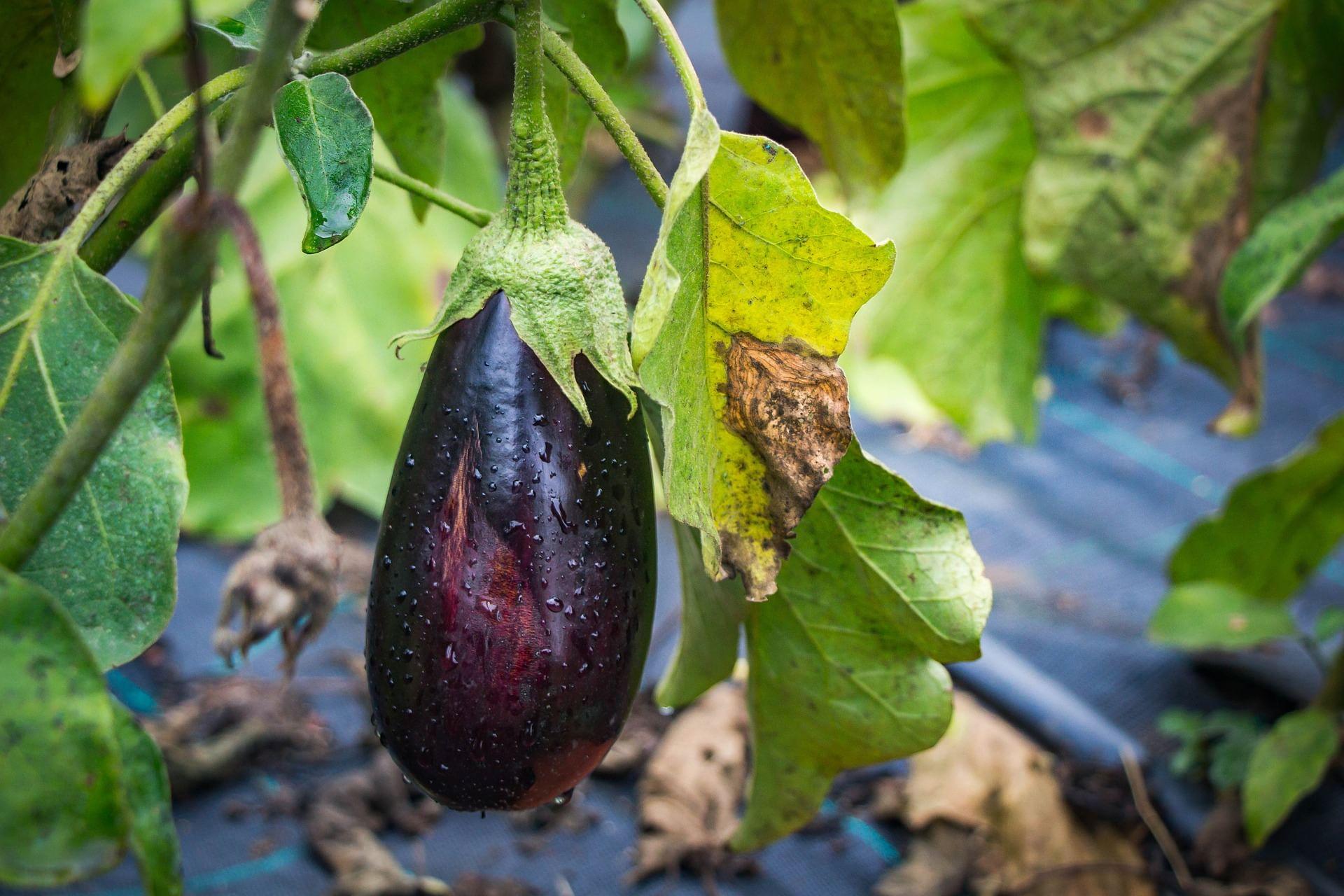
Brinjal, also known as eggplant, is a popular vegetable crop that is widely grown for its nutritional and culinary value. However, like any other crop, brinjal is susceptible to a variety of brinjal diseases that can affect its productivity and quality. Among these, root-related diseases are particularly challenging, causing stunted growth, wilting, and even plant death. Effective management of these diseases is crucial for a healthy and productive harvest.
Brinjal Diseases and Their Management
Damping off in Brinjal
Damping off is a common disease, especially during early growth stages. It can occur before or after seedling emergence, caused by soil-borne pathogens like Pythium spp., Phytophthora spp., Rhizoctonia spp., and Sclerotium spp. The disease thrives in high humidity, poor soil drainage, and high soil temperature.
Symptoms of Damping off in Brinjal
- Seeds may fail to germinate or may germinate weakly.
- Seedlings may wilt and appear weak, even before they emerge from the soil.
- The collar region of seedlings turns water-soaked and slimy, causing the plant to fall over and die.
- The roots of the seedling may become discolored and mushy and may eventually rot away.
Management of Damping off in Brinjal
- Select healthy seeds for sowing.
- Treat the seeds before sowing (as recommended below).
- Avoid over-watering and ensure that the soil is well-drained.
- Avoid raising the nursery continuously in the same plot.
|
Product name |
Technical content |
Dosage |
|---|---|---|
|
Trichoderma viride |
Soil Application: Mix 1- 2 kg of product + 100 kg of FYM and broadcast for 1 acre field |
|
|
Metalaxyl 4% + Mancozeb 64% WP |
Nursery drenching: 3 gm/lit water |
|
|
Metalaxyl 35% WS |
Spray: 1.5 gm/lit of water |
Wilt in Brinjal
Wilt disease is a common problem in brinjal cultivation, caused by bacterial and fungal pathogens. This disease typically affects brinjal plants around 30 to 45 days after planting. The pathogens block water and nutrient flow, resulting in wilting and plant death.
Bacterial Wilt Of Brinjal
This disease, caused by Ralstonia solanacearum (formerly Pseudomonas solanacearum), appear at any stage of growth, but can cause rapid wilting and death, especially during pre-flowering and early fruiting stages.
Bacterial Wilt Of Brinjal Symptoms
- Leaves wilt during the day but recover slightly at night.
- Permanent wilting as the disease progresses.
- Brown discoloration in the stem near the soil line.
- Yellowing of leaves, followed by drooping and wilting.
- Internal vascular tissue discoloration when the stem is cut.
- A milky stream of bacteria oozes from cut stem pieces when dipped in water.
Management of Bacterial Wilt in Brinjal
- Grow disease resistant seeds like IRIS Hybrid Brinjal Vinayak, MAHY green brinjal, Utsav brinjal.
- Avoid crop rotation with okra, tomato and potato. Instead, rotate the crop with non-host like cereals and crucifers such as cauliflower.
- Rogue out the infected plants and destroy them
- Add organic manures like FYM during the flowering stage to reduce pathogen populations.
- Use marigold as an intercrop or in rotation to control root knot nematodes.
|
Product name |
Technical content |
Dosage (Spraying) |
|---|---|---|
|
Eugenol, Thymol, potassium salts, cationic surface agent, sodium salts & preservatives |
2 gm/lit of water |
|
|
Geolife Geomycin (Bio Bactericide) |
Consortium Plant Extracts |
0.5 gm/lit |
|
Copper oxychloride 50% WP |
2 gm/lit of water |
|
|
Kasugamycin 5% + Copper Oxychloride 45% WP |
1.5 gm/liter |
|
|
Streptomycin sulphate 90% + Tetracycline hydrocloride 10% SP |
0.2 gm/lit of water |
Fungal Wilt Of Brinjal
Fusarium Wilt and Verticillium Wilt are fungal diseases caused by Fusarium oxysporum and Verticillium dahliae. These diseases affect brinjal plants, causing severe wilting and stunted growth.
Symptoms of Fungal Wilt Of Brinjal
- Wilting and yellowing of lower leaves, progressing upward.
- Necrotic, pale-yellow spots that turn brown and merge, causing complete wilting.
- Dry, brown underground stems and soft, water-soaked roots.
- Reddish-brown streaks in the vascular tissues when stems and roots are cut.
- Stunted growth and poor fruit production.
Management of Fusarium Wilt and Verticillium Wilt in Brinjal
- Grow tolerant varieties of Brinjal.
- Avoid planting brinjal or other susceptible plants in the same field for at least three years.
- Practice crop rotation with non-host crops.
- Avoid damaging or wounding the roots during fieldwork.
- Maintain field sanitation and supply adequate nutrients to promote plant resistance.
|
Product name |
Technical content |
Dosage |
|---|---|---|
|
Beneficial Lyophilized Microbes Consortia: 1.5 % |
Mix 25-50 gm/lit of water and keep it in shade for 3-5 hr. Then mix it in 200 lit of water and drench in 1 acre field. |
|
|
Trichoderma viride |
Seed Treatment: 6 ml per kg of seeds. Soil Application: 2 litter per Acer |
|
|
Carbendazim 50% DF |
2 gm/lit water |
|
|
Azoxystrobin 23%SC |
0.5 – 1 ml/liter of water |
|
|
Hexaconazole 5% + Captan 70% WP |
Drenching: 2 gm/lit water |
|
|
Thiophanate Methyl 70% WP |
Seed Treatment: 2 to 3 gm/kg of seeds Spray: 0.5 gm/lit of water |
NOTE: Check product’s description or label to know the right time of application.
Read More: Explore our comprehensive guide to Brinjal (Eggplant) farming.