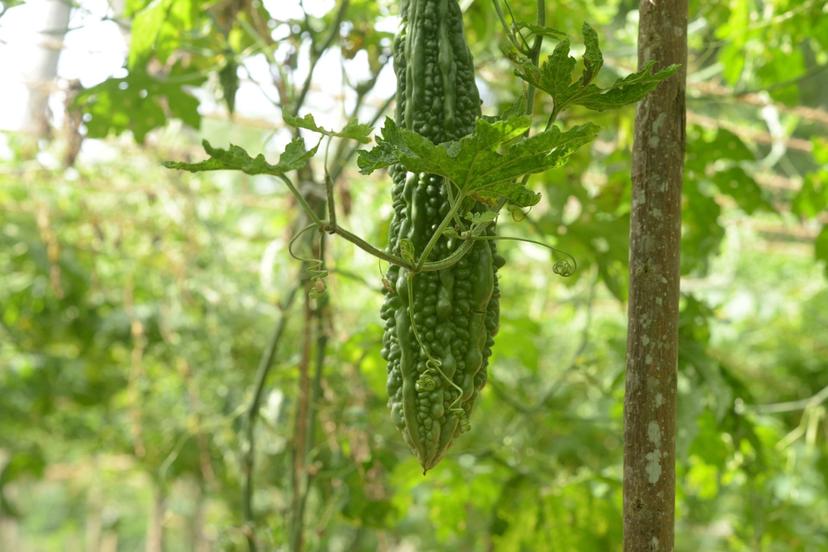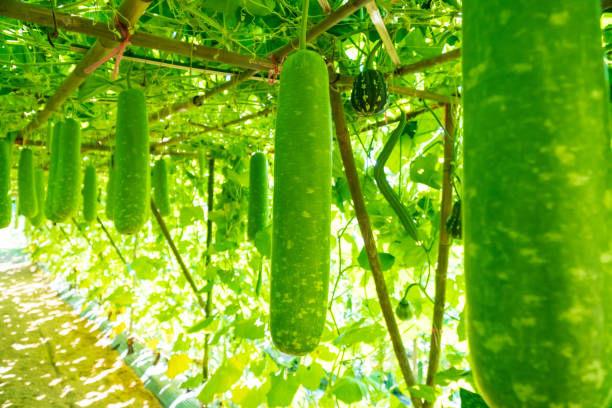
Bottle gourd (Lagenaria siceraria) is a popular, nutrient-rich vegetable widely grown across India. Also known as lauki, dudi, or calabash, it belongs to the Cucurbitaceae family.
It contains over 90% water, making it ideal for hydration and health. Major producing states include Uttar Pradesh, Bihar, Haryana, and Madhya Pradesh.
This guide covers complete bottle gourd cultivation practices, from soil selection to harvesting.
Ideal Soil & Climate for Bottle Gourd Farming
- Temperature: 24°C to 27°C (minimum 18°C for germination)
- Soil Type: Well-drained sandy loam soil rich in organic matter
- Soil pH: 6.0 to 6.7 (tolerates up to 8.0)
- Climate: Warm and humid; avoid frost conditions
Land Preparation & Sowing
Bottle gourd grows best in fertile, well-drained loamy soil enriched with organic matter like leaf mold, compost, and farmyard manure (FYM). It is ideally cultivated during the summer to rainy season and requires adequate irrigation, making it unsuitable for water-scarce areas.
Prepare the land with fine ploughing and proper tilth, creating furrows spaced 2-3 meters apart. Apply FYM before planting and maintain 1.0-1.5 meter spacing between plants.
For better germination, soak seeds in 600 ppm succinic acid for 12 hours or in water for 12-24 hours before sowing.
Bottle Gourd Planting Process
- Bottle gourd seeds are sown directly into small pits or soaked in water or succinic acid for 12-24 hours for early germination.
- Usually, germination takes 6-7 days after planting.
- To grow big fruits, mix potting soil, vermicompost and coco peat equally to retain growth and moisture.
- Build strong trellis support to the trail of the plant to grow maximum and spread. Keep the plant open to the sun.
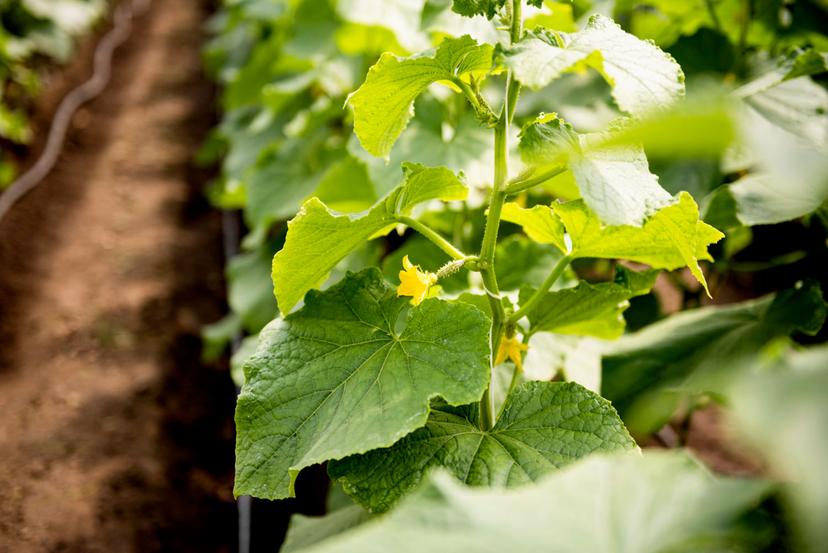
- Just after pollination, female flowers develop small gourds around them.
- Bottle gourd seeds require 1-inch water weekly to keep the soil moist and loamy. Start watering in the initial stage to avoid diseases by sprinkling or furrowing to avoid direct pressure.
- Pipes, wires, and bamboo are the best-proven support for trellis with a height of 5-6 feet.
- Bottle gourd farming requires less cost and produces fresh produce in a short period.
Stages of bottle gourd seed growth
Here is the sequence of growing stages in bottle gourd cultivation:
- Sprouting set 6-8 days after sowing, the seeds germinate and visualize in sprout form.
- Cotyledons are the rise of the first two fake leaves, which tear down automatically and begin the natural growth.
- First leaves appear at the end of the second week over the Cotyledons.
- The seedling stage is the growth of seedlings from the second week and forming small plants on beds.
- Thinning is cutting weak seedlings and keeping only one in the spot. Cut the weak with scissors after the second week.
Bottle gourd seeds are sown 1-2 cm in depth. The perfect sowing time for bottle gourd seeds is March-February, July-June, and December-November months of the year to expect the best produce.
Irrigation
Use the furrow irrigation method for effective watering. After sowing, irrigate every 3-4 days, and increase to alternate day watering during flowering and fruiting.
Provide about 1 inch of water per week to keep the soil moist. Ensure a proper drainage system during rainy season to prevent waterlogging and support healthy plant growth.
Manure & Fertilizer
Mix good quality manure, vermicompost, FYM, cow dung, or liquid fertilizers in a 2:1 ratio with soil to improve soil fertility and plant growth.
Apply NPK (15:15:15) at about 1 tablespoon per plant, mixed with vermicompost for better nutrient uptake and higher yield.
How & When to harvest the bottle gourd
Bottle gourd is ready for harvest when the fruits are tender and light green to pale yellow in color, usually 60-70 days after sowing. Harvesting should be done every 3-4 days to ensure good quality and avoid over-mature fruits. The harvesting period typically begins 2-3 weeks after flowering and continues for about 6-8 weeks. Tender fruits are preferred in the market, while over-mature gourds can be used for seed production. Proper and timely harvesting helps maintain freshness and increases overall yield.