Downy mildew of cucurbits is caused by the pathogen Pseudoperonospora cubensis that thrives under cool and humid conditions, leading to characteristic symptoms on the leaves and overall plant health. This disease can cause significant losses in yield if not managed properly.
Identifying the signs of the pathogen, understanding the conditions that favour its growth, and applying timely preventive measures are essential for effective management. We’re here to help you take the right preventive steps and act quickly if symptoms are detected.
Downy Mildew Symptoms in Cucurbits:
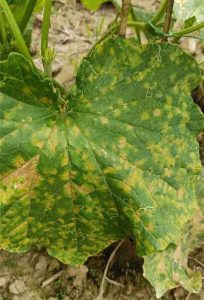
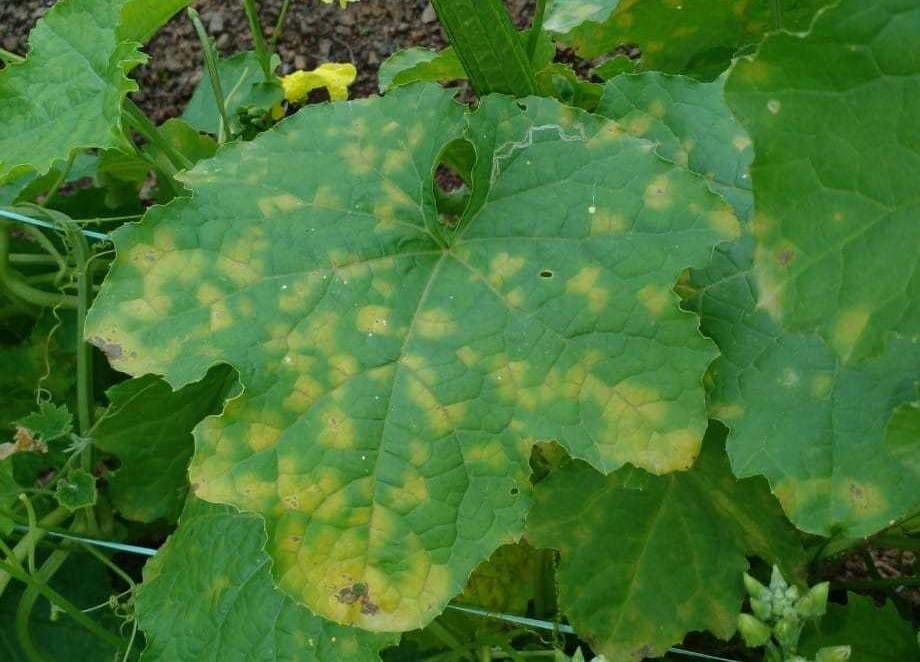
- Appearance of small, angular yellow spots on the upper surface of the leaves.
- As the disease progresses, the yellow spots enlarge and turn brown with lesions having angular edges following the leaf veins. The affected areas of the cucurbits may become dry and papery.
- During the wet season or when leaves remain wet, fuzzy grey to purple mould-like fungal growth can be seen on water-soaked lesions on the underside of the leaves.
- As the disease progresses, these lesions expand, and the entire foliage may begin to wilt.
- Infected plants may produce fewer fruits, and the ones that do develop may be smaller, misshapen, or have a poor flavour.
- Severe cases of cucurbit downy mildew can lead to stunted growth.
Ideal Conditions for Downy Mildew Disease
- Downy mildew thrives in cool (15-20°C), wet, and humid conditions, especially during rainy weather or heavy dew.
- The pathogen requires moisture on the leaf surface to infect and spread.
- It survives in plant debris, seeds, and soil but is primarily spread through airborne spores.
- These spores can travel long distances and infect healthy plants.
- The disease may also spread through infected seedlings.
Preventive Measures for Downy Mildew in Cucurbits
- Use healthy seeds and transplants, and select resistant varieties with tolerance to downy mildew like IRIS hybrid vegetable seeds F1 hybrid cucumber Janki, IRIS cucumber Dawat seeds, Sorot Ridge gourd
- Practice crop rotation with crops like legumes, tomatoes, and root crops for one or two growing seasons to break the disease cycle and reduce the pathogen’s population in the soil.
- Maintain good air circulation by spacing plants widely and pruning dense foliage to allow better sunlight and quick leaf drying.
- Avoid overhead irrigation, which creates leaf wetness. Use drip irrigation or water at the base of plants to keep the foliage dry.
- Remove and destroy infected plant debris, including fallen leaves and infected fruits. Clean tools and equipment to prevent disease spread.
- Use Neem oil for controlling downy mildew.
- Apply protective fungicides like 1% Bordeaux mixture, Mancozeb, or copper-based fungicides every 5-7 days as a preventive measure.
Effective Management to Control Downy Mildew in Cucurbits
Spray fungicides at 7-14 day intervals, depending on disease intensity and weather conditions.
|
Product name |
Technical content |
Dosage |
|---|---|---|
|
Biological Management |
||
|
Botanical extracts |
2.5 ml/lit of water |
|
|
Pseudomonas fluorescens |
2.5 ml/lit of water
|
|
|
Chemical Management |
||
|
Metiram 55% + Pyraclostrobin 5% WG |
3 gm/lit of water |
|
|
Ametoctradin 27% + Dimethomorph 20.27% SC |
1.5 ml/lit of water |
|
|
Hexaconazole 5% + Captan 70% WP |
2 gm/lit of water |
|
|
Metalaxyl 4% + Manconzeb 64% WP |
2 gm/lit of water |
|
Note:Always read the product labels for correct application rates and safety precautions. Alternate products when spraying. Prepare Bordeaux mixture fresh and use it on the same day.
Discover effective strategies for defeating Gummy Stem Blight in cucurbits. Learn more.
Frequently Asked Questions
How do weather conditions affect downy mildew in cucurbits?
Downy mildew thrives in cool, wet, and humid conditions. High humidity and free moisture on leaves from rain or dew promote the disease's spread, making it crucial to monitor weather patterns and take preventive measures during such conditions.
How often should fungicides be applied for downy mildew control?
Apply fungicides for cucurbits downy mildew control every 7-14 days, depending on weather conditions and the severity of the disease.
How to prevent downy mildew from affecting cucurbits crops?
To prevent downy mildew in cucurbits, use plant disease-resistant seed varieties, avoid overhead irrigation, practice proper crop rotation, and ensure good air circulation around plants.