Introduction
Wheat rust is one of the major fungal diseases that attacks wheat crops, particularly in wheat-growing regions of India. Rust of wheat is caused by fungi belonging to Puccinia genus, which can spread through the air and has the potential to travel thousands of miles and infect the wheat crop.
Wheat Rust is a persistent and devastating threat to wheat production worldwide. Every year, substantial yield losses are caused by the three main forms of wheat rust: black rust (Puccinia graminis), brown rust (Puccinia triticina), and yellow rust (Puccinia striiformis). Under ideal environmental conditions, like high humidity and moderate temperatures, it can spread quickly, severely damaging wheat crops.
Millions of hectares of wheat-producing land are affected by wheat rust, leading to significant economic losses annually. Depending on the severity of the outbreak and the susceptibility of the wheat variety, crop losses can range from 10% to 50%. and in extreme cases, entire harvests may be destroyed, impacting wheat market prices. To avoid such losses, effective disease management is very important. Effective control methods range from mechanical control to chemical control. In this article, let’s know about the disease, pathogens, favorable conditions, and control measures.
Wheat Rust Symptoms
- Stem Rust: Also known as Black Rust is caused by the fungus Puccinia graminis. It is known for its large, spindle shaped bumps on stem area. These bumps are reddish-brown which turn black as the disease progresses. Wheat stem and leaf sheaths are the common targets of the fungus. Stem rust grows quickly and can cause more damage.
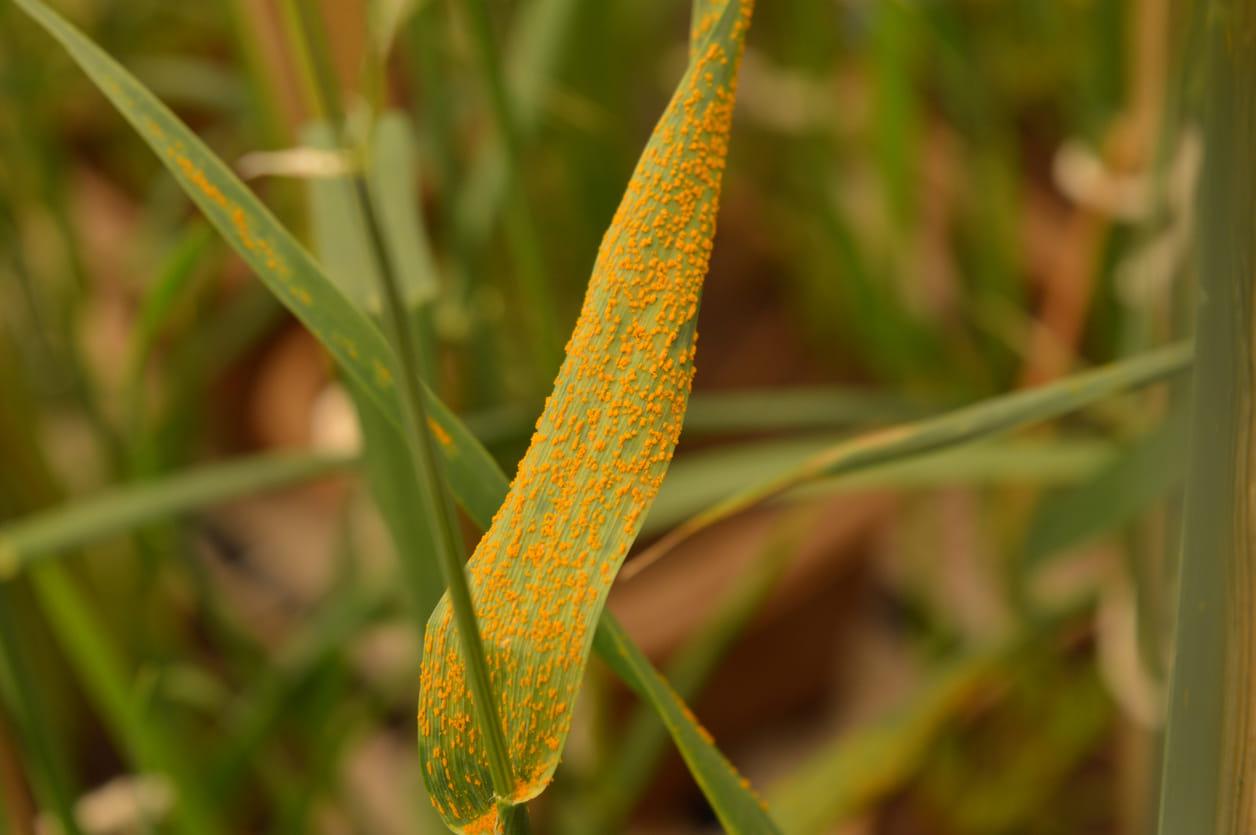
- Stripe Rust: Also known as Yellow Rust. Caused by the fungus Puccinia striiformis, the symptoms appear as yellow to orange stripes on the infected leaves. Stripe rust can severely reduce the grain yield due to poor photosynthetic activity because of yellow bumps on the leaves.
- Leaf Rust: Also called Brown Rust caused by Puccinia triticina. The symptoms of brown rust are characterized by the presence of tiny, round bumps that are reddish-brown in color. The symptoms usually appear on leaves which later may cause the death of the plant as disease progresses.
Favourable Conditions
- Stripe rust disease, which is also known as yellow rust, thrives well under cooler conditions. Growing seasons like early spring or winters can favor disease spreading. Cooler temperatures ranging between 10-15°C are the most favorable for fungal infection.
- Leaf rust and stem rust, on the other hand, thrive well prefer a little warmer temperature than stripe rust. Temperatures ranging between 15-25°C will favor the fungi here.
- High humidity and prolonged leaf wetness are also crucial for the growth of fungus. Humidity levels above 80% are most likely to cause the spread of fungus.
Rust Disease in Wheat Preventive Measures
- Planting resistant varieties is the most effective way to control rust disease. The resistant varieties are mainly bred to fight the disease. Choosing varieties with adult plant resistance provides long-term protection against rust.
- Rotate wheat with non-host crops to break the disease cycle
- Remove and destroy infected plants to decrease the fungal colonies.
- Avoid early sowing: early sowing may help in escaping the risk of disease appearance as it may skip all the critical growth stages and weather conditions that favor the rust disease.
- Avoid dense stands and allow proper spacing between the plants as enough ventilation through the wheat plots may help avoid infection.
- Get rid of alternate hosts, if any. Alternate hosts might carry inoculum or encourage the spread of wheat rust disease.
- Balanced fertilization, proper spacing, and avoiding excessive irrigation help reduce humidity that favors rust.
Management Of Rust Disease
Cultural Practices to Control Rust in Wheat
- Cultivation of resistant or tolerant varieties recommended for the season and locality.
- Crop rotation with non-host crop
- Remove and destroy heavily infected plants.
Rust Disease in Wheat Biological control
- Use of beneficial microorganisms to suppress the rust causing fungi and enhance plant resistance. Microbes such as Trichoderma harzianum, Trichoderma viride, Pseudomonas fluorescens, and Bacillus subtilis can inhibit rust spore germination and reduce disease severity.
- These bioagents can be applied as seed treatments, soil amendments, or foliar sprays. Using biological control along with resistant varieties, proper field hygiene, and timely monitoring forms an eco-friendly, integrated approach to managing wheat rust.
Wheat Rust Chemical Control
Product name | Technical content | Dosage dilution in water (L) |
Kresoxim-methyl 44.3% SC | 1 ml/L in water | |
Mancozeb 75% WP | 2-2.6g/L in water | |
Propiconazole 25% WG | 0.6ml/L in water | |
Azoxystrobin 18.2% + Cyproconazo le 7.3% w/w SC | 1ml/L in water |
CONCLUSION
To conclude, effective control measures for all three types of rust, namely stem rust, stripe rust, and leaf rust in wheat, demand a combination of early disease detection by symptoms, preventive measures, as well as timely action. The risk of facing yield loss or crop loss in severe cases shall be avoided by sticking to the cultural practices like cultivation of resistant varieties, proper sanitation of the field, getting rid of alternate hosts, biological control using biocontrol agents like Trichoderma harzianum, Bacillus subtilis, etc., and chemical control methods using chemical fungicides. By integrating cultural, biological, and chemical strategies, farmers can safeguard their crops, minimize yield losses, and ensure sustainable wheat production, ultimately protecting food security.