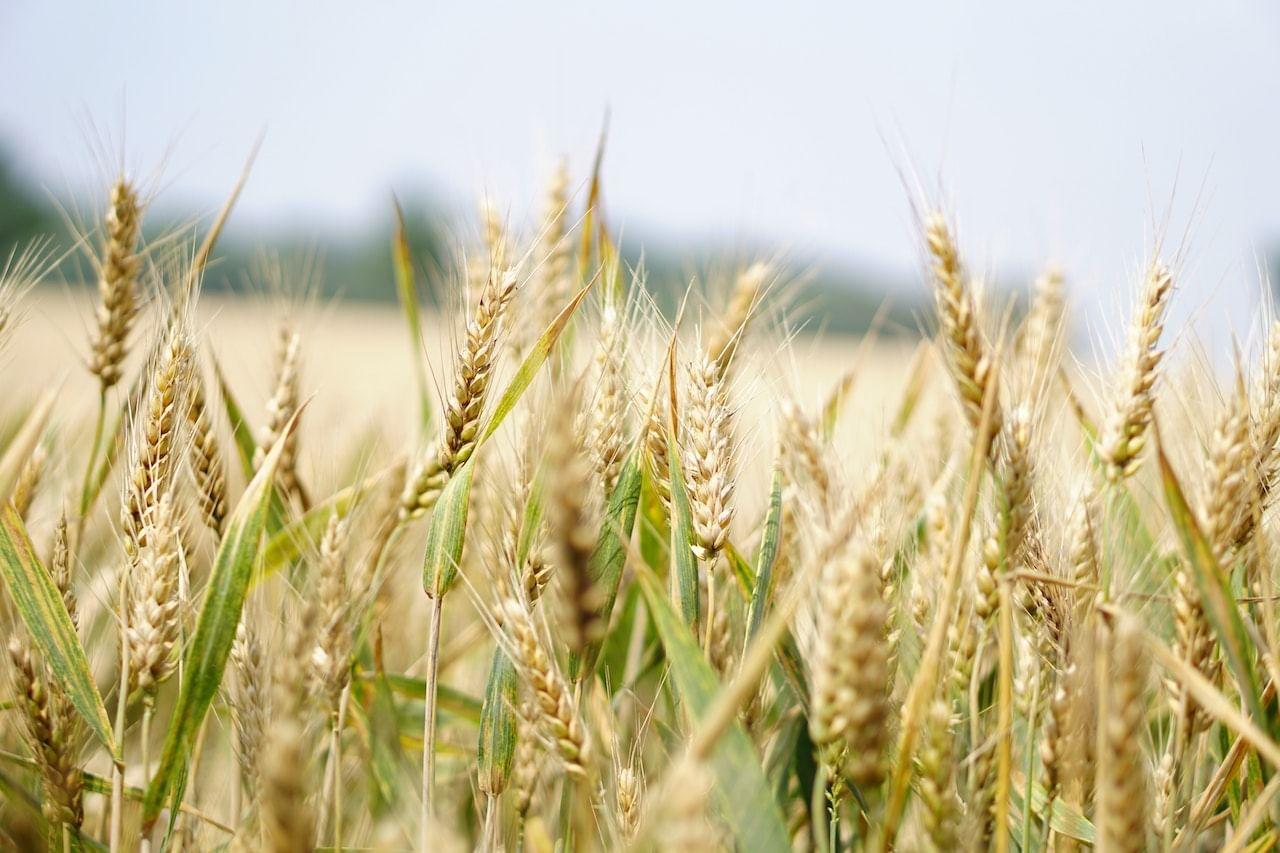
Wheat (Triticum aestivum) is one of the staple crops of India, particularly grown in the Rabi season. It contributed a significant share to the total wheat production of over 109 million tons during the year 2021. Major wheat growing states in India include Uttar Pradesh, Punjab, Haryana, Madhya Pradesh, Rajasthan, Gujarat and Bihar. However, yellow rust, also known as stripe rust in wheat, is a major concern for wheat farmers, causing up to 50% yield loss and, in severe cases, complete crop failure. The disease can reduce yield and grain quality, leading to economic losses for farmers.
Causes of Yellow Rust in Wheat
Yellow or Stripe rust is caused by the fungus Puccinia striiformis and is most common during winter and early spring. It can affect all growth stages of wheat, but it is most damaging during early plant growth.
- Cool, damp weather (10-15°C) with high humidity and intermittent rainfall favors the disease.
- The disease spreads through wind currents, as airborne spores travel long distances, infecting healthy plants.
- A lack of crop rotation for many years can increase disease severity
- Growing varieties that are susceptible to wheat yellow rust influences disease spread
Symptoms of Yellow Rust in Wheat
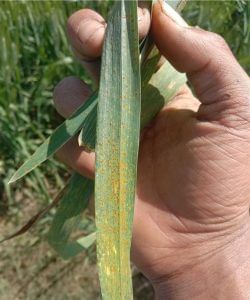
- Presence of bright yellowish-orange pustules or flecks of urediospores appears on the leaves, along the veins of the leaves
- As the disease progresses, the pustules may merge and cause necrotic stripes on the leaves
- On mature leaves, the symptom appears as a linear and stripe-like pattern
- At the end of the season, teliospores appear as secondary black spores among the stripes of the pustules
- The disease symptoms may also appear in the leaf sheath, neck and glumes
- It also causes chlorosis or yellowing of leaves, which affects the photosynthetic activity, resulting in stunted growth with weakened plants, reduced tillering, shrivelled grains with only a few spikes and reduced grain weight
Preventive Measures for Yellow Rust in Wheat
- Select varieties that are region-specific and resistant to yellow rust and other diseases
- Early planting can help avoid the peak period of yellow rust infection.
- Follow good agronomic practices like proper planting density, irrigation, and weed control to prevent rust.
- Follow mixed cropping and crop rotation with non-host crops such as legumes, mustard, and barley to break the disease cycle by reducing the amount of inoculum in the soil
- Avoid excessive application of nitrogenous fertilizers
- Spray Barrix control, a microbiostat at 0.3 gm/lit of water to inhibit rust fungus growth.
- Regularly monitor wheat fields for signs of infection to implement early management strategies.
- Remove and destroy crop residues after harvest to reduce inoculum in the soil.
Management of Yellow Rust in Wheat
For effective management of yellow or stripe rust, combine Triazoles and Strobilurin fungicides.
Use the following fungicides for controlling yellow rust in wheat crop;
|
Product Name |
Technical Content |
Dosage |
|---|---|---|
|
Biological Management |
||
|
Organic formulation |
1.5 - 2 gm/lit water |
|
|
Thymol, Eugenol, potassium salts, cationic surface agent, sodium salts & preservatives |
1.5 - 2 gm/lit water |
|
|
Pseudomonas fluorescence & Bacillus subtilis |
5 - 10 gm/lit water |
|
|
Chemical Management |
||
|
Propiconazole 25 % EC |
1 ml/acre water |
|
|
Mancozeb 75% WP |
1 gm/lit water |
|
|
Zineb 75% WP |
2.5 gm/lit water |
|
|
Azoxystrobin 11% + Tebuconazole 18.3% w/w SC |
1 ml/lit water |
|
|
Tebuconazole + Trifloxystrobin 75% WG |
0.5 gm/lit water |
|
|
Azoxystrobin 18.2% + Difenoconazole 11.4% SC |
1 ml/lit water |
|
|
Thiophanate Methyl 70 % WP |
1.2 - 3 gm/lit water |
|
|
Propiconazole 13.9% + Difenoconazole 13.9% EC |
0.8 - 1.5 ml/lit water |
|
NOTE: Always check the product’s label before use to know the right time of spray application
Conclusion
Yellow or Stripe rust caused by the fungus Puccinia striiformis in wheat is a destructive disease that affects wheat crops in India, reducing yield and grain quality. In recent years, there has been an increase in the incidence and severity of this disease. To manage the disease, farmers should monitor wheat fields regularly, apply preventive fungicides, and follow proper agronomic practices such as crop rotation and the use of resistant varieties. By adopting these strategies, farmers can reduce the impact of yellow rust on their wheat crops and protect their yield.
Click Here to learn more about Wheat Planting Methods and Package of Practices Details.
Frequently Asked Questions
What causes yellow rust in wheat?
Yellow rust in wheat is caused by the fungus Puccinia striiformis. It thrives in cool, damp conditions and spreads through airborne spores.
What are the symptoms of yellow rust in wheat?
Symptoms include yellowish-orange pustules on leaves, which later merge into necrotic stripes. This leads to yellowing leaves, stunted growth, and reduced grain quality.
What weather conditions favour the spread of yellow rust in wheat?
Yellow rust thrives in cool (10-15°C), humid, and wet conditions, especially during rainy weather or heavy dew. It spreads rapidly in these conditions and infects wheat plants through airborne spores.