Chilli is a sensitive crop. Even small stress on young leaves or flowers can affect plant growth and final yield. One of the most common yet often misunderstood problems in chilli fields is thrips damage. Many farmers notice curling leaves or poor flowering but realise the real cause only when the damage has already spread.
This guide is written in a farmer-first, experience-based manner to help you clearly understand chilli thrips damage symptoms, how to identify them early, and how to take timely control steps without risking crop safety.
Why early identification of chilli thrips matters?
Thrips are tiny insects, but their impact is big. They attack tender plant parts and feed by scraping the surface and sucking plant sap. If chilli thrips damage symptoms are ignored in the early stage, plants may remain stunted throughout the season.
Early identification helps in:
- Preventing permanent leaf damage
- Protecting flower formation
- Reducing repeated sprays
- Maintaining plant vigour
Understanding chilli thrips symptoms clearly is the first and most important step.
What are thrips and how do they attack chilli plants?
Thrips are slender, very small insects that usually hide on:
- Tender leaves
- Leaf folds
- Flower buds
- Underside of leaves
A chilli thrip damages the plant by scraping the leaf surface and feeding on plant fluids. This feeding disrupts normal leaf growth and affects photosynthesis.
Because they are tiny and fast-moving, farmers often miss them during early infestation.
Chilli thrips damage symptoms: what to look for first
Recognising chilli thrips damage symptoms early can save the crop. Below are the most common visible signs seen in chilli fields.
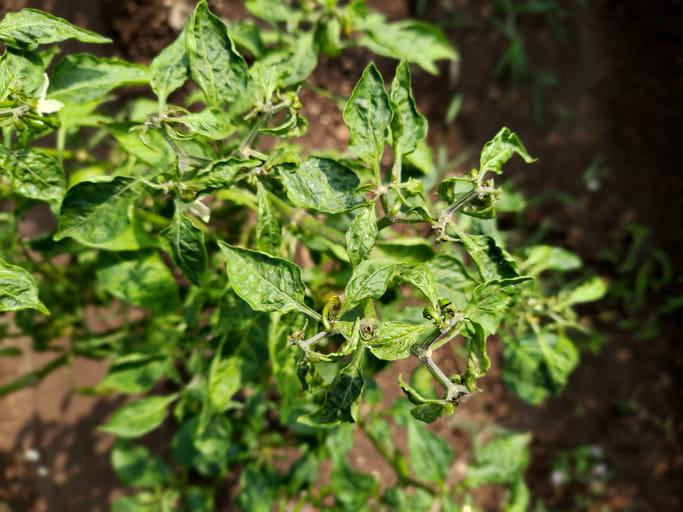
1. Leaf curling and crinkling
- Young leaves curl upward or inward
- Leaves look narrow, twisted, and rough
- Growth appears uneven
This is one of the earliest chilli thrips symptoms.
2. Silvery or bronze patches on leaves
- Scraped leaf surface looks shiny or silvery
- Over time, these patches turn brown
- This type of thrips damage is more visible under sunlight
3. Stunted plant growth
- Plants remain short even with proper nutrition
- Internodes become shorter
- New leaf formation slows down
These are strong indicators of chilli thrips damage symptoms in the vegetative stage.
4. Flower drop and poor fruit set
- Flowers dry and fall early
- Reduced fruit formation
- Uneven chilli size
This stage is critical, and untreated chilli thrips symptoms can directly affect yield.
How to confirm thrips infestation in chilli
To confirm thrips damage:
- Gently tap a leaf over white paper
- Look for tiny moving insects
- Check early morning or evening for better visibility
Do not rely only on leaf curling. Nutrient deficiency and herbicide stress can look similar, but chilli thrips damage symptoms usually appear first on new growth.
Difference between thrips damage and nutrient deficiency
Observation | Thrips damage | Nutrient deficiency |
|---|---|---|
Leaf texture | Rough, crinkled | Soft, thin |
Leaf colour | Silvery → brown | Uniform yellowing |
Spread | Patchy, fast | Gradual |
New leaves | Highly affected | Mildly affected |
This comparison helps avoid a wrong diagnosis when identifying chilli thrips damage symptoms.
When is the chilli crop most vulnerable to thrips?
A chilli thrip infestation is most severe during:
- Hot and dry weather
- Early vegetative stage
- Flower initiation stage
Dry climate supports rapid multiplication, making early monitoring very important for chilli thrips control.
Cultural practices to reduce thrips pressure
Before jumping to sprays, basic field practices can reduce thrips damage naturally.
Field-level precautions
- Avoid water stress in plants
- Maintain proper plant spacing
- Remove heavily infested shoots
- Avoid excess nitrogen fertiliser
Healthy plants tolerate chilli thrips symptoms better than stressed crops.
Mechanical and preventive methods
- Use yellow or blue sticky traps for monitoring
- Regular field scouting twice a week
- Remove weeds that act as alternate hosts
These steps support early chilli thrips control without chemical stress.
Chilli thrips control using insecticides
When infestation crosses manageable levels, chilli thrips control insecticide options may be considered carefully.
Important points before spraying:
- Always follow label instructions
- Rotate modes of action
- Avoid repeated use of the same chemistry
- Spray during early morning or evening
Using a chilli thrips control insecticide should be based on pest pressure, not routine calendar spraying.
Note: The choice and dosage of insecticides should always be as per local agricultural recommendations and label directions to ensure crop and user safety.
Correct spraying method for better thrips control
For effective chilli thrips control:
- Ensure good coverage of new leaves
- Focus on leaf undersides
- Use the recommended water volume
- Avoid spraying during high temperatures
Poor spraying technique often leads to repeated thrips damage even after treatment.
How early control helps reduce future damage?
Early management of chilli thrips damage symptoms:
- Protects new leaf growth
- Improves flowering
- Reduces the cost of multiple sprays
- Maintains uniform crop growth
Once leaf deformation occurs, it cannot be reversed. That is why early action against chilli thrips symptoms is critical.
Common mistakes farmers make with thrips control
- Waiting too long after the first symptoms
- Over-spraying without monitoring
- Mixing multiple chemicals unnecessarily
- Ignoring resistance management
Avoiding these mistakes improves long-term chilli thrips control results.
Final takeaway for farmers
Thrips may be small, but ignoring chilli thrips damage symptoms can lead to big losses. Regular crop observation, correct identification, and timely action are the keys to successful management.
By understanding:
- Early chilli thrips symptoms
- Proper monitoring methods
- Safe chilli thrips control insecticide use
- Preventive field practices
Farmer tip: Walk through your chilli field every 3 - 4 days during early growth. Early eyes save the crop.
Frequently Asked Questions
1. How to Identify Chilli Thrips Damage and Control It Early?
To identify chilli thrips damage early, carefully observe young leaves and flower buds. Look for leaf curling, silvery patches, and rough leaf texture. Early detection allows farmers to start monitoring and apply timely chilli thrips control measures before the damage spreads across the field. Regular field visits during the early growth stage are the best way to identify chilli thrips damage and control it early.
2. What are the first signs to Identify Chilli Thrips Damage and Control It Early?
The first visible signs include curling of tender leaves, narrow and twisted growth, and silvery streaks on the leaf surface. These chilli thrips damage symptoms usually appear on new growth first. If these signs are noticed early, it becomes easier to identify chilli thrips damage and control it early without repeated sprays.
3. When should farmers try to Identify Chilli Thrips Damage and Control It Early?
Farmers should start monitoring from the early vegetative stage, especially during hot and dry weather. Thrips multiply quickly in dry conditions. Inspect the crop every 3 - 4 days, tap leaves over white paper, and check the underside of new leaves. Early monitoring helps identify chilli thrips damage and control it early before flowering is affected.
4. Can leaf curling alone help Identify Chilli Thrips Damage and Control It Early?
Leaf curling is an important symptom, but it should not be the only factor considered. Nutrient deficiency or herbicide stress may look similar. To correctly identify chilli thrips damage and control it early, confirm the presence of tiny moving thrips on leaves or buds. Proper identification avoids unnecessary spraying.
5. Why is it important to Identify Chilli Thrips Damage and Control It Early instead of waiting?
Once leaves become deformed due to thrips feeding, they do not return to normal shape. Delayed action can result in stunted growth, flower drop, and poor fruit set. By learning how to identify chilli thrips damage and control it early, farmers can protect plant vigour, reduce input costs, and maintain better yield potential.