Effective weed control begins with correct identification. Most weeds in Indian fields fall into two groups: broadleaf weeds and grassy weeds. Each group has different leaf shape, growth habit, and herbicide sensitivity. Spraying the wrong type of herbicide is one of the main reasons farmers see poor control.
What Are Broadleaf Weeds?
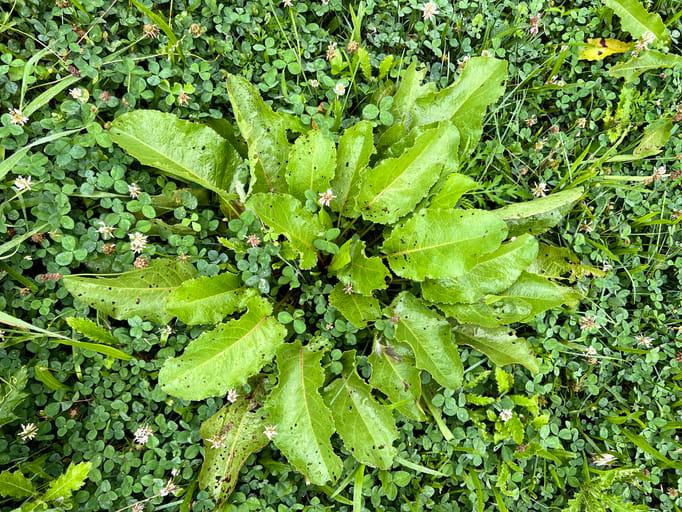
Broadleaf weeds are dicotyledonous plants with wide, net-veined leaves. The seedlings emerge with two cotyledon leaves. They often have showy flowers and a taproot system. They are common in cereals, sugarcane, and orchard crops.
Common Broadleaf Weeds in Indian Fields
- Parthenium hysterophorus (Gajar Ghas / Congress grass)
- Chenopodium album (Bathua)
- Amaranthus species (Chaulai)
- Convolvulus arvensis (Hirankhuri)
- Phyllanthus niruri (Bhumi Amla)
- Trianthema portulacastrum (Patharchatta)
What Are Grassy Weeds?
Grassy weeds are monocotyledonous plants with narrow, parallel-veined leaves. Their seedlings emerge with a single leaf, and they have fibrous roots and hollow, jointed stems. They are major problems in paddy, wheat, maize, and sugarcane.
Common Grassy Weeds in Indian Fields
- Echinochloa colona / E. crus-galli (Sawan / Barnyard grass)
- Phalaris minor (Mandusi / Canary grass) in wheat
- Cynodon dactylon (Doob / Bermuda grass)
- Cyperus rotundus (Motha / Purple nutsedge — actually a sedge, often grouped with grasses)
- Eleusine indica (Goosegrass)
- Dactyloctenium aegyptium (Crowfoot grass)
Broadleaf vs Grassy Weeds: Key Identification Features
Feature | Broadleaf Weeds | Grassy Weeds |
|---|---|---|
Leaf Shape | Wide, oval, heart-shaped | Narrow, long, blade-like |
Leaf Veins | Net-like (reticulate) | Parallel veins |
Seedling Leaves | Two cotyledons | One cotyledon |
Stem | Solid, often branched | Hollow, jointed (nodes) |
Root System | Taproot | Fibrous |
Flowers | Often colourful, visible | Small, in spikes or panicles |
How to Control Broadleaf Weeds
Cultural Methods
- Timely sowing and proper crop spacing to shade out weeds.
- Hand weeding or hoeing at 20 to 25 days and 40 to 45 days after sowing.
- Use of clean, weed-seed-free crop seed.
- Stale seedbed technique: irrigate, let weeds emerge, kill them, then sow.
Chemical Methods
- 2,4-D and Metsulfuron-methyl: broadleaf control in wheat and paddy.
- Carfentrazone-ethyl: post-emergence broadleaf control in wheat.
- Imazethapyr: broad-spectrum in soybean, groundnut, pulses.
- Atrazine: pre-emergence in maize and sugarcane.
How to Control Grassy Weeds
Cultural Methods
- Deep summer ploughing to expose grass rhizomes and seeds.
- Rotation with broadleaf crops to break the grass life cycle.
- Maintain proper irrigation; standing water in paddy suppresses many grasses.
Chemical Methods
- Pendimethalin (pre-emergence) for many grasses across crops.
- Clodinafop-propargyl / Sulfosulfuron / Pinoxaden: post-emergence in wheat for Phalaris minor.
- Pretilachlor / Bispyribac-sodium: post-emergence in paddy.
- Quizalofop-ethyl / Fenoxaprop-p-ethyl: grass control in broadleaf crops like soybean and cotton.
Integrated Weed Management Tips
- Combine cultural, mechanical, and chemical methods rather than relying on one.
- Rotate herbicides with different modes of action to delay resistance.
- Maintain field bunds and channels free of weeds to reduce seed dispersal.
- Always read herbicide labels and follow waiting periods before harvest.
Conclusion
Identifying whether a weed is broadleaf or grassy is the first step toward effective control. Selective herbicides only work when matched correctly. When in doubt, take a fresh weed sample to your nearest Krishi Vigyan Kendra (KVK) or agricultural university extension centre before buying a herbicide.