Introduction
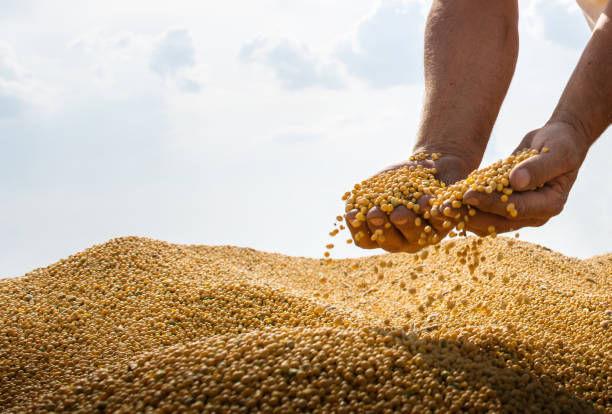
Soybean is a key Kharif oilseed and protein crop, mainly grown in Madhya Pradesh, Maharashtra, Rajasthan, Karnataka, and Telangana. It plays a big role in farmer income and supports the edible oil and animal feed industries. During the rainy season, soybeans often suffer from soil-borne diseases like soybean root rot and collar rot. These diseases attack the underground and lower stem parts of the plant. Once the plant turns yellow and starts wilting, recovery is very difficult. Prevention is far better than curing for these diseases. Knowing the early symptoms, favorable conditions, and right preventive steps is the key to saving the crop.
What is Root Rot and Collar Rot in Soybean?
Soybean root rot is a complex of soil-borne fungal diseases caused mainly by Rhizoctonia solani, Fusarium species, and Macrophomina phaseolina (charcoal rot). These fungi attack the roots and lower stem, blocking water and nutrient flow. Collar rot is caused by Sclerotium rolfsii, which produces a typical white cottony fungal growth at the base of the stem along with mustard-seed sized brown sclerotia (resting bodies). Both diseases affect the seedling stage, vegetative stage, and flowering stage. They cause sudden wilting, yellowing, and death of plants in patches. The fungi survive in soil and crop residue for many years, which makes prevention very important.
Symptoms
- Pre-emergence damping off — seeds rot before germination; gaps in the field.
- Post-emergence damping off — newly emerged seedlings collapse and die.
- Yellowing of lower leaves followed by wilting of the whole plant.
- Brown to dark brown lesions on the lower stem near the soil line (collar region).
- White cottony fungal growth at the collar region with mustard-seed sized brown to black sclerotia (typical Sclerotium rolfsii sign).
- Soft, dark, rotted roots; plant can be pulled out easily because the root system has rotted.
- Charcoal rot: Black streaks under the bark of stem and roots; plants dry suddenly.
- Patches of yellow, wilting, or dead plants — disease spreads in circles in the field.
- Yield impact: 10–40% loss is common; in severe attacks, whole patches dry up.
Farmer Tip: If a soybean plant suddenly wilts even though the field is moist, gently dig it out. Look at the roots and the collar region. White cottony growth with small brown balls = collar rot; dark brown rotted roots = root rot. Both need quick action.
Favorable Conditions
Soil-borne fungi like Rhizoctonia, Sclerotium, Fusarium, and Macrophomina are favored by specific field conditions:
- Warm soil temperature (28–35°C) with high soil moisture during early crop stage.
- Heavy rainfall followed by dry, hot spells (especially for charcoal rot).
- Poor drainage and waterlogging in low-lying patches.
- Untreated, infected, or poor-quality seed.
- Continuous soybean-soybean or soybean-pulses cropping; high inoculum carry-over.
- Heavy use of undecomposed crop residue and organic matter that supports fungus.
- Compacted soils with poor aeration and weak root growth.
- Deep sowing of seed in cloddy soil.
- Use of susceptible varieties without inbuilt tolerance.
Preventive Measures
- Use certified, healthy, bold, disease-free seed of recommended varieties.
- Treat seed before sowing with bio-agents like Trichoderma viride (5 g/kg seed) or Pseudomonas fluorescens (10 g/kg seed).
- Where soil-borne disease history is high, use a chemical seed treatment with thiram + carbendazim (2 + 1 g/kg seed) followed by Trichoderma.
- Maintain proper sowing depth (3–5 cm); avoid very deep sowing.
- Ensure good field drainage; remove waterlogging from low patches.
- Apply farmyard manure that is fully decomposed; do not use raw, undecomposed residue.
- Practice crop rotation with cereals (maize, sorghum) for at least 1–2 seasons.
- Plough deeply after harvest in summer to expose sclerotia to sun and bury residue.
- Apply lime in acidic soils where Sclerotium is a problem (as per soil test).
- Apply Trichoderma enriched FYM (2.5 kg / acre) at the time of sowing.
- Avoid heavy single dose of nitrogen; balance with potash and phosphorus.
- Scout the field at 15, 30, and 45 days after sowing for early symptoms.
Management Practices
Soybean root rot and collar rot are best managed through Integrated Disease Management (IDM). Since chemical sprays cannot reach roots easily, prevention through seed treatment and soil treatment is the most important step. Combine clean seed, balanced fertilizer, biological products, drainage, and need-based chemical drenching.
Mechanical Control
- Ensure good drainage; make small drainage channels in low-lying areas.
- Maintain proper sowing depth and avoid cloddy seedbeds.
- Remove and destroy heavily infected plants from the field.
- Plough deeply after harvest in summer to expose fungal sclerotia to heat.
- Practice solarization in known disease-prone fields by covering moist soil with transparent plastic for 4–6 weeks in summer.
- Avoid moving soil and equipment from infected to healthy fields.
- Burn the infected stubble; do not use it as cattle bedding.
Biological Control
Biological products are the strongest tool for soil-borne diseases. They protect the root zone, build natural defence, and reduce sclerotia in the soil over the years. Useful BigHaat products include:
Product Name | Technical Content | Dosage |
Trichoderma viride 1.5% WP | liquid based: 1-2 lit/ Acre Carrier based: 2 - 5 kg/Acre | |
Trichoderma viridae 2% | 1-2 lit/Acre | |
Bacillus spp. & Pseudomonas spp | Liquid base – 1-2lit/Acre Carrier base – 2-5kg/Acre | |
Pseudomonas fluorescens,Pseudomonas stutzeri,Neem extract,Karanja extract | 400gm/Acre | |
Pseudomonas fluorescens 1.0% WP | Liquid base 1-2 lit/Acre Carrier base- 2-5 kg/Acre |
Chemical Control
Chemical control is mainly through seed treatment and soil drenching. Foliar sprays are not effective for soil-borne diseases. Use chemical fungicides only after correct identification and follow label dosage carefully. Wear protective clothing and avoid contamination of drinking water sources.
Product Name | Technical Content | Dosage |
Carbendazim 12% + Mancozeb 63% WP | 300gm/Acre | |
Carbendazim 12% + Mancozeb 63% WP | 300gm/Acre | |
Mancozeb 50% + Carbendazim 25% WP | 350gm/Acre |
Safety Tip: Always read the product label, follow the recommended dosage, and consult a local agronomist before spraying.
Best Time to Take Action
Prevention starts before sowing. Always treat seed with Trichoderma or recommended fungicide. Apply Trichoderma-enriched FYM at sowing for known problem fields. Scout the crop at 15, 30, and 45 days after sowing for any wilting or yellow patches. As soon as the first wilted plant is seen, drench the surrounding plants with a recommended fungicide solution. Drainage must be ensured immediately if rains are heavy. Action delayed beyond 7–10 days from first symptom usually leads to spread of disease in patches.
Common Mistakes Farmers Should Avoid
- Sowing untreated seed; this is the biggest cause of root rot and damping off.
- Continuous soybean-soybean cropping without rotation.
- Sowing too deep in cloddy or compacted soil.
- Ignoring waterlogging in low patches after heavy rain.
- Applying raw, undecomposed FYM full of fungus.
- Using only foliar sprays for soil-borne diseases — they don't reach the roots.
- Repeating the same chemical for seed treatment every year — leads to resistance.
Conclusion
Soybean root rot and collar rot are silent yield killers that hit the crop right from germination. Once the plant turns yellow and starts wilting, the damage is mostly done. The strongest farmer's tool is prevention — clean seed, proper seed treatment, good drainage, and Trichoderma-enriched FYM at sowing. Practice crop rotation and avoid raw residue. Scout the field regularly in the first 45 days and act on the first wilted plant. Integrated Disease Management combining biological products, balanced fertilizer, and need-based chemical drenching gives the best long-term protection. Healthy roots = healthy soybean crop = better yield and farmer income.
Note: The information contained herein is for informational purposes only. Nothing herein shall be construed to be financial or legal advice. Viewers are advised to do their own research before making any decisions.