

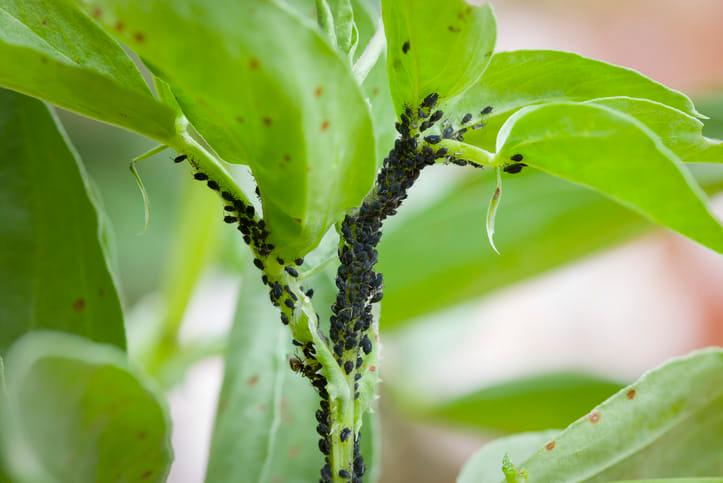
By the time a farmer sees clear pest damage from the field bund — yellow patches, wilting plants, or holes in leaves — the pest is usually well-established and difficult to control. Catching the attack early, in its first 5 to 10 days, gives the best chance of low-cost control with minimal yield loss. Early detection is the heart of modern IPM.
Why Early Detection Matters
- Pests multiply rapidly — one female aphid can produce 50 to 100 nymphs in a week.
- Early-stage pests are easier to kill with low-cost neem or selective insecticide.
- Late-stage pests need stronger chemicals, higher doses, and repeated sprays.
- Some pests like leaf curl virus vectors cause permanent damage even after the pest is gone.
1. Walk the Field Regularly (Scouting)
- Walk through the field at least twice a week, in a zig-zag pattern.
- Inspect at least 10 random plants per acre.
- Look at the upper, middle, and lower canopy.
- Check the under-surface of leaves where most sucking pests hide.
- Inspect growing tips, flower buds, and fruit clusters carefully.
2. Watch the Earliest Visual Cues
|
Early Symptom |
Likely Pest |
|---|---|
|
Small yellow specks on top of leaves |
Mites or thrips |
|
Sticky shiny patches on leaves |
Aphid or whitefly honeydew |
|
Black sooty mould on leaves |
Sucking pest infestation |
|
Curled, cupped young leaves |
Jassids, whitefly, viral disease |
|
Tiny holes in young leaves |
Flea beetles or caterpillars |
|
Silver streaks on flowers/leaves |
Thrips |
|
Bored holes in fruits |
Fruit borer, shoot borer |
|
Wilting in patches |
Root grub, termites, or wilt disease |
3. Use Traps to Catch Pests Before You See Them
- Yellow sticky traps for aphids, whiteflies, jassids — 8 to 12 per acre.
- Blue sticky traps for thrips — 8 to 10 per acre.
- Pheromone traps for fruit and shoot borers — 4 to 6 per acre.
- Light traps for moths in paddy, cabbage, cauliflower.
- Inspect traps every 3 to 4 days; rising counts indicate an outbreak forming.
4. Know the Economic Threshold Level (ETL)
ETL is the pest density at which spraying becomes economically justified. Spraying before reaching ETL wastes money; spraying too late risks yield.
- Cotton — Jassid: 2 nymphs per leaf at 30 DAS; 1 at later stages.
- Paddy — BPH: 5 to 10 hoppers per hill.
- Tomato — Fruit borer: 1 egg or larva per plant.
- Chilli — Thrips: 5 thrips per leaf.
- Brinjal — Shoot borer: 5 percent shoot damage.
Confirm ETL values with your local KVK; they vary by region and crop stage.
5. Use Smartphone and Weather-Based Advisories
- Subscribe to IMD agromet bulletins and Kisan Suvidha alerts.
- Use Plantix, AgriBolo, or similar pest-identification apps to check symptoms.
- Follow KVK WhatsApp groups for weekly pest forecasts.
6. Keep a Simple Field Diary
Record what you saw, where, and on which date. Over 2 to 3 seasons, this builds a pattern of when each pest first appears in your field, so you can prepare a step ahead next year.
What to Do When You Spot Early Attack
- Confirm the pest correctly — use traps, photos, and expert help.
- Start with neem oil 3 to 5 ml per litre or NSKE 5 percent at low pest counts.
- Use bio-agents like Chrysoperla, Trichogramma if appropriate.
- Switch to recommended insecticides only above ETL, with label-dose accuracy.
- Rotate chemical groups to prevent resistance.
Conclusion
Early pest detection is the cheapest yield-saving practice in farming. Walk the field regularly, use traps, watch the youngest leaves, and act when counts cross ETL. Always follow product labels and consult your local KVK or agriculture officer for region-specific advice.