

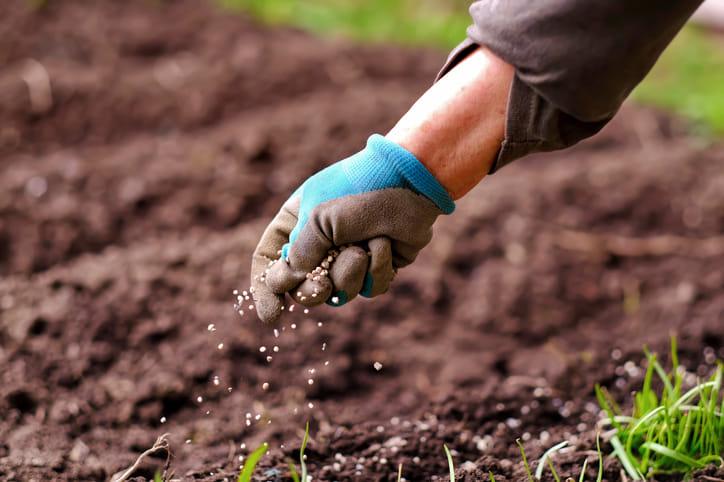
Seed treatment is the cheapest and most effective step a farmer can take to protect a crop. A small amount of fungicide, insecticide, or bio-agent applied to the seed shields the young plant from seed-borne diseases, soil-borne pests, and early stress. ICAR studies show that proper seed treatment alone can lift yield by 10 to 15 percent.
Why Seed Treatment Is Important
- Protects against seed-borne and soil-borne pathogens.
- Reduces early pest attack and root grub damage.
- Improves germination and crop establishment.
- Builds early plant vigour, leading to higher final yield.
- Lowers the need for early-stage sprays — saving cost.
Types of Seed Treatment
1. Physical Seed Treatment
- Sun drying for 2 to 3 hours to kill surface fungi.
- Hot water treatment (52 °C for 10 minutes) for paddy, cotton against bacterial diseases — follow exact temperature.
2. Chemical Seed Treatment
- Carbendazim 50 WP at 2 g per kg seed for soil-borne fungi.
- Thiram at 3 g per kg seed for damping-off and seed rot.
- Carboxin + Thiram (Vitavax Power) at 2 to 3 g per kg seed for wheat smut and root rot.
- Imidacloprid 70 WS at 5 g per kg seed for sucking pests in cotton, wheat, and vegetables.
- Thiamethoxam 30 FS at 10 ml per kg seed for early-stage pest protection.
3. Biological Seed Treatment
- Trichoderma viride or T. harzianum at 5 to 10 g per kg seed for root rots and wilts.
- Pseudomonas fluorescens at 10 g per kg seed for bacterial diseases.
- Rhizobium inoculation at 200 g per acre seed for pulses (gram, soybean, groundnut).
- Azotobacter or Azospirillum for cereals at 200 g per acre seed.
- PSB (Phosphate Solubilizing Bacteria) at 200 g per acre seed.
Correct Order of Seed Treatment
When using multiple products on the same seed, follow this order:
- Step 1: Fungicide first (Carbendazim, Thiram, Carboxin).
- Step 2: Insecticide second (Imidacloprid, Thiamethoxam).
- Step 3: Bio-agent last (Trichoderma, Rhizobium, Pseudomonas).
- Wait at least 24 hours between chemical and bio-agent steps.
Crop-Wise Seed Treatment Recommendations
|
Crop |
Recommended Treatment |
|---|---|
|
Paddy |
Carbendazim 2 g/kg + Pseudomonas 10 g/kg |
|
Wheat |
Carboxin + Thiram 3 g/kg; Imidacloprid 5 g/kg for termite zones |
|
Cotton |
Imidacloprid 5–10 g/kg + Trichoderma 5 g/kg |
|
Soybean |
Carbendazim 2 g/kg + Rhizobium 5 g/kg + PSB 5 g/kg |
|
Groundnut |
Thiram 3 g/kg or Carbendazim + Rhizobium |
|
Maize |
Imidacloprid 5 g/kg + Carbendazim 2 g/kg |
|
Vegetables |
Trichoderma 5 g/kg + Pseudomonas 5 g/kg |
How to Apply Seed Treatment
- Use a clean container or a seed drum.
- Add a few drops of water if needed to help the chemical stick.
- Mix gently so seeds are uniformly coated.
- Shade dry seeds before sowing — never under direct sun.
- Sow treated seeds within 24 to 48 hours.
Safety Reminders
- Always wear gloves and a mask while treating seeds.
- Never eat, drink, or smoke during treatment.
- Do not use treated seeds for food, feed, or grinding.
- Store leftover treated seed away from children, animals, and food.
- Follow label instructions on every product.
Conclusion
Proper seed treatment is one of the highest-return investments in farming. Combine the right fungicide, insecticide, and bio-agent in the right order for your crop. Follow product label instructions and consult your local KVK for region-specific recommendations.