

Introduction
Tomato is a valuable vegetable crop for farmers, but it is highly sensitive to several soil-borne diseases. Among them, bacterial wilt is one of the most difficult and damaging diseases. It can cause sudden wilting of healthy-looking tomato plants, especially during warm and moist conditions. In many cases, farmers notice that plants wilt quickly even when there is enough soil moisture.
Bacterial wilt is dangerous because once a plant is infected, it is very difficult to cure. The bacteria enter through roots, multiply inside the plant, and block the water-conducting tissues. Due to this blockage, the plant cannot transport water properly and starts wilting. Early identification, field sanitation, healthy seedlings, and preventive management are very important to reduce losses.
What is Bacterial Wilt in Tomato?
Bacterial wilt in tomato is caused by the bacterium Ralstonia solanacearum. This bacterium lives in the soil and attacks the roots of tomato plants. It enters mainly through wounds in roots caused by transplanting injury, nematodes, intercultural operations, or damaged root tips.
After entering the plant, the bacteria multiply inside the vascular tissues. These tissues carry water from roots to leaves. When the bacterial population increases, the water movement gets blocked. As a result, the plant wilts even if water is available in the soil.
This disease is more common in warm regions and can remain in the soil for a long time. It also affects other crops like brinjal, chilli, potato, and some weeds.
Symptoms of Bacterial Wilt in Tomato
Farmers should observe tomato plants carefully, especially during the vegetative and flowering stages. Bacterial wilt symptoms are different from normal drying due to water shortage.
Common symptoms include:
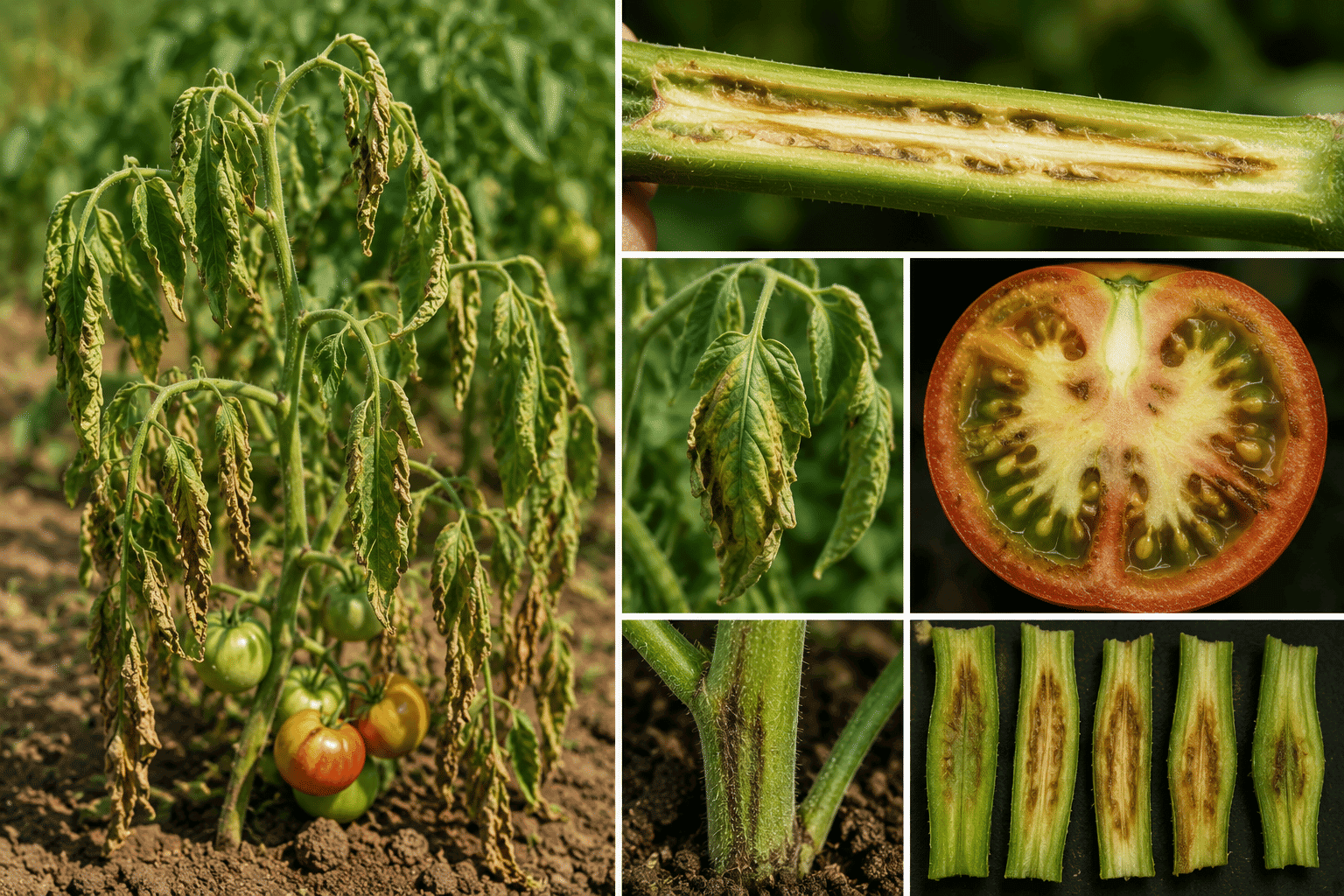
- Sudden wilting of one or more plants in the field
- Leaves drooping during daytime even when soil has moisture
- Plants appearing fresh in the morning but wilting later in the day
- Wilting of upper leaves first in many cases
- Entire plant wilting within a few days
- Leaves remaining green during early wilting stage
- No major yellowing in the beginning
- Brown discoloration inside the stem when cut
- Sticky bacterial ooze from cut stem in severe infection
- Poor flowering and fruit setting in affected plants
- Complete plant death in advanced stage
One important point is that bacterial wilt often causes sudden wilting without much yellowing at first. This helps farmers differentiate it from many fungal wilts, where yellowing and slow drying are more common.
Simple Field Test for Bacterial Wilt
Farmers can do a simple water test to check bacterial wilt symptoms.
- Cut a small piece of the lower stem from a wilted plant.
- Place the cut stem piece in a clear glass of clean water.
- Keep it undisturbed for a few minutes.
- If milky white threads or cloudy bacterial ooze come out from the cut end, it indicates bacterial wilt infection.
This test is helpful for field-level identification. However, farmers should also take advice from local agriculture experts if symptoms are confusing.
Damage Caused by Bacterial Wilt
Bacterial wilt causes direct plant death. Unlike leaf diseases that damage only leaves, this disease affects the internal water movement system of the plant. Once the plant wilts completely, it usually does not recover.
Major losses include:
- Sudden death of tomato plants
- Reduced plant population in the field
- Poor flowering and fruit development
- Reduced marketable yield
- Patchy crop stand in the field
- Repeated crop failure in infected soil
- Higher cost of replanting and disease management
If infection starts early, farmers may lose plants before fruiting. If it appears during flowering or fruiting, fruits may remain small, plant growth stops, and yield reduces heavily.
Causes and Spread of Bacterial Wilt
Bacterial wilt spreads mainly through infected soil, water, seedlings, and farm operations. The bacteria survive in soil and plant residues and can infect the next tomato crop if proper care is not taken.
Common sources of spread include:
- Infected seedlings from nursery
- Contaminated soil carried by tools or footwear
- Irrigation water moving from infected areas to healthy areas
- Use of infected field for repeated tomato cultivation
- Root wounds during transplanting or weeding
- Nematode injury on roots
- Infected crop residues left in the field
- Solanaceous weeds acting as alternate hosts
Once the bacteria enter a field, they can survive for a long period, especially when host crops are grown continuously.
Favorable Conditions for Disease Development
Bacterial wilt becomes severe when soil and weather conditions support bacterial growth. Farmers should be more alert during:
- Warm weather conditions
- High soil moisture
- Poor drainage
- Waterlogging in the field
- Continuous tomato or solanaceous crop cultivation
- Use of infected seedlings
- Root injury during field operations
- Heavy nematode infestation
- Poor field sanitation
The disease spreads faster in poorly drained fields. Standing water helps bacteria move from infected plants to healthy plants.
Monitoring and Field Scouting
Regular field observation helps farmers identify the disease before it spreads widely. Farmers should check the crop frequently after transplanting and during flowering.
During field inspection:
- Look for sudden wilting in patches.
- Check whether wilted plants have enough soil moisture.
- Cut the stem and observe brown discoloration.
- Use the water test to check bacterial ooze.
- Mark infected patches in the field.
- Remove infected plants early to reduce spread.
- Avoid moving soil from infected patches to healthy areas.
Early removal of infected plants is important because they act as a source of bacteria in the field.
Management Practices for Bacterial Wilt in Tomato
There is no complete cure for bacterial wilt after the plant is infected. Therefore, management should focus mainly on prevention and reducing disease spread.
Use Healthy Seedlings
Healthy seedlings are the first step in disease prevention.
Farmers should:
- Raise seedlings in disease-free nursery soil.
- Avoid nursery soil from infected fields.
- Use clean trays or raised nursery beds.
- Remove weak or wilted seedlings immediately.
- Transplant only healthy and strong seedlings.
- Avoid root injury during transplanting.
Infected seedlings can carry the disease into the main field, so nursery care is very important.
Field Sanitation and Crop Rotation
Clean field practices help reduce bacterial survival.
Important practices include:
- Remove and destroy infected plants along with roots.
- Do not leave wilted plants in the field.
- Avoid dumping infected plants near irrigation channels.
- Remove weeds from field bunds and nearby areas.
- Follow crop rotation with non-host crops like maize, cereals, or pulses.
- Avoid repeated tomato, brinjal, chilli, or potato cultivation in the same field.
Crop rotation for a longer period helps reduce bacterial population in the soil.
Soil and Water Management
Since bacterial wilt increases in wet and poorly drained soils, proper water management is very important.
Farmers should:
- Grow tomato on raised beds in wilt-prone areas.
- Provide proper drainage channels.
- Avoid water stagnation around plants.
- Do not allow irrigation water from infected fields to enter healthy fields.
- Avoid over-irrigation.
- Use drip irrigation where possible.
- Improve soil health with well-decomposed organic manure.
Raised beds and good drainage reduce root stress and help slow disease development.
Resistant Varieties and Grafting
In areas where bacterial wilt appears every season, farmers should use resistant or tolerant tomato varieties if available. Grafting tomato plants on resistant rootstocks can also help reduce wilt damage in disease-prone fields.
Farmers should choose varieties or grafted seedlings based on local recommendations and disease history of the field.
Biological Management
Biological practices can help improve soil health and reduce disease pressure when used regularly.
Useful options include:
- Application of beneficial microbial formulations
- Use of Pseudomonas fluorescens formulations
- Use of Trichoderma enriched compost
- Application of well-decomposed farmyard manure
- Improving organic matter in soil
These methods work best as preventive practices. They should be used before disease becomes severe.
Chemical Control Measures
Chemical control has limited effect once bacterial wilt enters the plant. Farmers should not depend only on chemical spraying for this disease. In some cases, soil treatment or recommended bactericides may be advised by local agriculture experts.
Farmers should follow these points:
- Use only recommended products for tomato bacterial wilt.
- Follow expert advice before chemical application.
- Do not use random chemicals without diagnosis.
- Combine chemical measures with drainage, sanitation, and crop rotation.
- Avoid repeated unnecessary spraying.
For bacterial wilt, prevention is much more effective than trying to cure infected plants.
Precautions During Field Operations
- Avoid working in the field when soil is very wet.
- Do not injure roots during weeding or intercultural operations.
- Clean tools after use in infected patches.
- Remove infected plants carefully without spreading soil.
- Keep irrigation channels clean.
- Control nematodes if they are present in the field.
Root wounds help bacteria enter the plant, so careful field operations are important.
Preventive Measures for Farmers
Farmers can reduce bacterial wilt by following these practices from the beginning:
- Use healthy and disease-free seedlings.
- Choose wilt-tolerant varieties in infected areas.
- Follow crop rotation with non-host crops.
- Avoid continuous tomato cultivation in the same field.
- Grow tomato on raised beds with good drainage.
- Remove wilted plants immediately.
- Keep the field clean and weed-free.
- Avoid over-irrigation and waterlogging.
- Improve soil health with organic manure.
- Monitor the crop regularly after transplanting.
Conclusion
Bacterial wilt is a serious soil-borne disease of tomato that causes sudden wilting and plant death. The disease is caused by bacteria that enter through roots and block water movement inside the plant. Common symptoms include sudden green wilting, drooping leaves, brown stem discoloration, and milky bacterial ooze from cut stems.
Since infected plants are difficult to cure, farmers should focus on prevention. Healthy seedlings, crop rotation, raised beds, proper drainage, field sanitation, removal of infected plants, resistant varieties, and good soil health are the most effective management practices. Timely action helps reduce plant loss, protect yield, and improve farmer profit.