

Introduction
Apple is a high-value fruit crop, and fruit appearance plays a major role in market price. Farmers work hard to maintain healthy trees, proper flowering, and clean fruits. However, some diseases affect both leaves and fruits, reducing tree strength and fruit quality. Apple cedar rust is one such fungal disease that can become serious in orchards where cedar, juniper, or related wild host plants are present nearby.
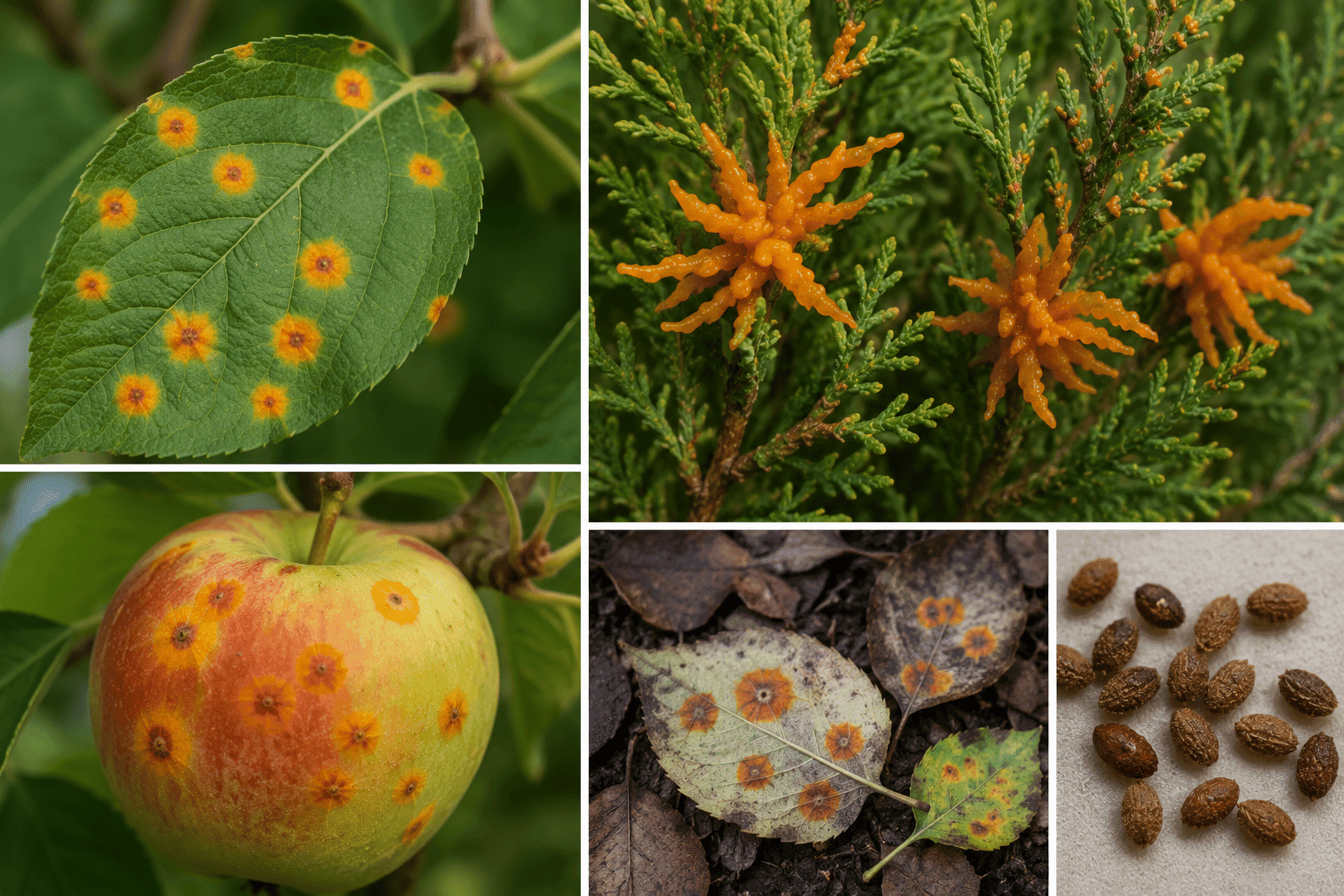
Apple cedar rust mainly affects leaves, young fruits, and sometimes tender shoots. The disease is easy to notice because it produces bright yellow to orange spots on apple leaves. If the infection is severe, leaves may dry and fall early, which weakens the tree and affects fruit development. Regular orchard monitoring, removal of alternate host plants where possible, and timely preventive control are very important for managing this disease.
What is Apple Cedar Rust?
Apple cedar rust is a fungal disease that needs two types of host plants to complete its life cycle. One host is apple, and the other host is cedar, juniper, or related plants. The fungus survives on cedar or juniper plants and later spreads to apple trees during favorable weather.
In spring, when weather becomes moist and humid, fungal spores from infected cedar or juniper plants move through wind and infect apple leaves, flowers, and young fruits. After infection, yellow-orange spots develop on apple leaves. Later, spores produced on apple leaves can again infect cedar or juniper plants.
Because of this life cycle, orchards located near cedar or juniper plants are more likely to face this disease year after year.
Symptoms of Apple Cedar Rust
Farmers should observe apple trees carefully during spring and early summer, especially after rainfall or humid weather. Early symptoms mostly appear on leaves, but fruits can also be affected.
Common symptoms include:
- Small yellow spots on upper leaf surface
- Bright orange spots as disease develops
- Red or yellow rings around leaf spots
- Swelling or raised spots on infected leaves
- Small black dots in the center of spots
- Orange or tube-like growth on lower leaf surface in later stages
- Premature yellowing of infected leaves
- Early leaf fall in severe infection
- Orange spots or rough lesions on young fruits
- Poor fruit appearance and reduced market quality
- Weak tree growth when infection is heavy
The most visible symptom is the bright orange spot on leaves. These spots may start small, but they gradually enlarge and become more prominent. On the lower side of leaves, small cup-like or tube-like structures may appear in later stages.
Fruit Damage and Quality Loss
Apple cedar rust may not always destroy the entire crop, but it can reduce fruit quality and tree health. Fruits affected by rust may develop orange, rough, or slightly raised lesions. Such fruits lose their clean appearance and may get lower market value.
The disease also affects the leaves, which are very important for food preparation in the tree. When leaves fall early, the tree becomes weak. This may affect fruit size, fruit color, bud development, and next season’s flowering.
Major losses include:
- Reduced healthy leaf area
- Early leaf fall
- Weak tree vigor
- Poor fruit development
- Rust spots on fruits
- Reduced fruit shine and appearance
- Lower market price
- Weak flower bud formation for the next season
If infection happens every year, the tree may slowly lose strength and productivity.
How Apple Cedar Rust Spreads
Apple cedar rust spreads mainly through wind-borne spores. The fungus survives on cedar or juniper plants and produces spores during moist weather. These spores travel with wind and infect apple trees.
The disease spreads through:
- Infected cedar or juniper plants nearby
- Wind movement of fungal spores
- Rainy and humid weather
- Long leaf wetness period
- Dense orchard canopy
- Poor air circulation
- Presence of alternate host plants around orchards
Unlike some diseases that spread mainly through infected apple leaves, cedar rust depends strongly on nearby alternate host plants. That is why farmers should not only observe apple trees but also check nearby cedar or juniper plants.
Favorable Conditions for Disease Development
Apple cedar rust becomes more active when weather supports fungal growth and spore movement. Farmers should be more alert during:
- Cool to mild weather in spring
- Rainfall during new leaf growth
- High humidity
- Heavy dew formation
- Long hours of leaf wetness
- Presence of cedar or juniper plants nearby
- Dense tree canopy
- Poor pruning and low air movement
Young leaves and fruits are more susceptible to infection. Once the leaf tissue becomes mature, the chance of new infection reduces. Therefore, early-season protection is very important.
Monitoring and Orchard Inspection
Regular monitoring helps farmers identify cedar rust early and plan control measures before the disease spreads heavily.
During orchard inspection:
- Check young leaves for yellow-orange spots.
- Inspect both upper and lower leaf surfaces.
- Observe young fruits for orange or rough lesions.
- Look for premature leaf yellowing.
- Check nearby cedar or juniper plants for swollen galls.
- Monitor orchards after rainy or humid weather.
- Mark trees showing repeated infection every year.
If cedar or juniper plants nearby show jelly-like orange growth during wet weather, they may be a source of rust spores.
Prevention and Control Methods
Apple cedar rust is best managed through prevention. Once bright orange spots appear, the infected leaf tissue cannot become healthy again. Control practices should focus on reducing future infection and protecting new growth.
Remove Alternate Host Plants Where Possible
Since the fungus needs cedar or juniper plants to complete its life cycle, removing these hosts near the orchard can reduce disease pressure.
Farmers can follow these practices:
- Remove wild cedar or juniper plants near the orchard if practical.
- Avoid planting cedar or juniper close to apple orchards.
- Prune infected galls from nearby juniper plants.
- Keep orchard surroundings clean.
Complete removal may not always be possible, especially if host plants are present in nearby forests or neighboring areas. Still, reducing nearby infected hosts helps lower disease risk.
Cultural Control Methods
Good orchard management reduces humidity and helps leaves dry quickly after rain.
Important practices include:
- Prune trees properly to improve air circulation.
- Avoid dense canopy formation.
- Maintain proper spacing between trees.
- Remove unnecessary water shoots.
- Keep the orchard clean and weed-free.
- Avoid overhead irrigation during disease-favorable weather.
- Maintain balanced nutrition for healthy tree growth.
Open canopy and good sunlight penetration help reduce moisture inside the tree, making conditions less favorable for disease development.
Use Resistant Varieties
In areas where cedar rust occurs every year, farmers should prefer resistant or tolerant apple varieties if available. Resistant varieties reduce disease severity and lower the need for frequent spraying.
Before planting a new orchard, farmers should consult local horticulture experts about suitable varieties for their region.
Chemical Control Measures
Fungicide protection is most effective when applied before or during early infection periods. Spraying after severe symptoms appear will not remove existing spots.
Farmers should follow these points:
- Use only recommended fungicides for apple cedar rust.
- Start protection during early leaf emergence if the disease is common in the area.
- Spray before or during favorable weather conditions.
- Follow label dosage and instructions carefully.
- Rotate fungicides with different modes of action.
- Avoid repeated use of the same fungicide.
- Ensure proper coverage of leaves and young fruits.
- Follow the waiting period before harvest.
Farmers should take guidance from local agriculture or horticulture officers for correct spray timing and product selection.
Precautions During Spraying
- Spray during calm weather.
- Avoid spraying during rainfall or strong winds.
- Use clean water for spray preparation.
- Cover the full canopy properly.
- Do not use higher than recommended dosage.
- Wear gloves, mask, and protective clothing.
- Keep children and animals away from the sprayed orchard.
- Follow safety instructions mentioned on the product label.
Good spray coverage during the early growth stage is important because young leaves and fruits are most vulnerable.
Preventive Measures for Farmers
Farmers can reduce apple cedar rust by following these steps:
- Inspect orchards regularly during spring.
- Check nearby cedar and juniper plants for rust galls.
- Remove alternate host plants where possible.
- Maintain open canopy through proper pruning.
- Avoid excess irrigation and leaf wetness.
- Use resistant varieties in rust-prone areas.
- Follow preventive spray schedules during high-risk periods.
- Maintain good orchard sanitation and balanced nutrition.
Conclusion
Apple cedar rust is an important fungal disease that affects apple leaves and fruits, especially in orchards located near cedar or juniper plants. The disease causes bright yellow-orange spots on leaves, premature leaf fall, fruit blemishes, and reduced tree vigor. If infection occurs regularly, it can affect fruit quality and long-term orchard productivity.
Farmers should focus on early monitoring, removal of alternate host plants where possible, proper pruning, good air circulation, resistant varieties, and timely preventive fungicide sprays. Managing the disease before severe symptoms appear is the best approach. With proper orchard care and timely action, farmers can protect apple trees, improve fruit quality, and maintain better market value.