

Introduction
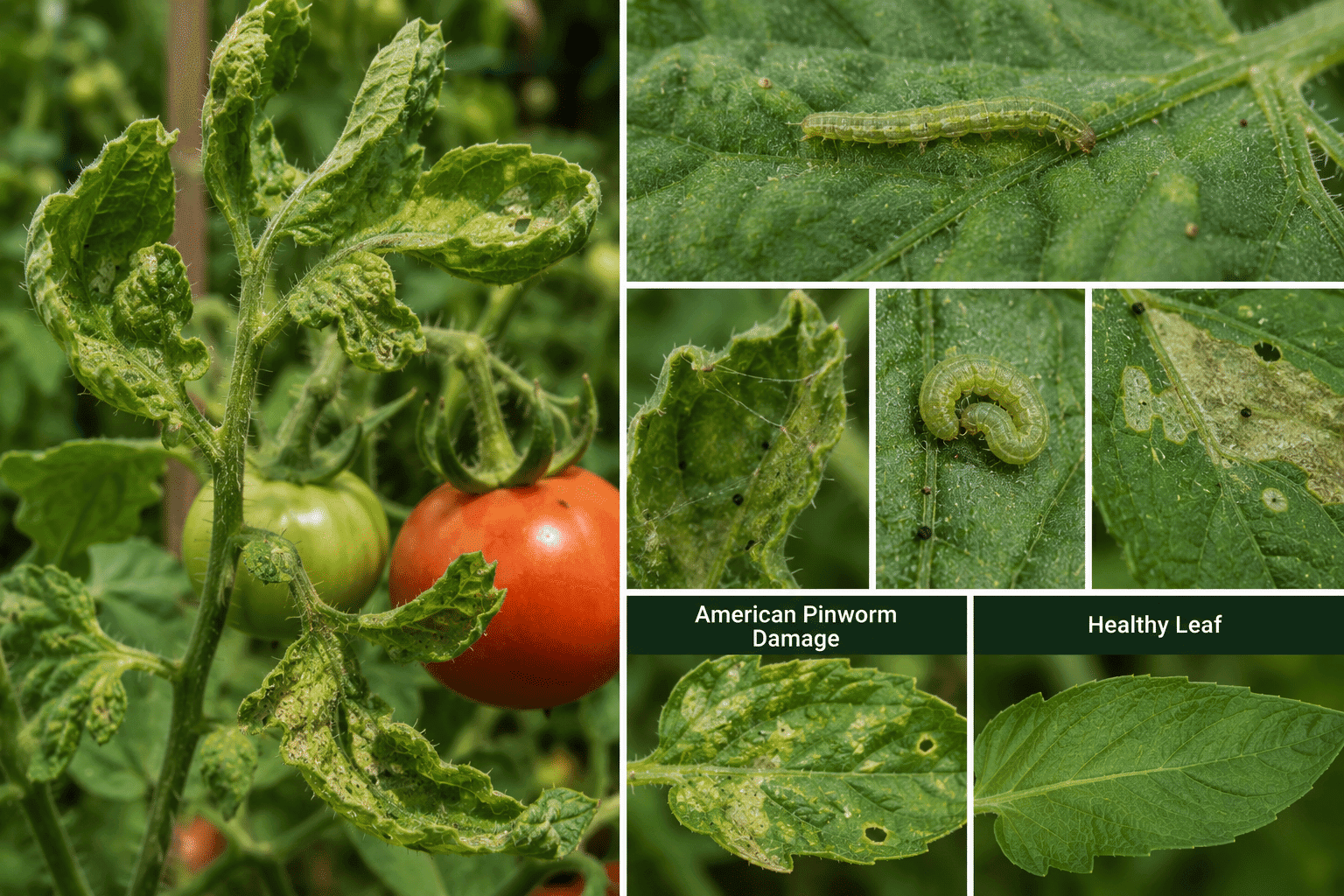
Tomato is a high-value vegetable crop, but it is also attacked by many pests from nursery stage to harvesting. Among them, American pinworm, also known as tomato pinworm or tomato leaf miner in many areas, is a serious pest that can damage leaves, shoots, flowers, and fruits. The pest is more dangerous because the larvae remain hidden inside leaves or fruits, making them difficult to control once the infestation becomes severe.
American pinworm can attack tomato throughout the crop season. In the early stage, it damages leaves by making mines and feeding inside the leaf tissue. Later, it can enter fruits and create holes, galleries, and internal feeding damage. Even a small hole on tomato fruit reduces market quality and selling price. Therefore, farmers should identify the pest early and follow proper management practices before fruit damage increases.
What is American Pinworm in Tomato?
American pinworm is the larval stage of a small moth. The adult moth lays eggs on leaves, tender shoots, flowers, or near fruits. After hatching, the tiny larvae enter the leaf surface and start feeding inside the leaf tissue. As the larvae grow, they may damage shoots, flower buds, and fruits.
The larvae are small and usually greenish to light pink in color. They are difficult to see in the early stage because they remain inside leaves or fruits. The adult moths are mostly active during evening and night hours. If the pest is not controlled early, it can multiply quickly and spread across the tomato field.
Early Symptoms of Infestation
Farmers should regularly observe tomato plants from the nursery stage itself. Early symptoms are mostly seen on leaves and tender growing parts.
Common symptoms include:
- Small mines or tunnel-like marks on leaves
- Transparent or whitish patches on leaf surface
- Leaves showing blotchy mines due to internal feeding
- Drying of mined leaves in severe infestation
- Small larvae inside leaf mines
- Folding or webbing of tender leaves in some cases
- Damage to growing shoots and flower buds
- Flower dropping due to pest attack
- Small entry holes on fruits
- Black fecal matter near fruit holes
- Larvae feeding inside tomato fruits
In the beginning, leaf mines may look small and light-colored. Later, the mined area becomes dry and brown. Farmers should not ignore these early leaf symptoms, because fruit damage usually increases if the pest population is allowed to build up.
Fruit Damage Caused by American Pinworm
Fruit damage is the most serious problem caused by American pinworm in tomato. The larvae enter fruits by making small holes, usually near the calyx, fruit shoulder, or tender fruit surface. After entering, they feed inside the fruit and create tunnels.
Important fruit damage symptoms include:
- Small pin-sized holes on tomato fruits
- Internal feeding tunnels inside fruits
- Black or brown fecal matter near entry holes
- Uneven fruit surface due to internal feeding
- Fruit rotting after larval entry
- Premature fruit dropping in severe cases
- Fruits becoming unfit for market sale
- Increased fungal or bacterial infection through damaged areas
Sometimes the fruit may look normal from outside, but when cut open, feeding tunnels and larvae may be seen inside. Such fruits cannot be sold in the market and may lead to direct economic loss for farmers.
Damage and Yield Loss
American pinworm damages tomato in two major ways. First, it reduces leaf area by mining inside the leaves. This affects photosynthesis and weakens the plant. Second, it directly damages fruits, reducing marketable yield.
The crop loss becomes high when infestation occurs during flowering and fruiting stages. Leaf damage affects plant health, while fruit damage reduces both quality and price. In severe infestation, farmers may face repeated fruit rejection in the market because damaged fruits are not preferred by traders and consumers.
Favorable Conditions for Pest Development
American pinworm population increases quickly when field conditions are favorable. Farmers should be more alert during:
- Warm weather conditions
- Dry or moderately humid weather
- Dense tomato canopy
- Continuous tomato cultivation
- Poor field sanitation
- Presence of infested crop residues
- Nearby solanaceous crops such as brinjal, chilli, or potato
- Uncontrolled pest population in nursery
- Excessive use of broad-spectrum insecticides
The pest can survive on tomato crop residues and nearby host plants. If old infected crop material is left in the field, it may become a source of infestation for the next crop.
Monitoring and Field Scouting
Regular monitoring is very important because the larvae remain hidden inside leaves and fruits. Farmers should inspect the field every 3–4 days from the nursery stage to harvesting.
During field scouting:
- Check young leaves for mines and blotches
- Open mined leaves and look for live larvae
- Observe tender shoots and flower buds
- Check fruits near the calyx for small holes
- Look for black fecal matter around fruit entry points
- Remove and inspect suspicious fruits
- Monitor adult moth activity during evening hours
Pheromone traps are very useful for monitoring adult moths. These traps help farmers know when moth activity is increasing in the field. Early warning through traps helps in taking timely control measures before heavy fruit damage occurs.
Management Practices for American Pinworm
American pinworm should be managed through integrated pest management. Since the larvae hide inside leaves and fruits, late-stage chemical spraying alone may not give good results. Early action, sanitation, trapping, biological control, and need-based spraying are all important.
Cultural Control Methods
- Use healthy and pest-free seedlings for transplanting.
- Avoid planting tomato near heavily infested old tomato fields.
- Remove weeds and alternate host plants around the field.
- Follow crop rotation with non-solanaceous crops.
- Avoid continuous tomato cultivation in the same field.
- Maintain proper spacing to reduce dense canopy.
- Destroy crop residues after final harvest.
- Do not leave damaged fruits in the field.
Clean cultivation is very important because the pest can continue its life cycle on leftover plants and damaged fruits.
Mechanical and Physical Control
Mechanical methods help reduce pest population during early infestation.
- Remove and destroy mined leaves with live larvae.
- Collect and destroy damaged fruits from the field.
- Install pheromone traps for monitoring and mass trapping.
- Use insect-proof netting in nursery areas where possible.
- Avoid transporting infested seedlings or fruits to healthy fields.
- Remove plant debris after pruning or harvesting.
Farmers should not throw infested fruits near the field, as larvae may continue developing and spread again.
Biological Control Methods
Biological control is useful when started early. It helps reduce pest pressure and is safer for beneficial insects.
Useful options include:
- Trichogramma parasitoids
- Predatory bugs and spiders
- Bacillus thuringiensis (Bt) formulations
- Neem-based products during early infestation
- Conservation of natural enemies
Bt formulations are more effective against young larvae before they enter deep inside fruits. Farmers should avoid unnecessary broad-spectrum insecticide sprays, as these may kill natural enemies and increase pest resurgence.
Chemical Control Measures
When pest population becomes high and fresh damage is observed, farmers can use recommended insecticides. Spraying should target the early larval stage because once larvae enter fruits, control becomes difficult.
Farmers should follow these points:
- Use only recommended insecticides for tomato.
- Spray after proper field scouting and trap observation.
- Focus on early infestation instead of waiting for heavy fruit damage.
- Rotate insecticides with different modes of action.
- Avoid repeated use of the same chemical.
- Ensure proper coverage of leaves, shoots, flowers, and fruit clusters.
- Follow the waiting period before harvesting fruits.
Since tomato is harvested frequently, farmers must be careful about spray timing and residue safety.
Precautions During Spraying
- Spray during morning or evening hours.
- Avoid spraying during strong winds or rainfall.
- Cover the lower leaf surface and fruit clusters properly.
- Use clean water for spray preparation.
- Do not exceed the recommended dosage.
- Wear gloves, mask, and protective clothing.
- Keep children and animals away from the sprayed field.
- Harvest only after completing the recommended waiting period.
Proper spray coverage is important because larvae may be present in hidden parts of the plant.
Preventive Measures for Farmers
Farmers can reduce American pinworm infestation by following preventive practices from the beginning of the crop:
- Raise seedlings in a clean nursery.
- Use insect-proof netting in nursery if available.
- Install pheromone traps soon after transplanting.
- Monitor the crop every 3–4 days.
- Remove mined leaves and damaged fruits early.
- Maintain field sanitation throughout the crop season.
- Destroy crop residues after harvest.
- Avoid continuous tomato cropping.
- Encourage natural enemies and avoid unnecessary pesticide sprays.
Prevention is more effective than trying to control the pest after larvae enter fruits.
Conclusion
American pinworm is a serious pest of tomato because it damages both leaves and fruits. Early symptoms appear as leaf mines, whitish patches, and drying of affected leaves. Later, the larvae enter fruits and cause small holes, internal tunnels, rotting, and market rejection. Fruit damage directly reduces farmer income.
Effective management depends on early identification, regular scouting, pheromone trap monitoring, removal of infested leaves and fruits, clean cultivation, biological control, and need-based insecticide spraying. Farmers should not wait until fruit damage becomes severe. Timely integrated management helps protect tomato plants, improve fruit quality, reduce crop loss, and increase marketable yield.