Introduction
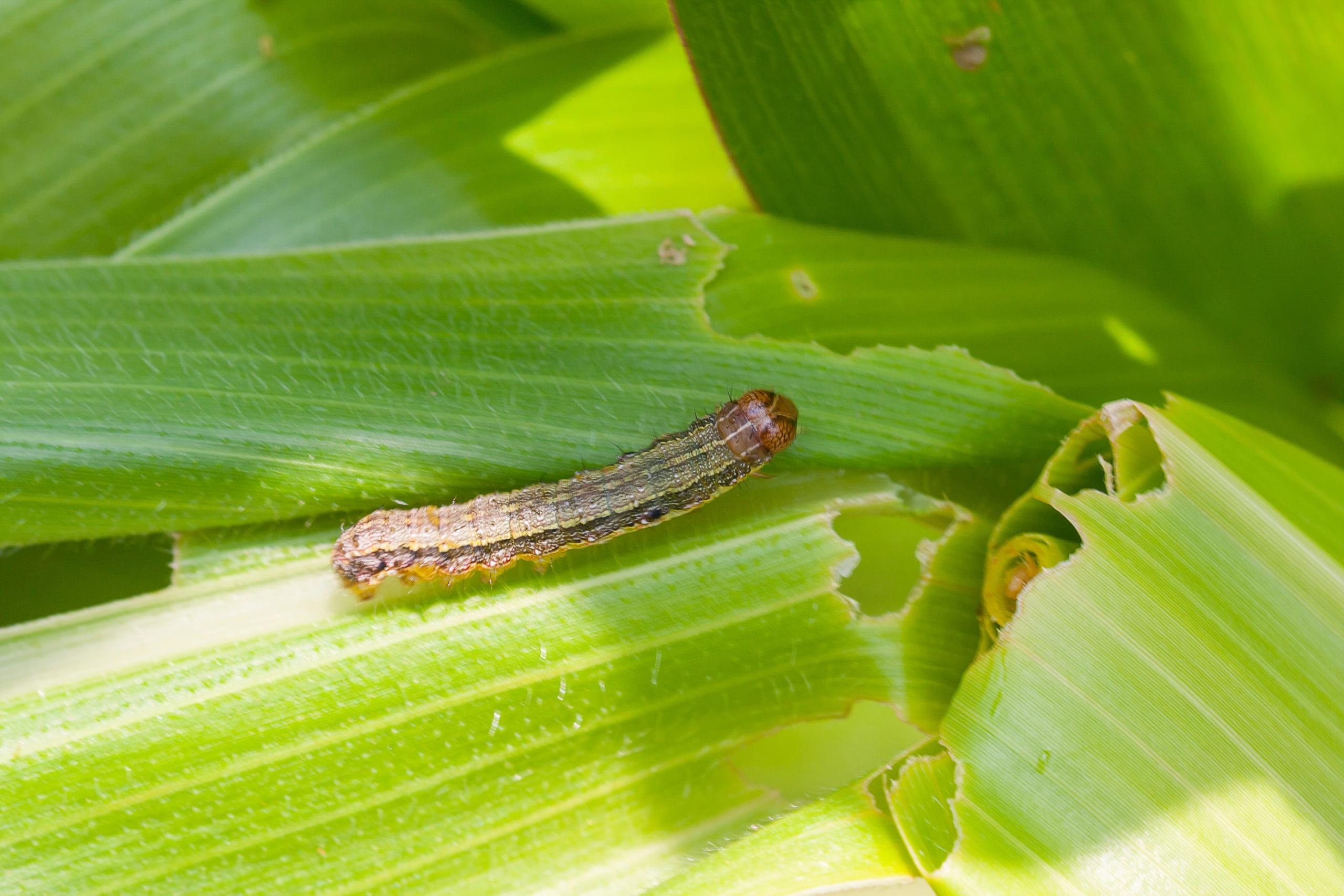
Fall armyworm, scientifically known as Spodoptera frugiperda, has become a major pest of maize in India since its first detection in Karnataka in 2018. It mainly damages maize during the vegetative stage, especially by feeding inside the whorl. Severe infestation can reduce plant growth, damage cobs, and affect yield.
Fall armyworm management works best when farmers identify the pest early and target young larvae before they move deep into the whorl.
How to Identify Fall Armyworm in Maize
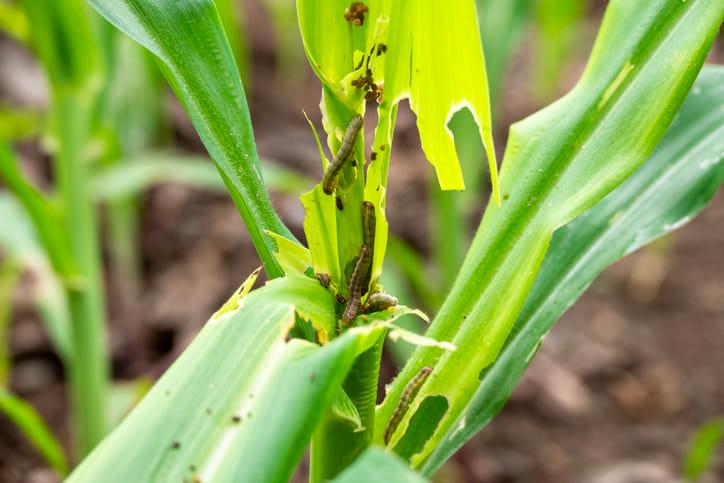
Do not confuse fall armyworm with other caterpillars. Look for these field symptoms:
- Scraping marks on young leaves
- Round or irregular holes on leaves
- Sawdust-like frass inside the whorl
- Larvae hidden deep inside the whorl
- Inverted “Y” mark on the head
- Four black dots arranged in a square on the second-last body segment
- Severe whorl damage in patches
- Cob feeding in late infestation
One female moth can lay a large number of eggs, so early monitoring is very important.
Conditions That Favour Fall Armyworm
FAW infestation increases when:
- Maize is sown late
- Continuous maize cropping is followed
- Crop residues are not managed
- Weather is warm and humid
- Fields are not scouted regularly
- Early egg masses and young larvae are missed
- Unnecessary sprays disturb natural enemies
8 Insecticide Options for Fall Armyworm in Maize
Use only insecticides registered for maize and fall armyworm or the relevant target pest as per the approved label. Do not apply any insecticide without verifying label approval.
|
Sr. No. |
Insecticide Technical Name |
Mode of Action Type |
Best Use Situation |
|
1 |
Spinetoram 11.7% SC |
Contact and stomach action |
Early larval stage |
|
2 |
Emamectin Benzoate 5% SG |
Stomach and contact action |
Whorl-stage larvae |
|
3 |
Chlorantraniliprole 18.5% SC |
Diamide insecticide |
Egg hatch to early larvae |
|
4 |
Spinosad 45% SC |
Contact and stomach action |
Young larvae |
|
5 |
Chlorantraniliprole + Lambda-cyhalothrin combination |
Combination insecticide |
Mixed pest pressure, label-based use |
|
6 |
Novaluron 5.25% + Emamectin Benzoate 0.9% SC |
IGR + larvicide |
Early to medium larvae |
|
7 |
Flubendiamide formulation |
Diamide insecticide |
Early to mid-larval stage, label-based use |
|
8 |
Indoxacarb 14.5% SC |
Oxadiazine insecticide |
Larval management, label-based use |
Right Way to Spray for Better Control
Many sprays fail because the spray solution does not reach the whorl where the larvae hide.
Spray Tips
- Spray at early larval stage.
- Direct the nozzle into the whorl.
- Use adequate water volume for proper coverage.
- Spray in the early morning or late evening.
- Avoid spraying during rain or strong wind.
- Rotate insecticide groups between sprays.
- Do not repeat the same molecule again and again.
- Follow the label dose and waiting period.
Final Thoughts
Fall armyworm can damage maize quickly, but early scouting and whorl-targeted spraying can reduce losses. Select insecticides based on crop stage, pest intensity, and local expert advice.
Combine insecticide use with pheromone monitoring, field sanitation, crop rotation, and timely sowing for better long-term control.