Introduction
Maize is one of the most important Kharif cereals of India, grown widely in Karnataka, Madhya Pradesh, Maharashtra, Bihar, Telangana, Andhra Pradesh, Rajasthan, Tamil Nadu, and the North-East. It is used for food, animal feed, and industrial purposes. Since 2018, fall armyworm in maize (FAW) has become the most damaging pest of Indian maize. The pest can attack the crop from the seedling stage and cause heavy whorl damage within just a few days. If not detected early, fall armyworm can reduce yield by 30-60%. Knowing the early signs, scouting properly, and starting integrated control on time is the only way to protect the crop.
What is Fall Armyworm in Maize?
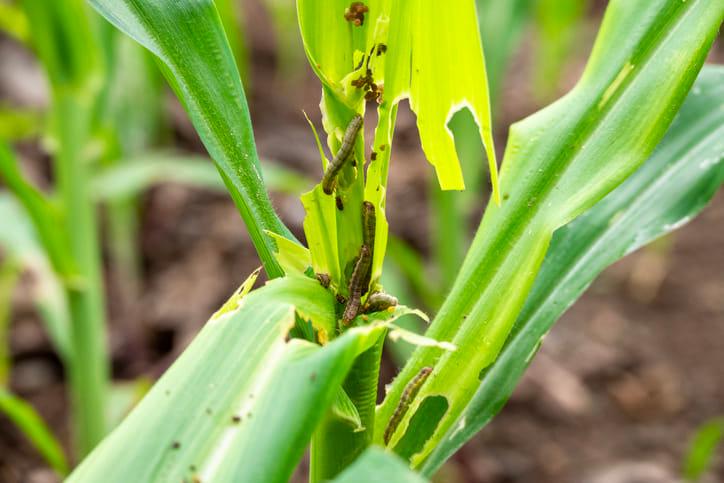
Fall armyworm (Spodoptera frugiperda) is a moth whose caterpillars feed on the leaves and whorl of maize plants. The adult is a grey-brown moth that can fly long distances, helping the pest spread quickly. Eggs are laid in masses of 100-200 on the underside of leaves, covered with grey-brown hairs. The young larvae feed on tender leaves and create typical "window pane" damage, while older larvae enter the whorl and cause shot-hole damage with lots of frass (insect waste). FAW caterpillars have an inverted Y-shape on the head and four black dots arranged in a square on the second-last segment - these are the key identification marks. The pest attacks maize from seedling stage right up to tasseling, and even cobs in late stage.
Symptoms
- Window pane damage on young leaves - small transparent papery patches where larvae have scraped the surface.
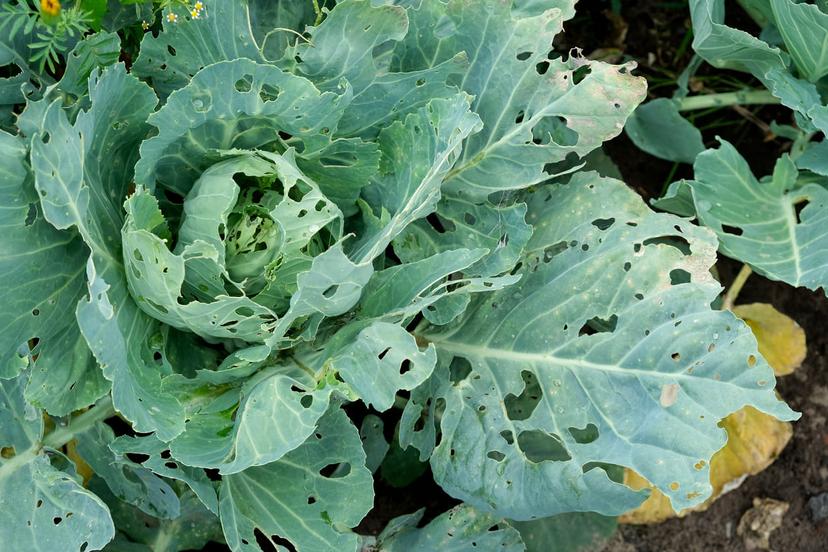
- Shot-hole and ragged feeding pattern on leaves once larvae start feeding fully.
- Heavy frass (sawdust-like waste) inside the whorl - typical sign of FAW attack.
- Whorl damage with ragged edges; leaves emerging from whorl show large irregular holes.
- Tasseling damage - feeding on the tassel reduces pollen production.
- Cob damage in late attacks - caterpillars feed on developing kernels.
- Visible egg masses on the underside of leaves, covered with grey-brown hairs.
- Yield impact: 30-60% loss in heavy attack and 100% loss in young plants if whorl is destroyed.
Farmer Tip: Walk through the field weekly and check 20 plants in different spots. Look down into the whorl. If you see fresh frass and ragged feeding, FAW is active. If 5% of plants in seedling stage or 10% in vegetative stage show whorl damage, take immediate action.
Favorable Conditions
Fall armyworm spreads fast and reproduces in many crop seasons. Common favorable conditions include:
- Warm temperature (25-30°C) and moderate humidity, common during Kharif.
- Continuous maize cropping in nearby fields, providing year-round food.
- Late-sown maize next to early-sown crop with already developed pest population.
- Heavy use of nitrogen fertilizer producing soft, lush, dark green crop.
- Use of broad-spectrum chemicals that kill natural enemies.
- Lack of crop rotation; carry-over of pupae in soil.
- Susceptible varieties without inbuilt tolerance.
- Mixed cropping with sorghum, rice, sugarcane, and other host crops nearby.
Preventive Measures
- Use certified seed of recommended hybrids; some hybrids show better tolerance to FAW.
- Sow at the recommended time; avoid very late or very staggered sowing.
- Maintain proper plant spacing (60 x 20 cm or as per hybrid).
- Apply nitrogen in 3 split doses; avoid heavy single dose of urea.
- Practice crop rotation with pulses, oilseeds, or vegetables wherever possible.
- Plough deeply after harvest to expose pupae to sun, birds, and ants.
- Scout the crop at 15, 30, and 45 days after sowing - focus on whorls.
- Hand-pick visible egg masses on the underside of leaves and destroy them.
- Conserve natural enemies - Trichogramma, ear-wigs, ladybird beetles, predatory bugs.
- Keep field margins free of grassy weeds that act as alternate hosts.
Management Practices
Fall armyworm should be managed through Integrated Pest Management (IPM). Combine cultural practices, mechanical methods, biological agents, and selective insecticides. Farmers should not depend only on chemical sprays - repeated use of the same chemical group leads to FAW resistance and increases cost without saving yield.
Mechanical Control
- Hand-pick and destroy egg masses and grown-up larvae from the whorl.
- Apply a small pinch of sand + lime or sand + wood ash (9:1) into the whorl of attacked plants - this irritates and kills small larvae.
- Install pheromone traps @ 5 traps per acre; replace lures every 30 days.
- Use light traps to catch adult moths during peak flight.
- Plough deeply after harvest to expose pupae.
- Remove and destroy badly infested seedlings.
Product Name | Usage |
12-16 lure in traps/Acre | |
12-16 lure in traps/Acre |
Biological Control
Biological products are very effective for early-stage FAW management, especially in seedling and early whorl stage. Useful BigHaat products include:
Product Name | Technical Content | Dosage |
Bacillus Thuringiensis 5*10⁸ CFU gram/min | 1-2kg/Acre | |
Bacillus thuringiensis var. kurstaki | 1lit/Acre |
Chemical Control
Use chemical insecticides only when FAW damage is above the action threshold (5% damaged plants in seedling stage or 10% damaged plants in vegetative stage). Direct the spray straight into the whorl in the early morning or evening. Rotate chemical groups, follow label dosage, and wear safety gear.
Product Name | Technical Content | Dosage |
Chlorantraniliprole 18.5% SC | 80ml/Acre | |
Cyantraniliprole 19.8 % w/w + Thiamethoxam 19.8% w/w | 6ml/ kilogram of seed. | |
Chlorantraniliprole 18.50% SC | 80ml/Acre | |
Novaluron 5.25% + Indoxacarb 4.5% SC | 350ml/Acre |
Safety Tip: Always read the product label, follow the recommended dosage, and consult a local agronomist before spraying.
Best Time to Take Action
Start scouting from 10 days after sowing. Install pheromone traps from sowing itself. Hand-pick egg masses every visit to the field. Apply biological products like Btk, Beauveria, or Metarhizium when small larvae are seen and damage is just starting. Use chemical insecticides only when fresh damage in whorl and frass are clearly visible and threshold is crossed. Direct the spray into the whorl. The seedling and early whorl stages are most critical - protecting plants here saves the entire yield. Repeat scouting every 5-7 days till tasseling.
Common Mistakes Farmers Should Avoid
- Spraying only on top of leaves - FAW larvae are inside the whorl.
- Using broad-spectrum pyrethroids again and again, killing natural enemies and triggering resistance.
- Late action - once larvae are large and inside whorl, control becomes difficult.
- Heavy single-dose nitrogen application that produces soft, lush growth.
- Not installing pheromone traps for early monitoring.
- Spraying just before rain - chemical washes off.
- Mixing too many chemicals in one tank without expert advice.
Conclusion
Fall armyworm in maize is now the number one pest in Indian Kharif maize. The pest is fast, hungry, and can wipe out a field within days if not detected early. The best defence is regular field scouting, hand-picking of egg masses, pheromone monitoring, and timely action right from the seedling stage. Direct the spray into the whorl and rotate chemical groups every season. Combine biological products like Trichogramma cards, Btk, Beauveria, and Metarhizium with selective insecticides only when needed. Always follow label dosage, spray in early morning or evening, and use safety gear. Integrated Pest Management protects yield, saves cost, and keeps the farm ecosystem healthy.
Disclaimer
Note: The information contained herein is for informational purposes only. Nothing herein shall be construed to be financial or legal advice. Viewers are advised to do their own research before making any decisions.