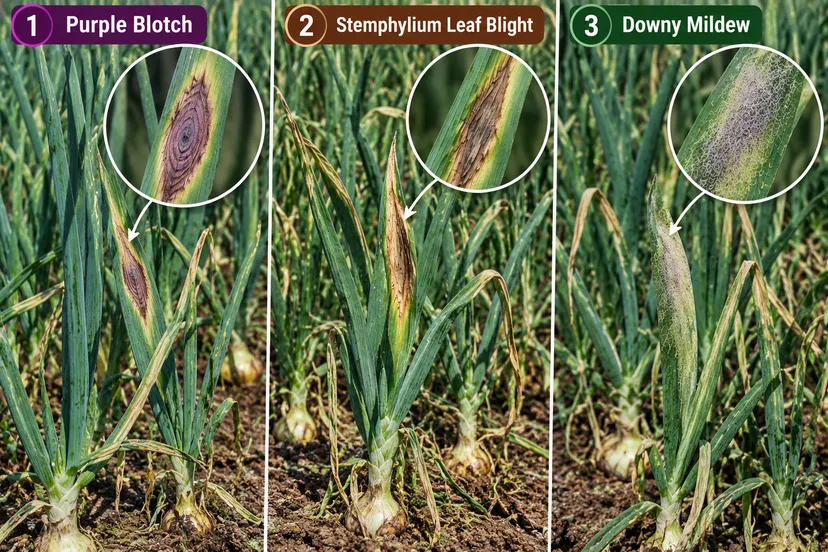
Purple Blotch in Onion: Causes, Symptoms & Management
Purple blotch is one of the most serious leaf diseases of onion (Allium cepa) in India, especially in the kharif and late kharif seasons. It starts as small spots on the leaves, but in humid weather the leaves can dry out quickly, so bulbs stay small and yield drops.
The disease can also damage seed stalks in seed crops and cause neck rot in stored bulbs, so early control matters for both yield and storage quality.
What Causes Purple Blotch in Onion?
Purple blotch is caused by the fungus Alternaria porri. It survives on infected seed, crop debris and volunteer onion plants, and its spores spread by wind and rain splash. Leaves injured by thrips are infected more easily, so the disease is often worse in fields with heavy thrips attack.
Symptoms of Purple Blotch
Stage
What you may see
Early
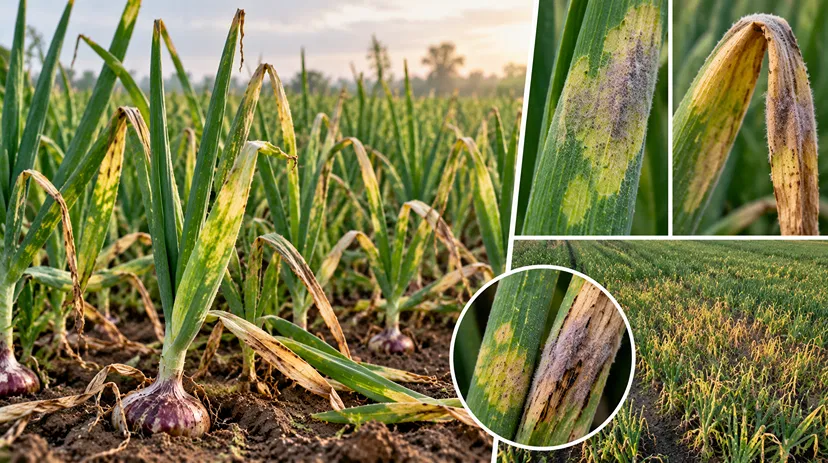
Small, sunken, whitish spots on leaves and seed stalks
Developing
Spots enlarge into oval patches with a purple to brown centre, often with rings, and a yellow border
Advanced
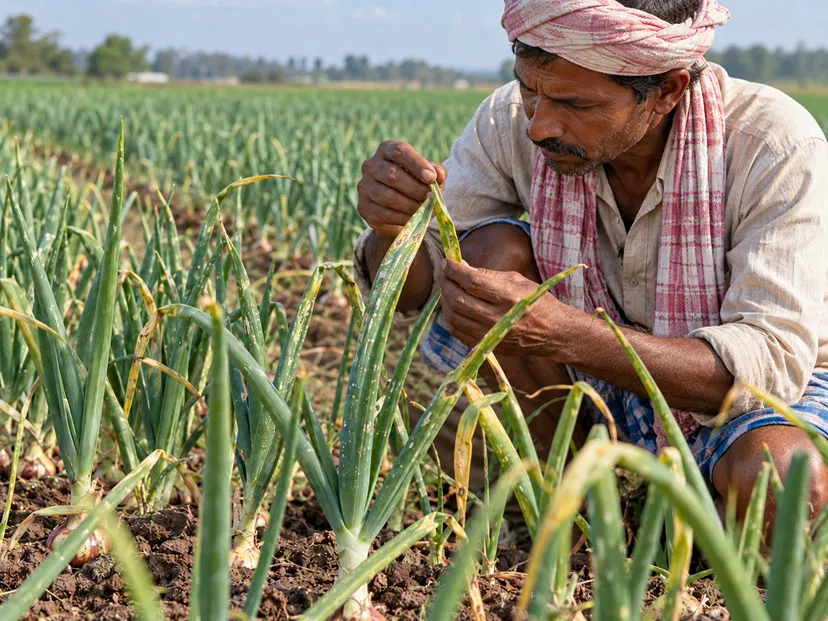
Patches join and girdle the leaf; leaves droop, turn yellow and dry from the tip downwards
Seed crop
Seed stalks weaken and break, and seed set is poor
Bulbs
Infection at the neck can lead to rotting of bulbs in storage
Purple blotch is often seen together with Stemphylium blight in onion. The table below can help tell them apart.
Feature
Purple blotch
Stemphylium blight
Spot colour
Purple to brown centre with rings and a yellow border
Small yellow to orange streaks that turn light brown
Where it starts
Anywhere on the leaf, often in the middle
Mostly on one side of the leaf, often near the tip
Season
Warm, humid weather, mainly kharif and late kharif
Warm, humid weather; common in rabi seed crops too
Favourable Conditions
Temperatures of about 20 to 30°C with high humidity
Rain, heavy dew or leaves that stay wet for long hours
Thrips damage on leaves, which opens the way for infection
Excess nitrogen, close planting and poor drainage
Growing onion or garlic in the same field season after season
When to Take Action
There is no fixed action level for purple blotch. Since the disease spreads fast in humid weather, it is best to start spraying at the first spots, generally 30 to 45 days after transplanting in the kharif crop, and repeat at 10 to 15 day intervals when the weather stays favourable.
Management of Purple Blotch in Onion
Cultural Practices
Follow a crop rotation of 2 to 3 years with crops other than onion and garlic
Use healthy seed from a disease free crop and treat it before sowing
Remove and destroy crop debris and volunteer onion plants after harvest
Give balanced nitrogen with enough potash, and avoid heavy late doses of nitrogen
Plant at the recommended spacing on raised beds where drainage is poor
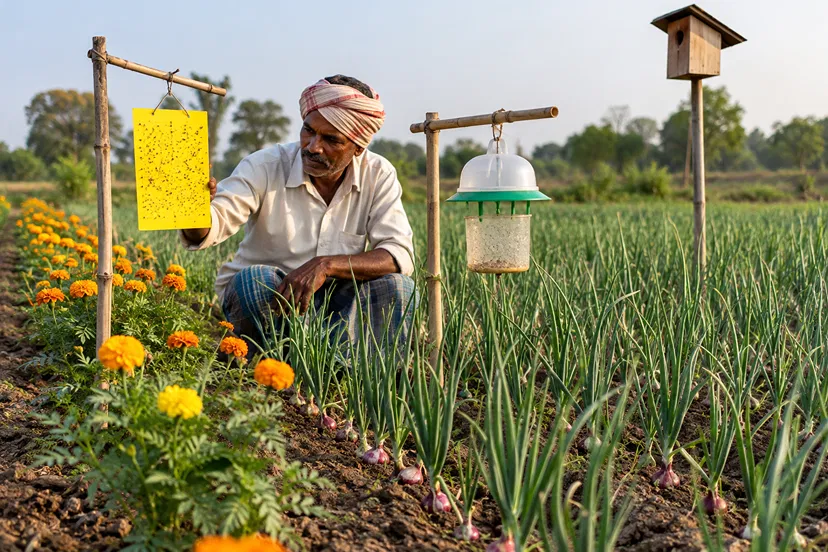
Control thrips on time, as their damage helps the fungus enter the leaves
Since thrips and purple blotch often go together, this guide on thrips control in onion can help protect the leaves early.
Biological Control
Seed treatment and soil application of Trichoderma mixed with farmyard manure can help reduce disease carried through seed and soil. Bio-fungicides work best as a preventive step along with crop rotation and field hygiene.
More natural options are covered in this guide on biological and organic control in onion.
Chemical Control
Spray at the first sign of spots and cover all the leaves well. Onion leaves are waxy, so adding a sticker or spreader can help the spray stay on the leaves. Rotate fungicides from different groups, and choose one with a short waiting period close to harvest.
Recommended Products for Purple Blotch Management
Active Ingredient / Molecule
Product Name
Recommended Use
Dosage / Application
Product Link
Azoxystrobin 18.2% + Difenoconazole 11.4% SC
Amistar Top (Syngenta)
Onion: purple blotch, Stemphylium blight and downy mildew
1 ml per litre (about 200 ml in 200 L water per acre); waiting period 7 days
Syngenta Amistar Top
Difenoconazole 25% EC
Score (Syngenta)
Onion: purple blotch
1 ml per litre (100 ml per 100 L water); waiting period 20 days
Syngenta Score
Tebuconazole 25.9% EC
Folicur (Bayer)
Onion: purple blotch
1.25 to 1.5 ml per litre (about 250 to 300 ml in 200 L water per acre); waiting period 21 days
Bayer Folicur
Azoxystrobin 11% + Tebuconazole 18.3% SC
Custodia (Adama)
Onion: purple blotch
About 0.94 ml per litre (300 ml in 320 L water per acre); waiting period 7 days
Adama Custodia
Fluxapyroxad 250 g/L + Pyraclostrobin 250 g/L SC
Merivon (BASF)
Onion: purple blotch
0.5 ml per litre (about 100 ml in 200 L water per acre); waiting period 10 days
BASF Merivon
Metiram 55% + Pyraclostrobin 5% WG
Cabrio Top (BASF)
Onion: purple blotch
3 to 3.5 g per litre (about 600 to 700 g in 200 L water per acre); waiting period 16 days
BASF Cabrio Top
Spray in the morning or evening when the air is calm. Wear gloves, a mask and full clothing while spraying.
Prevention and Best Practices
Scout the field every week from about a month after transplanting, especially after rain
Avoid overhead irrigation late in the day, so leaves dry before night
Cure harvested bulbs well and store them in a dry, airy place to reduce neck rot
Plan rotation, spacing and field hygiene with the help of this guide on cultural practices to prevent onion diseases
Conclusion
Purple blotch can dry out an onion crop quickly in humid weather, but it can be kept in check with timely action. Crop rotation, healthy seed, balanced nutrition, thrips control and recommended fungicide sprays at the first spots can help farmers protect leaves, bulb size and storage quality.
Frequently Asked Questions
What causes purple blotch in onion?
Purple blotch is caused by the fungus Alternaria porri. It spreads through infected seed, crop debris and wind blown spores, mainly in warm, humid weather.
How can I identify purple blotch on onion leaves?
Look for small whitish spots that turn into oval, purple brown patches with a yellow border. Leaves may later droop and dry from the tip.
When should farmers spray for purple blotch?
Spraying is generally advised at the first sign of spots, especially in humid or rainy weather, and repeated at 10 to 15 day intervals if needed.
Which fungicide is recommended for purple blotch in onion?
Difenoconazole 25% EC, tebuconazole 25.9% EC and azoxystrobin + difenoconazole are among the recommended options. Always follow the label dose and waiting period.
Disclaimer: This blog gives general guidance on identifying and managing purple blotch in onion, and disease pressure can vary with season, variety and field conditions. Always read the current product label for dose and waiting period, and consult a local agriculture expert before spraying.