

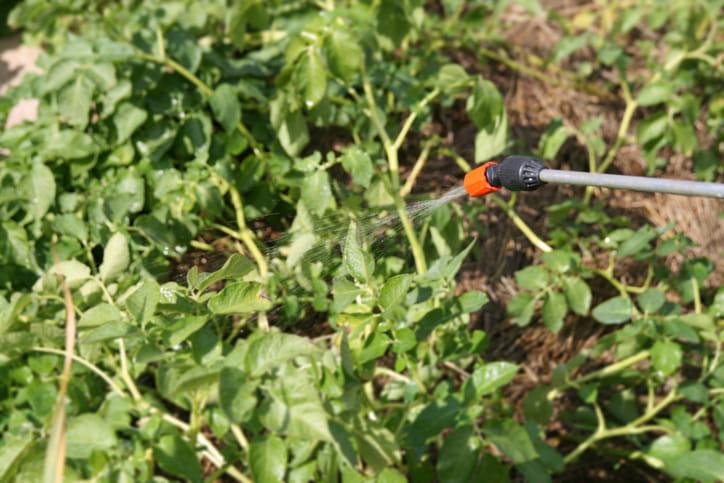
Most spray failures in Indian fields are not due to fake or low-quality pesticide. They come from one common mistake: spraying with too little water and an improperly calibrated sprayer. This single error reduces coverage, causes resistance, and silently damages your crop year after year. The good news is that it costs nothing to fix.
The Mistake: Spraying With Too Little Water
Most pesticide labels recommend 150 to 250 litres of spray solution per acre for proper coverage. Yet most farmers use only 60 to 100 litres per acre with a knapsack sprayer. The chemical is correct, the dose is correct, but the coverage is not. As a result:
- Pesticide does not reach the under-surface of leaves where pests hide.
- Some plants are over-sprayed (causing damage) while others are under-sprayed.
- Pests survive the spray and slowly become resistant.
- Farmers blame the chemical, switch products, and the problem repeats.
Why Water Volume Decides Spray Success
Pesticides work only where they land. A leaf has tens of thousands of stomata and pest hideouts. Enough water is needed to carry the chemical to all parts of the canopy, especially the under-surface and inner branches. Reducing water from 200 to 80 litres per acre reduces coverage by more than half, no matter what dose is mixed.
How Much Water Is Right?
|
Crop Stage / Type |
Spray Volume per Acre |
|---|---|
|
Early crop (small plants) |
120–150 litres |
|
Vegetative crops (cotton, paddy, pulses) |
180–220 litres |
|
Dense canopy (tomato, chilli, brinjal) |
200–250 litres |
|
Fruit trees (mango, citrus) |
400–800 litres |
|
Pre-emergence herbicide |
180–250 litres |
|
Post-emergence herbicide |
150–200 litres |
How to Calibrate Your Sprayer
- Fill the sprayer with plain water.
- Mark out a 10 × 10 metre area in the field.
- Spray that area at your normal walking pace and pressure.
- Measure how much water was used.
- Multiply by 40 to get the litres needed per acre (one acre ≈ 4000 sq m).
- Adjust your walking speed, pressure, or nozzle till you hit the target volume.
Nozzle Choice — Equally Important
- Flat-fan nozzle: best for herbicides and uniform field coverage.
- Flood-jet nozzle: for pre-emergence herbicides over soil.
- Hollow-cone nozzle: for insecticides and fungicides on standing crops.
- Never use a hollow-cone nozzle for herbicides — fine droplets drift and damage neighbouring crops.
Other Mistakes Linked to This One
- Walking too fast through the field — reduces deposit per area.
- Spraying with worn-out or partially blocked nozzles.
- Skipping the under-surface of leaves where sucking pests sit.
- Mixing pesticide directly into the sprayer without proper pre-dilution.
- Spraying at midday — chemical evaporates before it works.
How to Fix It This Season
- Calibrate the sprayer before the season starts.
- Match the water volume to the crop stage and label.
- Use the right nozzle for each chemical type.
- Spray in early morning or late afternoon.
- Walk slowly and evenly across the field.
- Direct nozzles to also cover the underside of leaves.
Conclusion
The most expensive mistake in pesticide use is spraying with too little water. Fixing it costs nothing but improves spray performance dramatically. Always read the product label for recommended water volume, calibrate your sprayer, choose the right nozzle, and consult your local KVK or agriculture officer for region-specific advice.