

Introduction
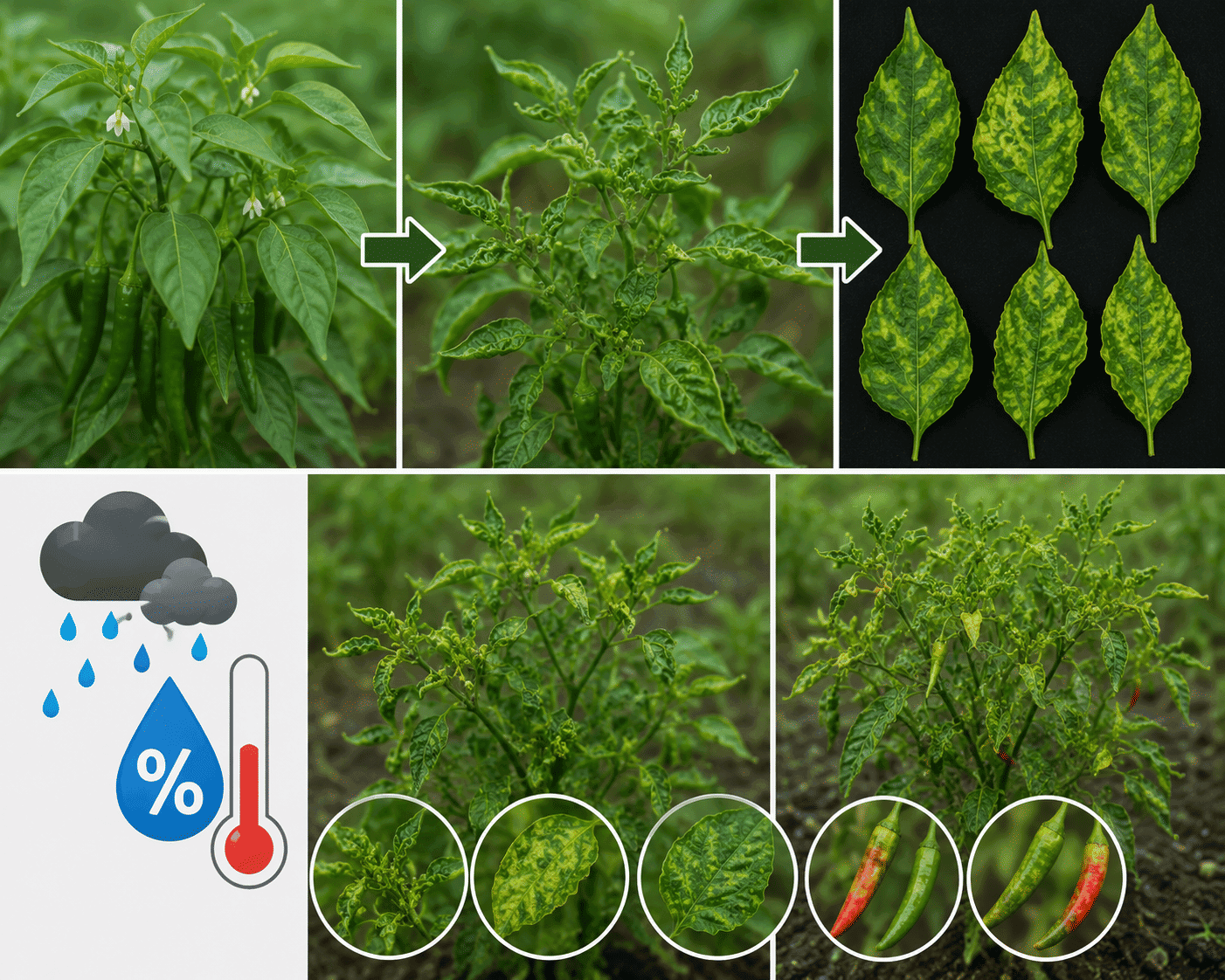
Chilli is an important cash crop for farmers, but during humid and cloudy weather, leaf curl and viral diseases can increase quickly in the field. These diseases mainly affect tender leaves, shoots, flowers, and fruit setting. Once a chilli plant is infected by a virus, it cannot be cured completely. Therefore, early identification and prevention are very important.
Humid weather supports the fast multiplication of sucking pests like thrips and whiteflies. These insects act as carriers of viral diseases. They move from infected plants to healthy plants and spread the virus while feeding. If farmers ignore the early symptoms, the disease may spread across the field and cause heavy yield loss.
Why Leaf Curl and Viral Diseases Increase During Humid Weather
During humid weather, chilli plants remain tender and soft. At the same time, pests like thrips and whiteflies become more active. These pests suck sap from leaves and transmit viruses from diseased plants to healthy plants.
The disease spreads faster when:
- Humidity is high
- Weather is cloudy
- Whitefly and thrips population is high
- Weeds are present around the field
- Crop canopy is dense
- Infected plants are not removed early
- Excess nitrogen fertilizer is used
- Broad-spectrum pesticides are sprayed repeatedly
Once virus symptoms appear clearly, the infected plant usually remains weak throughout the season. That is why management should focus on preventing spread.
Early Symptoms in Chilli Plants
Farmers should inspect the crop regularly, especially during the vegetative and flowering stages. Early symptoms are usually seen on young leaves and growing tips.
Common symptoms include:
- Upward or downward curling of leaves
- Small and narrow leaves
- Yellowing or light green patches on leaves
- Wrinkled or puckered leaf surface
- Stunted plant growth
- Shortened internodes
- Bushy plant appearance
- Poor flowering
- Flower drop
- Reduced fruit setting
- Small, deformed, or poor-quality fruits
- Presence of whiteflies or thrips on leaves
In severe infection, the plant becomes weak and stops growing properly. If infection occurs at an early stage, yield loss can be very high.
Damage Caused by Viral Diseases
Leaf curl and viral diseases reduce both plant growth and fruit production. The plant cannot produce healthy leaves, flowers, and fruits.
Major losses include:
- Weak vegetative growth
- Reduced photosynthesis
- Poor flowering
- Low fruit setting
- Small and curled fruits
- Reduced fruit size and shine
- Lower market quality
- Heavy yield loss in early infection
Even if fruits are formed, they may be small, uneven, or less attractive in the market.
Role of Thrips and Whiteflies
Thrips and whiteflies are the main vectors that spread viral diseases in chilli. They feed on tender leaves and shoots. When they feed on infected plants, they pick up the virus and transfer it to healthy plants.
Farmers should not wait for heavy pest population. Even a small number of virus-carrying insects can spread the disease quickly. Early vector control is the most important step in managing chilli viral diseases.
Field Monitoring and Scouting
Farmers should monitor the field every 3–4 days during humid weather. Early detection helps reduce further spread.
During field inspection:
- Check tender leaves and growing tips
- Observe leaf curling and yellowing
- Check the lower side of leaves for whiteflies
- Look for thrips on young leaves and flowers
- Identify stunted or bushy plants
- Remove infected plants early
- Check weeds around the field
Infected plants should be uprooted and destroyed away from the field. Do not throw infected plants on field bunds because they can act as a virus source.
Management Tips for Leaf Curl and Viral Diseases
Use Resistant or Tolerant Varieties
In areas where leaf curl and viral diseases appear regularly, farmers should choose resistant or tolerant chilli varieties if available. These varieties reduce disease severity and help maintain better crop growth.
Farmers should select varieties based on local recommendations and disease history of the field.
Healthy Seedlings and Nursery Care
A clean nursery helps reduce early disease entry.
Farmers should:
- Use healthy seedlings for transplanting
- Keep nursery weed-free
- Use insect-proof net where possible
- Remove infected seedlings immediately
- Avoid transplanting weak or curled seedlings
If infected seedlings are planted in the main field, the disease spreads faster after transplanting.
Vector Control
Thrips and whiteflies must be managed from the early crop stage.
Important practices include:
- Install yellow sticky traps for whiteflies
- Install blue sticky traps for thrips
- Remove weeds around the field
- Avoid excess nitrogen fertilizer
- Spray neem-based products during early pest activity
- Use recommended insecticides only when pest population increases
- Rotate insecticides with different modes of action
Sticky traps help in monitoring pest activity and reducing early pest buildup.
Neem and Insecticide Rotation
Neem-based products can help reduce sucking pest activity during early infestation. They are useful as part of preventive management and help reduce pest pressure.
Farmers should follow this approach:
- Use neem-based spray during early pest appearance
- Follow with recommended insecticide only if pest population increases
- Do not repeat the same insecticide again and again
- Rotate chemicals with different modes of action
- Avoid unnecessary broad-spectrum sprays
Repeated use of the same chemical can lead to resistance and poor pest control.
Nutrient Management to Reduce Stress
A stressed chilli crop is more vulnerable to pest and disease problems. Balanced nutrition helps plants remain stronger.
Farmers should:
- Avoid excess nitrogen fertilizer
- Apply balanced NPK as per crop stage
- Use potassium properly for better plant strength
- Apply micronutrients if deficiency symptoms appear
- Maintain proper irrigation
- Avoid waterlogging during humid weather
- Add well-decomposed organic manure to improve soil health
Healthy plants can tolerate pest pressure better and continue flowering and fruiting more effectively.
Precautions During Spraying
- Spray during morning or evening hours
- Avoid spraying during strong winds or rainfall
- Cover the lower side of leaves properly
- Use clean water for spray preparation
- Follow recommended dosage only
- Do not mix chemicals without expert advice
- Wear gloves, mask, and protective clothing
- Follow waiting period before harvesting chilli
Since chilli is harvested frequently, safe pesticide use is very important.
Preventive Measures for Farmers
Farmers can reduce leaf curl and viral disease spread by following these steps:
- Use healthy and disease-free seedlings
- Select resistant or tolerant varieties where available
- Remove infected plants early
- Keep the field and bunds weed-free
- Install yellow and blue sticky traps
- Control thrips and whiteflies from early stage
- Use neem and insecticides in rotation
- Avoid excess nitrogen fertilizer
- Maintain balanced nutrition and irrigation
- Monitor crop every 3–4 days during humid weather
Conclusion
Leaf curl and viral diseases in chilli increase rapidly during humid weather because thrips and whiteflies become active and spread viruses from plant to plant. The main symptoms include leaf curling, yellowing, stunted growth, poor flowering, flower drop, and small or deformed fruits.
Since viral diseases cannot be cured after infection, farmers should focus on prevention. Healthy seedlings, resistant varieties, weed removal, early infected plant removal, sticky traps, vector control, neem-based sprays, insecticide rotation, and balanced nutrition are important management practices. Timely action helps reduce disease spread, protect chilli flowering, improve fruit quality, and increase marketable yield.