

Introduction
Sigatoka disease damages banana leaves and reduces the plant’s ability to prepare food through photosynthesis. Severe infection causes early drying of leaves, poor bunch development, reduced fruit quality, and lower yield. If farmers fail to identify the disease at an early stage, it can spread rapidly in the field, especially during humid weather conditions. Therefore, regular crop monitoring and timely disease management are very important.
What is Banana Sigatoka Disease?
Sigatoka is a fungal leaf disease of banana caused mainly by Mycosphaerella species. The disease affects banana leaves and appears as spots and streaks that gradually enlarge and dry the leaf tissue.
There are two common types of Sigatoka disease in banana:
- Yellow Sigatoka
- Black Sigatoka
Among these, Black Sigatoka is considered more severe because it spreads faster and causes greater damage to the crop.
The disease mainly attacks leaves, reducing the green leaf area needed for healthy bunch development and fruit growth.
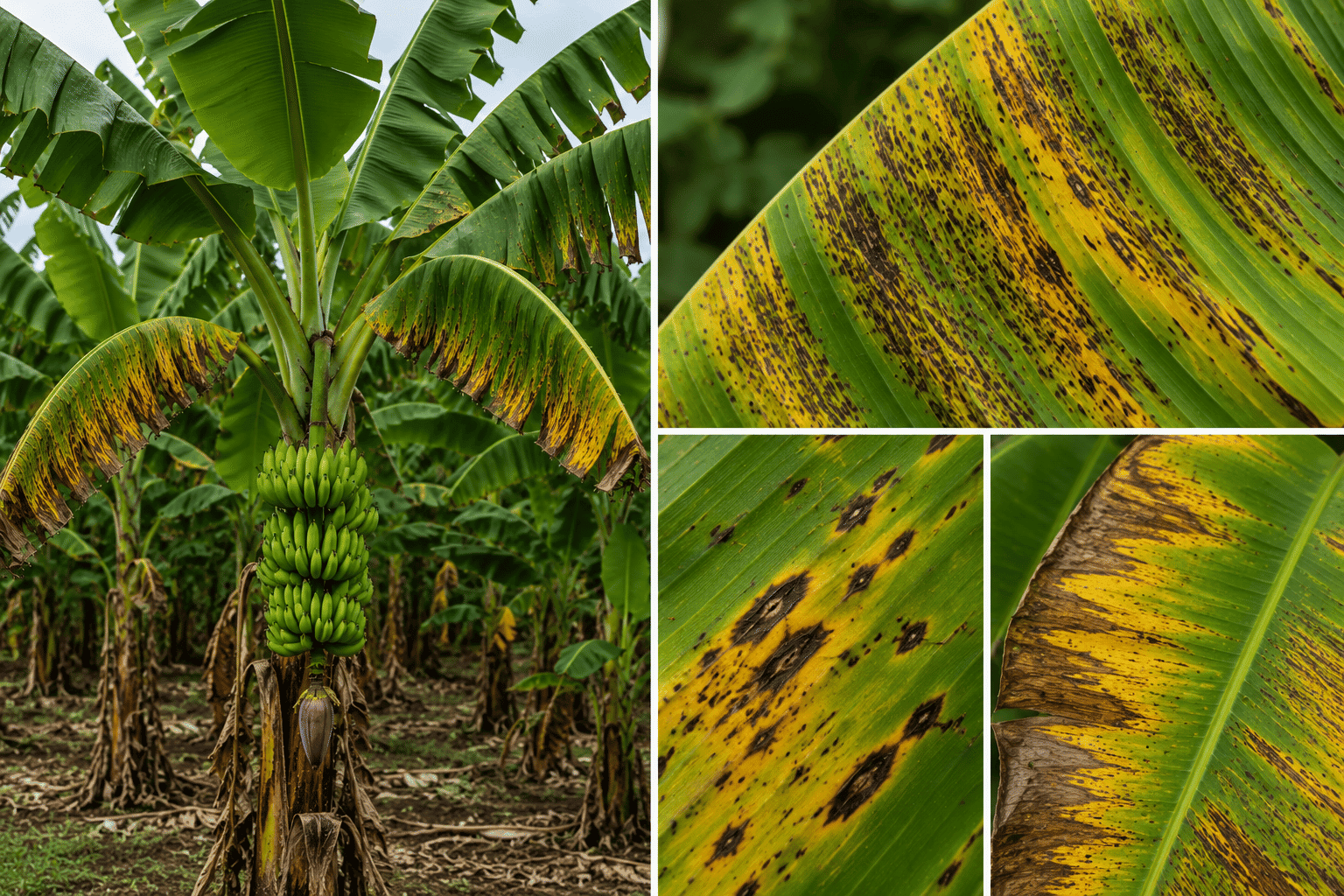
Symptoms of Sigatoka Disease in Banana
Early identification of symptoms helps farmers manage the disease before severe spread occurs. Farmers should regularly inspect the banana field for the following symptoms:
- Small yellow or light green streaks on leaves
- Tiny brown or black spots on leaf surface
- Spots enlarging into elongated streaks
- Drying of leaf tissue around the spots
- Yellowing of leaves
- Large black patches in severe infection
- Drying of leaves from margins toward the center
- Premature drying of older leaves
- Reduced green leaf area
- Weak plant growth and poor bunch development
In severe cases, most of the leaves dry early, leaving the plant with very few healthy leaves for fruit development. This directly affects fruit size, bunch weight, and fruit quality.
Damage Caused by Sigatoka Disease
Sigatoka disease mainly damages banana leaves, which are responsible for photosynthesis. When leaf area is reduced due to fungal infection, the plant cannot prepare enough food for healthy growth and bunch formation.
Major losses caused by the disease include:
- Reduced photosynthesis
- Poor plant vigor
- Smaller bunch size
- Poor fruit filling
- Delayed crop maturity
- Reduced fruit quality and market value
- Lower overall yield
In severe infection, fruits may become smaller and less attractive in the market. Heavy leaf drying also weakens the plant and affects future crop performance.
How Sigatoka Disease Spreads
The disease spreads mainly through fungal spores present on infected leaves. Wind, rain splash, irrigation water, and high humidity help the spores spread quickly from one plant to another.
Major sources of spread include:
- Infected leaves in the field
- Wind movement of fungal spores
- Rain splash and overhead irrigation
- Dense crop canopy
- Poor field sanitation
- Continuous humid weather conditions
If infected leaves are not removed on time, the disease spreads rapidly across the plantation.
Favorable Conditions for Disease Development
Sigatoka disease develops rapidly under favorable weather and field conditions. Farmers should be more careful during:
- Warm and humid weather
- Frequent rainfall
- High humidity conditions
- Dense planting and poor air circulation
- Water stagnation in the field
- Poor field sanitation
- Continuous leaf wetness
Dense crop canopy and excess moisture create favorable conditions for fungal growth and spore multiplication.
Monitoring and Field Inspection
Regular field scouting helps in early disease detection and timely control. Farmers should inspect the field frequently, especially during rainy and humid seasons.
During field inspection:
- Check older leaves first for early spots and streaks
- Observe lower leaves for yellow or brown lesions
- Monitor spread of spots on young leaves
- Remove severely infected leaves immediately
- Maintain records of disease spread for timely spraying decisions
Early identification and removal of infected leaves help reduce further disease spread.
Best Control Measures for Sigatoka Disease
Integrated disease management gives better and long-lasting control. Farmers should combine cultural, biological, and chemical methods instead of depending only on fungicide sprays.
Cultural Control Methods
- Remove and destroy severely infected leaves regularly.
- Maintain proper plant spacing for better air circulation.
- Avoid dense planting in the field.
- Keep the plantation clean and free from weeds.
- Improve drainage to avoid excess moisture and waterlogging.
- Remove old dried leaves and crop residues from the field.
- Follow balanced fertilizer management for healthy plant growth.
Proper field sanitation reduces fungal spore buildup and disease spread.
Nutrient and Crop Management
Healthy plants are more tolerant to disease stress. Farmers should:
- Apply balanced fertilizers based on crop requirement.
- Avoid excessive nitrogen fertilizer use.
- Use organic manure to improve soil health.
- Maintain proper irrigation management.
- Avoid water stagnation around plants.
Balanced nutrition helps maintain healthy leaf growth and better resistance against disease.
Biological Management
Biological methods help reduce fungal population naturally and improve plant health.
Useful biological options include:
- Application of Trichoderma formulations
- Use of beneficial microbial products
- Application of organic compost and biofertilizers
These methods improve soil microbial activity and support healthier crop growth.
Chemical Control Measures
When disease incidence becomes severe, farmers can use recommended fungicides for disease management. Fungicide spraying should begin during the early stages of infection for better effectiveness.
Farmers should follow these important points:
- Use only recommended fungicides for banana crop.
- Follow label instructions and recommended dosage carefully.
- Rotate fungicides with different modes of action to avoid resistance development.
- Ensure proper spray coverage on both upper and lower leaf surfaces.
- Avoid unnecessary and repeated spraying of the same fungicide.
Timely fungicide application during early disease development gives better control compared to spraying after severe infection.
Precautions During Spraying
- Spray during morning or evening hours.
- Avoid spraying during strong winds or rainfall.
- Use clean water for spray preparation.
- Cover all leaf surfaces properly during spraying.
- Wear gloves, mask, and protective clothing during spraying.
- Keep children and animals away from the sprayed area.
- Follow waiting period recommendations if applicable.
Preventive Measures for Farmers
Farmers can reduce the chances of severe Sigatoka infection by following preventive practices:
- Use healthy and disease-free planting material.
- Maintain proper plant spacing.
- Remove infected leaves regularly.
- Ensure good drainage in the field.
- Avoid overhead irrigation during humid weather.
- Monitor fields regularly during rainy season.
- Follow balanced fertilizer management.
- Maintain field sanitation throughout the crop period.
Preventive practices help reduce disease pressure and improve overall crop health.
Conclusion
Sigatoka disease is one of the major fungal diseases affecting banana cultivation and can cause heavy yield loss if ignored. The disease mainly damages leaves, reduces photosynthesis, weakens plants, and affects bunch development and fruit quality.
Early symptom identification, regular field monitoring, proper sanitation, balanced nutrient management, and timely fungicide application are essential for effective disease management. Farmers should follow integrated disease management practices by combining cultural, biological, and chemical methods for better and sustainable control. Timely action helps protect banana plants, improve bunch quality, reduce crop loss, and increase overall farm profit.