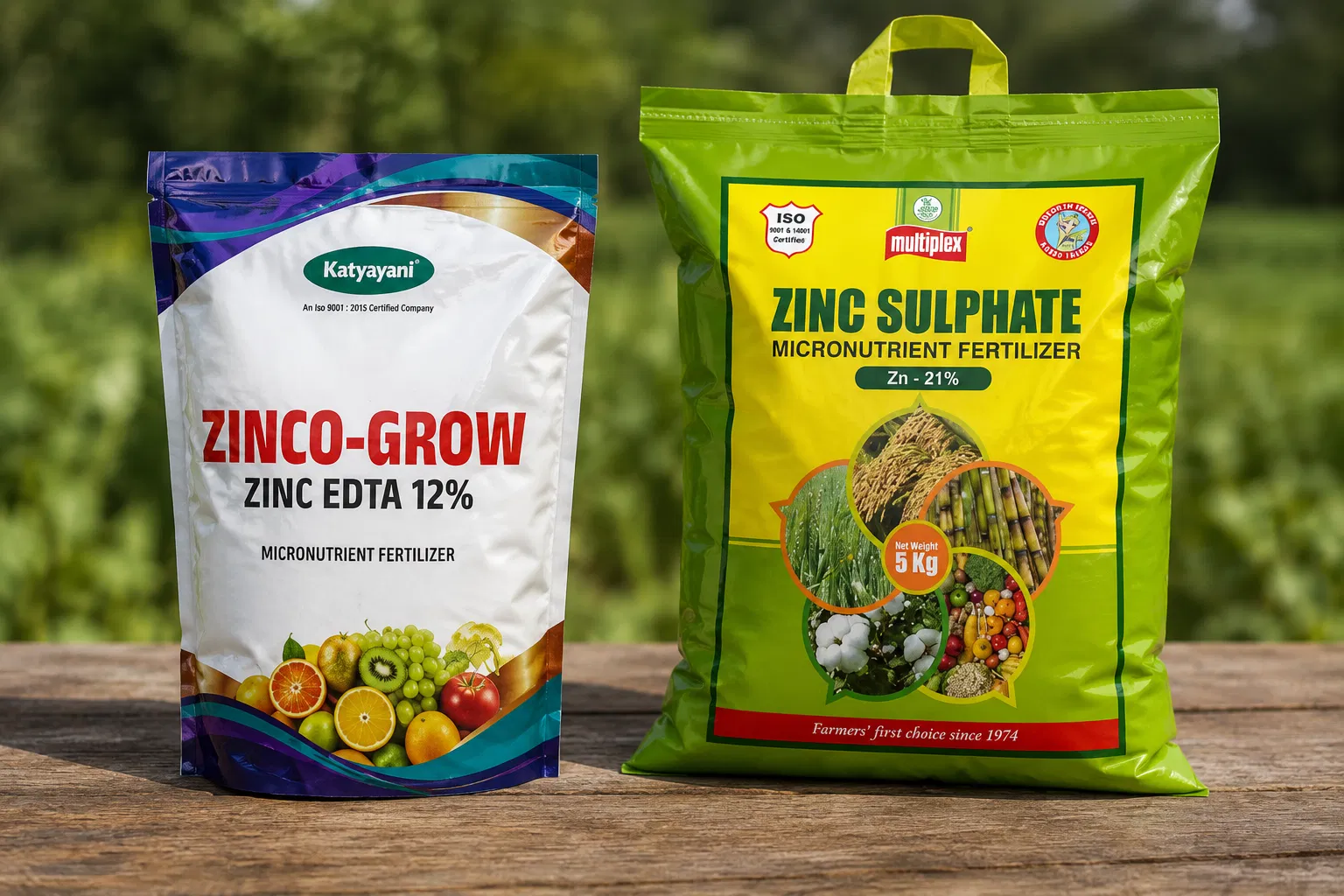
When crops show signs of zinc deficiency, the choice of fertilizer can make a big difference in both plant recovery and long-term soil health. Two of the most common options are zinc sulphate and chelated zinc, and while both supply this essential micronutrient, they do not perform the same way.
If you are trying to decide between zinc sulphate vs chelated zinc, the best choice depends on your crop, soil type, pH level, budget, and how quickly you need results. Understanding the differences can help you get better yield, healthier growth, and more efficient nutrient use.
What Is Zinc Sulphate?
Zinc sulphate is a widely used zinc fertilizer that contains zinc in an inorganic form. It is commonly applied to correct zinc deficiency in soils and crops. Farmers often choose it because it is affordable, effective, and easy to source.
It is available in several forms, including zinc sulphate monohydrate and zinc sulphate heptahydrate. Both provide zinc, but their concentration and solubility differ.
Key features of zinc sulphate
- Cost-effective and widely available
- Suitable for soil application, foliar spray, and seed treatment in some cases
- Works well in many standard agricultural soils
- Provides both zinc and sulphur
What Is Chelated Zinc?
Chelated zinc is zinc bound to an organic molecule that helps keep it available to plants for longer. This binding process, known as chelation, protects zinc from reacting with other elements in the soil and becoming unavailable.
Because of this, chelated zinc is often more efficient in challenging soil conditions, especially in alkaline or high-pH soils where zinc deficiency is common.
Key features of chelated zinc
- Highly available to plants
- Performs well in alkaline and calcareous soils
- Less likely to bind with soil particles
- Often used for rapid correction of deficiency
Zinc Sulphate vs Chelated Zinc: The Main Differences
Although both products deliver zinc, they differ in formulation, efficiency, and cost. Here is a simple comparison to help guide your decision.
1. Availability to plants
Chelated zinc usually remains available to plants longer, especially in soils that lock up micronutrients. Zinc sulphate is also effective, but it can become less available in high-pH or highly reactive soils.
2. Soil compatibility
Zinc sulphate works best in neutral to slightly acidic soils. Chelated zinc is often the better choice in alkaline soils, sandy soils with low organic matter, or soils with high phosphorus levels that may interfere with zinc uptake.
3. Cost
Zinc sulphate is generally much cheaper than chelated zinc. For large-scale field crops, this cost advantage often makes it the preferred option. Chelated zinc costs more, but its efficiency can justify the price in specific situations.
4. Speed of action
Both can correct deficiency, but chelated zinc may provide faster visible response in difficult soil conditions because the zinc is more readily absorbed. Zinc sulphate can also work quickly, especially when applied as a foliar spray.
5. Longevity
Chelated zinc typically offers more stable availability in the soil. Zinc sulphate may need repeat applications depending on soil type and crop demand.
When to Choose Zinc Sulphate
Zinc sulphate is often the smart choice when you need a practical and economical fertilizer. It is especially useful for broad-acre farming and routine soil correction.
Choose zinc sulphate if:
- Your soil is neutral or slightly acidic
- You need a budget-friendly zinc source
- You are correcting a known zinc deficiency across a large area
- You want a product that also supplies sulphur
It is commonly used in crops such as rice, wheat, maize, cotton, and vegetables, depending on local soil conditions and nutrient management plans.
When to Choose Chelated Zinc
Chelated zinc is the better option when zinc deficiency is difficult to manage or when soil chemistry reduces nutrient uptake. It is often favored for high-value crops where precision nutrition matters.
Choose chelated zinc if:
- Your soil has a high pH or is calcareous
- You have repeated zinc deficiency issues
- You need maximum nutrient efficiency
- You grow high-value crops and can justify the higher cost
It is especially useful in orchards, horticultural crops, and intensive production systems where nutrient availability must remain consistent.
Application Method Matters
The choice between zinc sulphate and chelated zinc also depends on how you plan to apply it. A fertilizer that works well in soil may behave differently as a foliar spray.
Soil application
Zinc sulphate is commonly used in soil because it is economical and effective for large-area application. Chelated zinc is often used when soil conditions limit zinc uptake.
Foliar spray
Both can be used as foliar treatments, but chelated zinc often offers better absorption and reduced risk of leaf burn when applied correctly. Zinc sulphate can also be effective, provided the concentration is carefully managed.
Seed treatment and fertigation
Depending on the product formulation, chelated zinc may be more suitable for fertigation systems and precise nutrient programs. Zinc sulphate is also used in some seed and irrigation applications, but compatibility should always be checked first.
The best zinc fertilizer is not always the most expensive one. It is the one that matches your soil, crop, and application method most effectively.
Which One Is Better for Crop Yield?
There is no universal winner in the zinc sulphate vs chelated zinc debate. The better option is the one that solves your crop’s actual nutrient problem with the least waste.
If your soil can readily supply zinc after application, zinc sulphate may deliver excellent results at lower cost. If your soil locks zinc away or your crop is highly sensitive to deficiency, chelated zinc may produce stronger and more reliable responses.
In many cases, farmers and agronomists choose based on soil test results rather than price alone. That approach usually leads to better yield and more efficient fertilizer use.
How to Make the Right Choice
Before buying either product, consider these factors:
- Test your soil to check pH, organic matter, and micronutrient levels.
- Identify the crop need because some crops are more zinc-sensitive than others.
- Review the application method to ensure the product fits your spray, soil, or fertigation plan.
- Compare cost per unit of usable zinc, not just the package price.
- Consider past performance if you have used one form before with better results.
Final Verdict: Zinc Sulphate vs Chelated Zinc
If you want an affordable, reliable zinc fertilizer for general soil correction, zinc sulphate is often the best place to start. If you are dealing with difficult soil conditions or need maximum zinc availability, chelated zinc is usually the stronger choice.
In short, zinc sulphate is the value option, while chelated zinc is the performance option. The right answer depends on your field conditions and crop goals.
Take action: start with a soil test, identify the cause of zinc deficiency, and choose the fertilizer form that gives your crop the best chance to absorb what it needs. That is the most practical way to protect yield, improve plant health, and avoid unnecessary fertilizer costs.