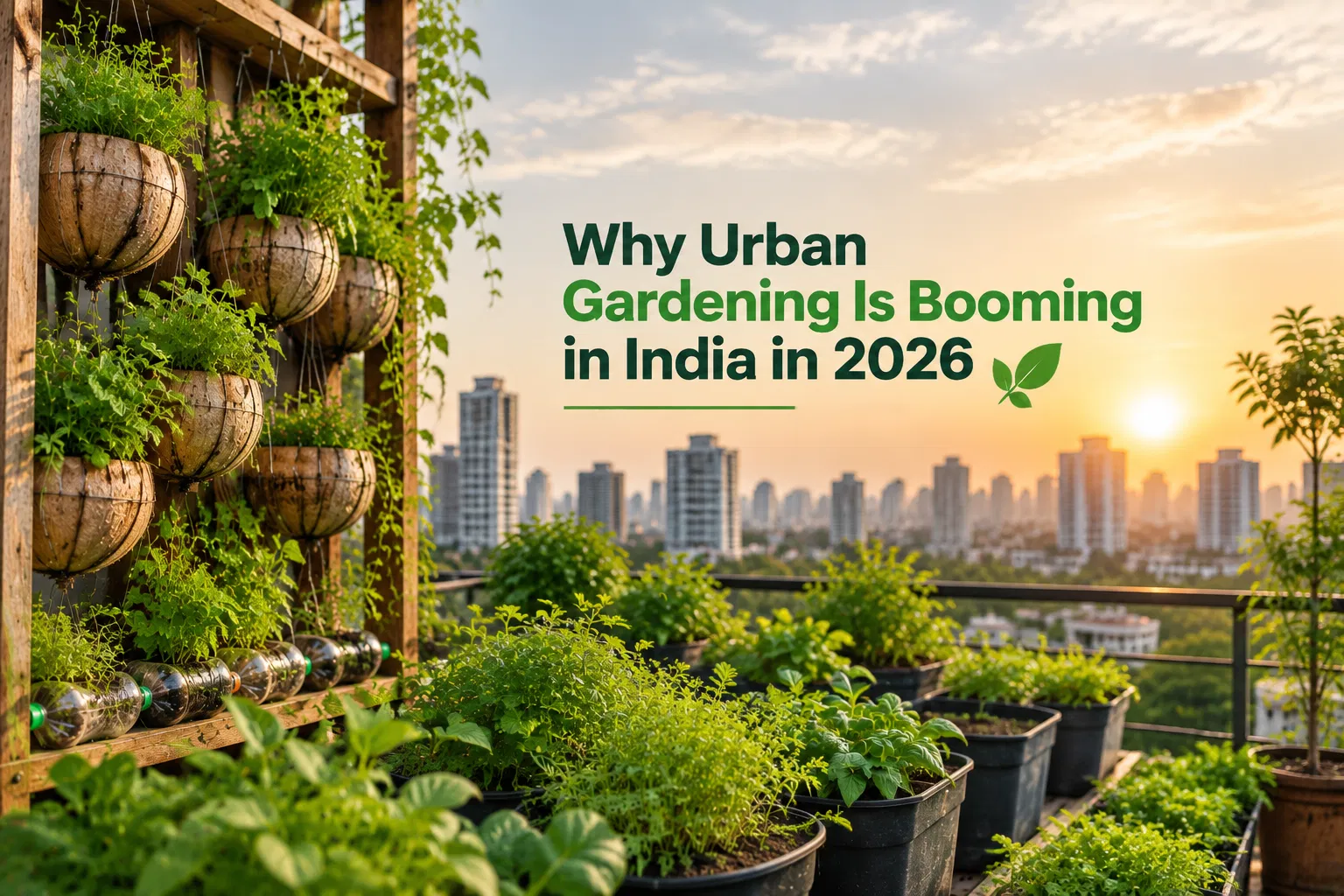
Balconies once used for storage are now lined with pots of tomato, coriander, and curry leaf. Terraces in Bengaluru, Pune, and Delhi are turning into working kitchen gardens. What started as a lockdown-era hobby has settled into a lasting habit for Indian city dwellers — here's why it keeps growing.
1. Growing Concern Over Food Safety
Awareness of pesticide residues and chemical use on commercially grown produce has pushed many urban households toward growing their own greens, herbs, and vegetables. Homegrown produce lets growers control exactly what goes into the soil and onto the plant, which matters more to buyers than it did a decade ago.
2. Space-Efficient Growing Techniques Have Matured
Lack of land used to be the biggest barrier to urban farming — that's largely solved now. Container gardening in grow bags, vertical planters, and railing pots let people grow a surprising amount on a few square feet of balcony. Grow bags in particular are popular because they're lightweight, reusable, and allow better root aeration than rigid pots — useful in India's heat, where overheated plastic containers can stress roots.
3. Better Access to Gardening Supplies
A few years ago, sourcing a decent potting mix, cocopeat, or the right hand tools meant hunting down a local nursery. Online agri-input platforms now deliver these directly, with clear usage guidance, making it far easier for a first-time gardener to get the basics right without guesswork.
4. Wellbeing and Stress Relief
Tending plants daily — watering, checking new growth, harvesting a few leaves for dinner — has become a low-effort way for busy city residents to build a routine outside screens and work. This isn't just anecdotal: time spent in green, hands-on activity is consistently associated with lower reported stress, which is part of why gardening has held on as a habit rather than fading as a passing trend.
5. Rising Interest in Sustainability
Growing even a portion of one's own food reduces reliance on long supply chains and plastic packaging, and composting kitchen waste into a manageable amount of usable soil input appeals to environmentally conscious urban households. Community and cooperative housing societies are increasingly setting aside shared terrace or courtyard space for exactly this purpose.
6. Social Media and Community Sharing
Photos and short videos of balcony harvests, unusual variety experiments, and before-after transformations have normalized urban gardening as an everyday hobby rather than a niche interest, with local gardening groups now common in most major Indian cities for swapping seeds, saplings, and troubleshooting tips.
What This Means for New Urban Gardeners
The barrier to starting has dropped significantly: a grow bag or a good-sized pot, a proper container mix, and basic hand tools are enough to begin. Success now comes down to consistency — right light, right watering, and refreshing soil or repotting as plants mature — rather than access or cost, which used to be the real limiting factors.
Frequently Asked Questions
Is urban gardening only for growing vegetables?
No — it spans ornamental houseplants, herbs, flowering plants, and edible crops; many urban gardeners grow a mix of all three.
Do I need a large balcony or terrace to start?
No — grow bags and vertical planters make it possible to grow a meaningful variety of herbs and vegetables in a few square feet.
Why has urban gardening grown particularly since the pandemic?
Extended time at home introduced many first-time growers to gardening, and enough of them found it genuinely rewarding to continue well beyond that period.
Disclaimer: General overview of urban gardening trends in India; individual growing conditions, climate, and available space will affect what works best for each household.