When farmers talk about getting crops off to a strong start, DAP as a basal fertilizer almost always comes up. And for good reason. Applied at sowing, DAP helps seedlings access the nutrients they need right when roots begin to grow and establish. That early boost can make a major difference in crop vigor, root development, and final yield.
DAP, or diammonium phosphate, is one of the most widely used fertilizers in agriculture because it supplies two essential nutrients in a highly efficient form: nitrogen and phosphorus. But its real value is not just in what it contains—it is also in when it is applied. As a basal fertilizer, DAP is placed near the seed or in the root zone at the time of planting so young plants can access nutrients immediately after germination.
What Is DAP Fertilizer?
DAP stands for diammonium phosphate, a concentrated fertilizer with a typical analysis of 18-46-0. This means it contains 18% nitrogen and 46% phosphorus, making it especially valuable for crops that need strong early growth.
Farmers use DAP because it supports two critical stages of crop development:
- Root establishment through phosphorus
- Initial vegetative growth through nitrogen
Unlike fertilizers that work mainly as top-dressings later in the season, DAP is often incorporated into the soil or placed in bands during sowing. This early placement is why it is commonly referred to as a basal fertilizer.
Why DAP Is Applied at Sowing
The main reason DAP is applied at sowing is simple: young plants need nutrients immediately. At the beginning of the crop cycle, root systems are small and cannot explore much soil. Nutrient availability near the seed zone gives seedlings a head start.
Phosphorus is especially important in this stage because it is closely linked to:
- Root growth and root branching
- Energy transfer within the plant
- Early flowering and crop maturity
- Improved seedling establishment
Without enough phosphorus early on, crops may remain weak, develop slowly, and produce lower yields. By applying DAP at sowing, growers reduce the risk of early nutrient stress and create better conditions for uniform crop emergence.
Early nutrition often determines late performance. A strong seedling stage leads to stronger roots, healthier plants, and better yield potential.
Key Benefits of DAP as a Basal Fertilizer
1. Supports Strong Root Development
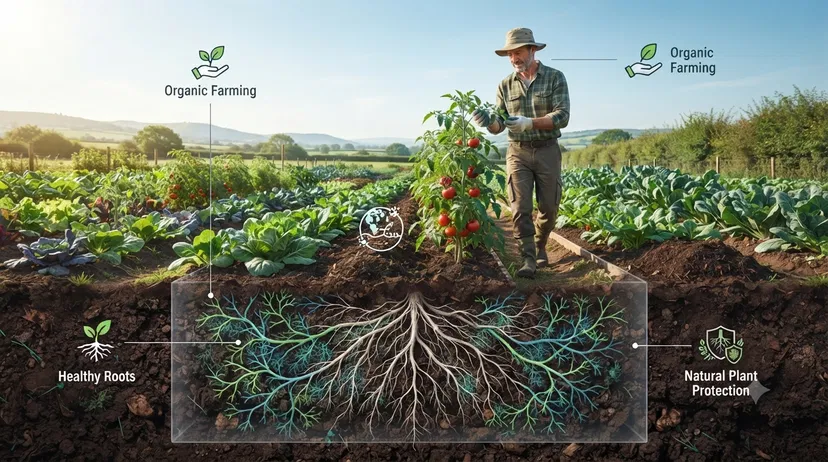
Phosphorus in DAP helps seedlings build a strong root system quickly. A healthy root network allows plants to absorb more water and nutrients as they grow. This is especially important in rain-fed agriculture or areas where moisture is limited.
2. Improves Early Growth
The nitrogen content in DAP promotes early leaf and shoot development. This helps the crop establish faster and compete better with weeds during the early stages.
3. Enhances Nutrient Efficiency
When DAP is placed at sowing, nutrients are positioned close to where roots will develop. That means the plant can access phosphorus and nitrogen efficiently instead of waiting for nutrients to move through the soil.
4. Encourages Uniform Crop Stand
Uniform germination and seedling growth are essential for high yields. Basal application of DAP helps create more even crop development, which simplifies later management practices such as irrigation, weeding, and harvesting.
5. Helps Crops Tolerate Early Stress
Seedlings that receive enough phosphorus and nitrogen early are generally more resilient. They are better able to cope with transplant shock, cold conditions, poor soil fertility, and other stress factors.
How DAP Works in the Soil
Once applied, DAP dissolves in soil moisture and releases ammonium and phosphate ions. The ammonium provides a readily available nitrogen source, while the phosphate supports root and energy metabolism.
However, phosphorus moves slowly in soil. This is one reason why placement matters so much. If DAP is broadcast far from the seed zone, the crop may not benefit as quickly. When banded or placed near the root zone, it becomes much more effective.
In many soils, phosphorus can become fixed or tied up by minerals, reducing availability. Applying DAP at sowing improves the chance that young roots will encounter usable phosphorus before it is immobilized.
Best Time to Apply DAP
The best time to apply DAP is at sowing or just before planting. This ensures nutrients are available during the most critical stage of crop establishment.
Common application methods include:
- Band placement near the seed row
- Side placement in rows during planting
- Incorporation into the soil before sowing
The exact method depends on the crop, soil type, irrigation system, and farming equipment. In all cases, the goal is to place nutrients where the developing roots can access them efficiently.
Important Precautions When Using DAP
Although DAP is highly effective, it must be used carefully to avoid seed injury or nutrient imbalance. Too much fertilizer too close to the seed can damage germination.
Here are a few practical precautions:
- Do not place DAP in direct contact with seed
- Use recommended rates based on soil testing
- Ensure proper moisture for nutrient dissolution
- Avoid overapplication, especially in phosphorus-rich soils
- Combine with other nutrients if crop demand requires it
It is also important to remember that DAP is not a complete fertilizer. While it provides nitrogen and phosphorus, it does not supply potassium, sulfur, zinc, or other micronutrients that crops may need depending on soil conditions.
Which Crops Benefit Most from DAP at Sowing?
Many crops respond well to DAP as a basal fertilizer, especially those that rely on strong early root establishment. Examples include:
- Maize
- Wheat
- Rice
- Canola
- Legumes
- Vegetables
- Oilseeds
In general, crops grown in phosphorus-deficient soils benefit the most. Farmers often see better emergence, faster early growth, and improved final productivity when DAP is applied at the right time and in the right place.
Why Soil Testing Matters
Soil testing is one of the smartest steps before applying any fertilizer. It helps determine whether the soil already contains enough phosphorus and what other nutrients may be lacking.
Using DAP without knowing soil needs can lead to:
- Unnecessary input costs
- Nutrient imbalances
- Reduced fertilizer efficiency
- Environmental losses
A soil test allows farmers to make informed decisions about rate, placement, and whether additional fertilizers are needed alongside DAP.
Conclusion: The Role of DAP at Sowing
DAP is applied as a basal fertilizer because it gives crops exactly what they need at the beginning of growth: readily available nitrogen for early vigor and phosphorus for strong root development. By placing DAP at sowing, farmers support faster establishment, better nutrient uptake, and stronger yield potential.
When used correctly, DAP is more than just a fertilizer—it is an early investment in crop performance. The key is proper placement, correct dosage, and alignment with soil conditions. For growers aiming to maximize early growth and final productivity, applying DAP at sowing remains one of the most practical and effective fertilization strategies.
Final insight: If you want better crop establishment, start with the roots. And for that, DAP at sowing is often the right place to begin.