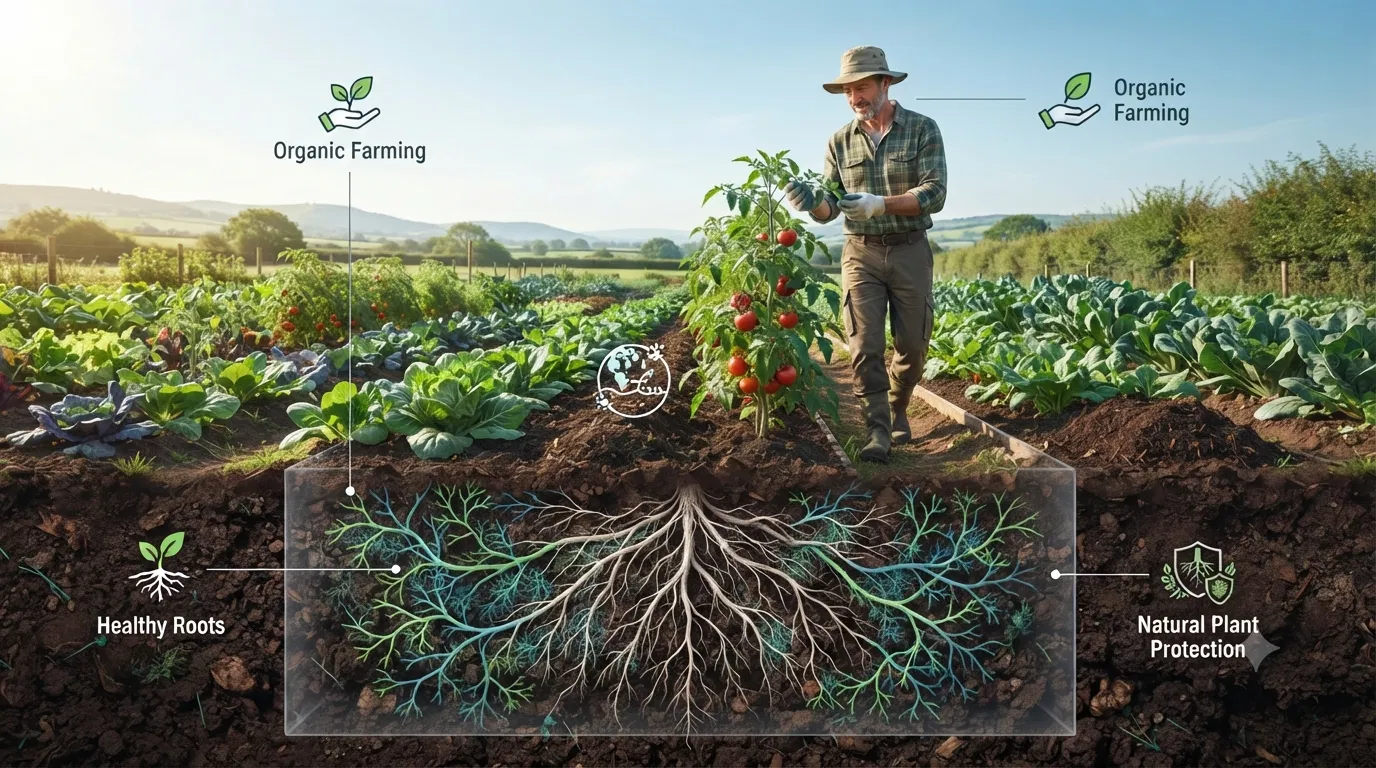
Healthy soil is the foundation of every successful organic vegetable farm, and one of the most powerful allies in that soil is Trichoderma. This beneficial fungus helps protect crops, improve root health, and support stronger plant growth without relying on synthetic chemicals. For organic growers looking for a natural way to boost yields and reduce disease pressure, using Trichoderma in organic vegetable farming can be a game-changer.
From seed treatment to soil application, Trichoderma offers a practical, eco-friendly solution for common vegetable crop challenges. It works quietly below the surface, colonizing the root zone, suppressing harmful pathogens, and helping plants absorb nutrients more efficiently. If you want healthier plants and more productive harvests, this natural biocontrol agent deserves a place in your farming program.
What Is Trichoderma?
Trichoderma is a genus of beneficial fungi found naturally in soil, compost, and decaying plant material. In organic farming, it is widely used as a biological control agent because it helps fight soil-borne diseases and stimulates plant growth.
Several species are commonly used in agriculture, including Trichoderma harzianum, Trichoderma viride, and Trichoderma asperellum. These fungi are known for their ability to colonize the rhizosphere, the thin layer of soil around plant roots, where they interact directly with both plants and harmful microbes.
Why Trichoderma Is Important in Organic Vegetable Farming
Organic vegetable farming depends on natural methods to maintain plant health and fertility. Since synthetic fungicides and pesticides are restricted, growers need reliable alternatives. Trichoderma fits perfectly into this system because it supports both disease prevention and soil vitality.
Here are the main reasons organic farmers use Trichoderma:
- Controls soil-borne diseases such as damping-off, root rot, wilt, and collar rot
- Promotes root growth by helping roots develop more efficiently
- Improves nutrient uptake by making soil nutrients more available to plants
- Supports soil health by contributing to a balanced microbial ecosystem
- Fits organic standards when used from approved formulations
This makes Trichoderma especially valuable in crops like tomato, chilli, cucumber, brinjal, okra, cabbage, cauliflower, leafy greens, and beans.
How Trichoderma Works
Trichoderma protects plants through several natural mechanisms. It does not just sit in the soil; it actively interacts with pathogens and plant roots.
1. Competition
Trichoderma competes with harmful fungi for space and nutrients around the root zone. By occupying the area first, it makes it harder for disease-causing organisms to establish themselves.
2. Mycoparasitism
Trichoderma can attack and break down other fungi by attaching to their hyphae and releasing enzymes that degrade cell walls. This helps reduce populations of harmful pathogens in the soil.
3. Antibiosis
It produces natural compounds that inhibit the growth of certain disease organisms. These substances help protect vegetable crops from infections before they spread.
4. Induced Resistance
Trichoderma can trigger a plant's natural defense system, making it better prepared to resist stress and disease. This is similar to giving the crop a biological shield.
5. Growth Promotion
In addition to disease suppression, Trichoderma may stimulate root development, improve plant vigor, and support better nutrient absorption. Healthier roots usually mean stronger shoots and better yields.
Best Ways to Use Trichoderma in Vegetable Crops
To get the best results, Trichoderma should be applied correctly and at the right stage of crop growth. Organic vegetable farmers often use it in several ways.
Seed Treatment
Seed treatment is one of the most common and effective methods. Coating seeds with Trichoderma before sowing helps protect emerging seedlings from soil-borne pathogens.
Benefits of seed treatment:
- Improves germination protection
- Reduces seedling mortality
- Encourages early root colonization
Soil Application
Trichoderma can be mixed with compost, farmyard manure, or well-decomposed organic matter and applied to the soil before transplanting or sowing. This helps build a beneficial microbial environment around the roots.
Root Dip Treatment
For transplanted vegetables, dipping seedling roots in a Trichoderma suspension before planting can reduce transplant shock and protect against root diseases.
Compost Enrichment
Adding Trichoderma to compost helps improve the biological quality of organic inputs. When enriched compost is applied to beds or pits, it introduces beneficial microbes directly into the root zone.
Drip or Drench Application
In established crops, Trichoderma can be applied as a soil drench or through drip irrigation, depending on the formulation. This is useful for maintaining microbial activity during the growing season.
Organic Crops That Benefit Most from Trichoderma
Many vegetables respond well to Trichoderma applications, especially crops prone to fungal diseases.
Common crops where Trichoderma is highly effective include: tomato, pepper, cucumber, pumpkin, cabbage, cauliflower, lettuce, spinach, onion, garlic, and leguminous vegetables.
It is especially useful in nurseries, raised beds, protected cultivation, and fields with a history of root diseases.
Benefits of Using Trichoderma in Organic Vegetable Farming
The advantages of Trichoderma go beyond disease suppression. It supports a more resilient and productive farming system.
- Natural disease management without chemical residues
- Better seedling establishment and stronger early growth
- Improved root architecture for better water and nutrient uptake
- Enhanced soil biology through microbial diversity
- Reduced crop losses from damping-off and root infections
- Higher marketable yield through healthier plants
For organic farmers, these benefits translate into lower input dependency, better crop quality, and more consistent harvests.
Best Practices for Successful Use
Although Trichoderma is highly beneficial, it works best when handled properly. Follow these best practices to maximize results.
- Use quality-approved formulations from trusted sources.
- Apply to moist soil so the fungus can establish more easily.
- Avoid mixing with harsh chemicals that may kill beneficial microbes.
- Use organic matter such as compost or manure to support microbial activity.
- Apply early before disease pressure becomes severe.
- Store properly in a cool, dry place away from direct sunlight.
It is also important to remember that Trichoderma is a living organism. Its performance depends on soil conditions, temperature, moisture, and overall farm management.
Common Mistakes to Avoid
Some growers do not see results because of avoidable application errors. To get the most from Trichoderma, avoid these mistakes:
- Applying expired or poor-quality products
- Using it in dry, lifeless soil without organic support
- Mixing it with fungicides that may reduce viability
- Expecting instant results instead of allowing time for colonization
- Applying without proper dosage or timing
Final Thoughts
Using Trichoderma in organic vegetable farming is one of the smartest ways to strengthen crops naturally. It helps protect roots, suppress disease, and improve plant performance while supporting the living soil that organic systems depend on. Whether you grow vegetables in open fields, raised beds, or nurseries, Trichoderma can become a valuable part of your crop protection and soil health strategy.
If your goal is healthier plants, better yields, and a more sustainable farming system, start integrating Trichoderma into your organic vegetable program today. With the right application and good soil management, this powerful beneficial fungus can help your vegetables thrive from seed to harvest.