What if you could lure destructive pests away from your most valuable crops and into a plant they prefer even more? That’s exactly the idea behind trap crops, one of the smartest tools in integrated pest management (IPM). Instead of relying only on pesticides, trap cropping uses strategic planting to attract pests, reduce crop damage, and support a healthier, more balanced growing system.
Whether you manage a home garden, small farm, or commercial planting, trap crops can help you stay ahead of pest pressure while using fewer chemical controls. In this guide, you’ll learn what trap crops are, how they work, which pests they target, and how to use them effectively as part of a modern IPM strategy.
What Are Trap Crops?
Trap crops are plants grown specifically to attract pests away from your main crop. These plants are usually more appealing to certain insects than the crop you want to protect. Once pests gather on the trap crop, you can monitor, remove, or treat that area instead of spraying an entire field or garden.
This approach works because many insects are drawn to certain plant traits such as color, scent, texture, or growth stage. By understanding pest behavior, growers can use trap crops to create a more targeted and environmentally friendly pest control system.
Trap cropping is not about eliminating pests completely. It’s about concentrating them where they’re easier to manage.
How Trap Crops Fit Into Integrated Pest Management
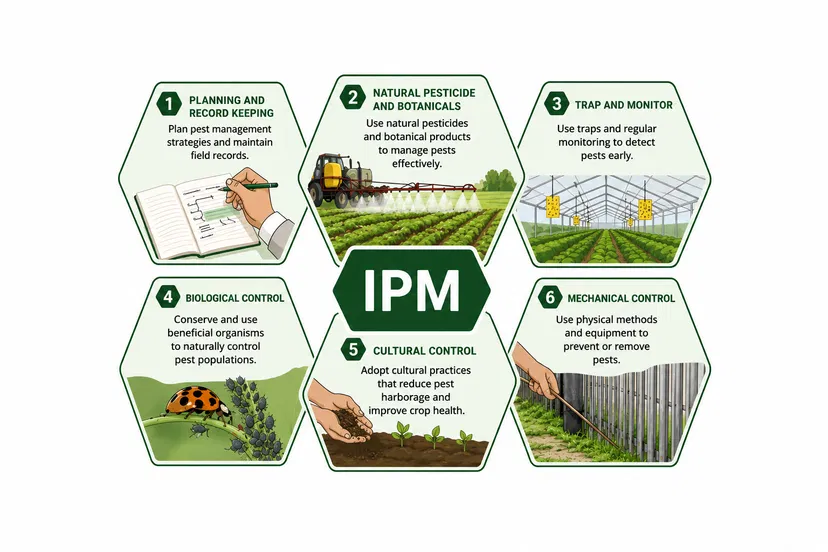
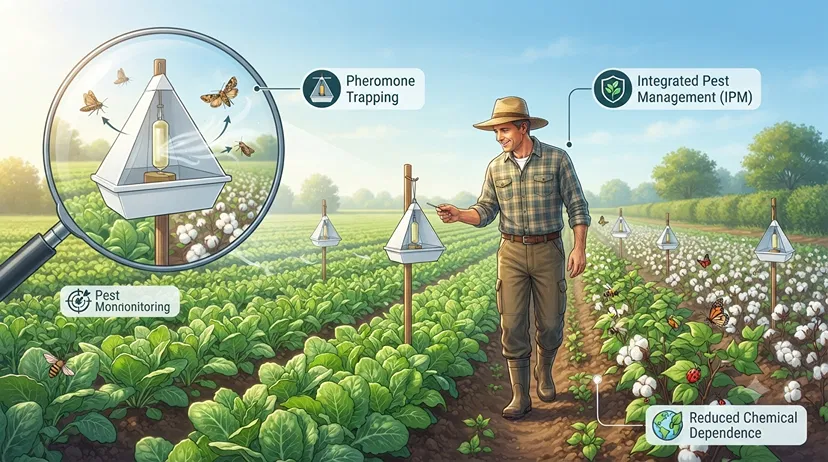
Integrated pest management combines multiple strategies to keep pest populations below damaging levels. Instead of depending on one method, IPM uses observation, prevention, biological controls, and carefully chosen interventions.
Trap crops fit perfectly into this model because they are:
- Preventive — they reduce pest pressure before damage spreads
- Targeted — they concentrate pests in one area
- Low-impact — they can reduce the need for broad pesticide use
- Flexible — they work in gardens, orchards, row crops, and greenhouse systems
When used with scouting, beneficial insects, mulching, crop rotation, and selective treatments, trap crops become a powerful part of a sustainable pest management plan.
Why Trap Crops Work
Trap crops work because pests do not choose host plants at random. They respond to visual cues, plant chemistry, and timing. In many cases, pests will move to the trap crop first if it is more attractive than the main crop.
For example, a pest may prefer a plant that is younger, more tender, or earlier to bloom. A trap crop can be planted to match that preference, drawing pests away at the most vulnerable stage of the main crop’s growth.
Successful trap cropping depends on three key factors:
- Attractiveness — the trap crop must be more appealing to the pest than the main crop
- Timing — the trap crop should be planted so it is ready when pests arrive
- Management — pests must be removed, treated, or contained before they spread
Common Examples of Trap Crops
Different pests respond to different trap crops, so the best choice depends on your target insect and main crop. Here are some widely used examples:
Mustard for Flea Beetles
Mustard is often used as a trap crop for flea beetles because it can attract these pests away from brassicas like cabbage, kale, and broccoli. Once beetles gather on the mustard, the plants can be treated or removed.
Radish for Cucumber Beetles
Radish can help draw cucumber beetles away from cucumbers and squash. Since these pests can spread disease, trapping them early can protect the main crop from significant losses.
Sunflowers for Certain Stink Bugs and Beetles
Sunflowers are sometimes used as trap crops because they attract a variety of pests, including some beetles and stink bugs. Their tall structure and large blooms make them highly noticeable in the landscape.
Barley or Wheat for Aphids in Some Systems
In some agricultural settings, cereals can be used as trap crops for aphids. These plants may attract pests before they move to more valuable crops.
Squash as a Trap Crop for Squash Bugs
In certain garden layouts, specific squash varieties can be used to lure squash bugs away from more desirable plants. This requires close monitoring to keep the pest population from becoming too large.
Benefits of Using Trap Crops
Trap crops offer several advantages for growers who want stronger pest management with less environmental impact.
- Reduced pesticide use — fewer broad-spray applications may be needed
- Better pest monitoring — pests are easier to find in one concentrated area
- Improved crop protection — main crops face less direct pest pressure
- Support for beneficial insects — fewer chemicals can help preserve pollinators and natural enemies
- Cost savings — targeted management can reduce waste and labor over time
For many growers, the biggest advantage is precision. Instead of treating everything, you can focus on the area that matters most.
Challenges and Limitations
Trap crops are effective, but they are not a guaranteed fix. If they are used incorrectly, they can actually make pest problems worse by acting as a reservoir.
Common challenges include:
- Pests spreading from the trap crop to the main crop
- Poor timing that makes the trap crop less attractive
- Insufficient monitoring leading to pest buildup
- Wrong crop selection for the target pest
- Weather or growth differences reducing effectiveness
Because of this, trap crops should always be part of a larger IPM plan, not the only strategy you use.
How to Use Trap Crops Effectively
To get the best results, trap cropping requires planning and follow-through. Use these steps to set up a more effective system:
1. Identify the Pest
Start by determining which pest is causing damage. Different insects prefer different plants, so accurate identification is essential.
2. Choose the Right Trap Crop
Select a plant that the pest finds highly attractive, but that will not become a serious problem if it is damaged. The trap crop should be more desirable than the main crop.
3. Plant at the Right Time
Timing matters. The trap crop should be at the preferred growth stage when the pest arrives. If it is too young or too old, it may not attract enough insects.
4. Place It Strategically
Trap crops are often planted around the perimeter of a field or garden, or in strips between rows. The layout should intercept pests before they reach the main crop.
5. Monitor Frequently
Check the trap crop regularly for pest buildup. Scouting helps you know when action is needed before insects spread.
6. Remove or Treat the Trap Crop
Once pests accumulate, manage them with targeted controls such as hand removal, localized spraying, vacuuming, or destruction of the trap crop if needed.
Trap Crops vs. Companion Planting
Trap crops are often confused with companion planting, but they serve different purposes. Companion plants are usually grown to improve growth, repel pests, or attract beneficial insects. Trap crops, on the other hand, are meant to attract pests directly.
In simple terms:
- Companion planting helps support the main crop
- Trap cropping sacrifices a plant to protect the main crop
Both can be useful, but trap crops are especially valuable when a specific pest pressure is predictable and well understood.
Best Practices for Success
To improve your chances of success with trap crops, keep these best practices in mind:
- Use local pest knowledge whenever possible
- Combine trap crops with regular scouting
- Do not let the trap crop become a pest source
- Rotate or replace trap crops as needed
- Pair trap cropping with biological and cultural controls
The more closely you observe pest behavior in your growing area, the more effective your trap crop strategy will be.
Conclusion: A Smarter Way to Manage Pests
Trap crops are a practical, proven, and environmentally smart part of integrated pest management. By drawing pests away from your valuable plants, they help reduce damage, improve monitoring, and support more targeted control methods.
If you want to build a stronger IPM plan, start by identifying your biggest pest threat and choosing a trap crop that matches it. With the right timing, placement, and follow-up, this simple strategy can make a major difference in garden or farm productivity.
Final insight: the best pest control is not always about killing more insects. Sometimes, it’s about outsmarting them.